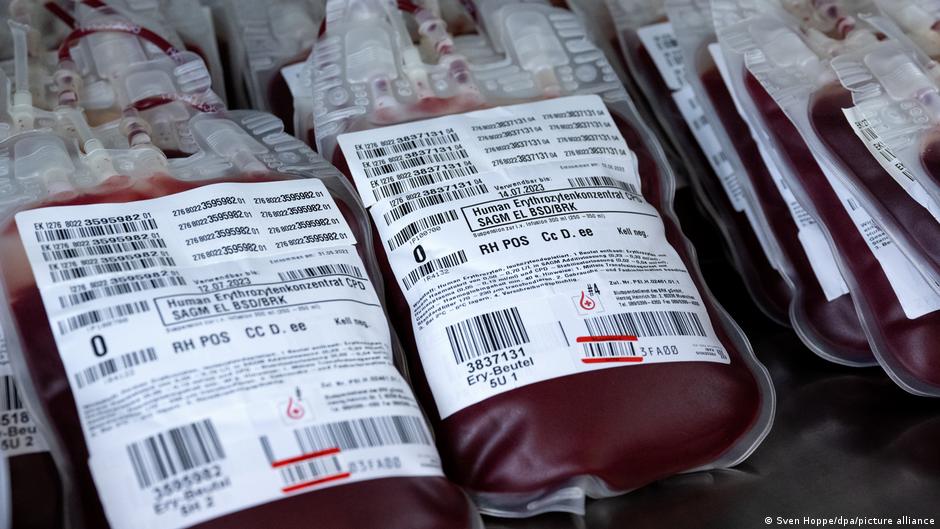
"Blood saves lives after accidents, during operations and in the treatment of serious illnesses such as cancer. According to the German Red Cross (DRK), up to 15,000 donations are needed every day in Germany. In order to be able to help whenever and wherever emergencies arise, supplies should cover at least four days. But time and again, there are shortages. By mid-January, there were only enough supplies for a day and a half."
"There were many reasons for this: the Christmas and New Year holidays, and the onset of harsh winter weather with icy roads stopped people from going to donate. Also, the usual wave of illness during the cold season, with many cases of flu and influenza, filled up the hospitals and meant many people were unable or not allowed to donate blood for health reasons. The German Red Cross sounded the alarm, which prompted me to take decisive action."
"The last time I had my blood taken was in 1994, 32 years ago. Initially, I thought I was perhaps too old. But that age limit has now been abolished. DW's Marcel Furstenau (right) recently donated blood for the first time since 1994Image: Marcel Furstenau/DW No discrimination for donors The reason for this is encouraging: older people today are often much healthier than in the past."
Blood is essential for treating accidents, surgeries, and serious illnesses; up to 15,000 donations are needed daily in Germany. Stockpiles should cover at least four days, but mid-January supplies fell to only a day and a half. Holidays, severe winter weather and icy roads deterred donors, while seasonal illnesses filled hospitals and made many people ineligible to donate. The German Red Cross issued an alarm, prompting renewed donations. Age limits for donors have been abolished because many older people are healthier today. Medical staff report no disadvantages for healthy donors, and studies suggest cardiovascular benefits.
Read at www.dw.com
Unable to calculate read time
Collection
[
|
...
]