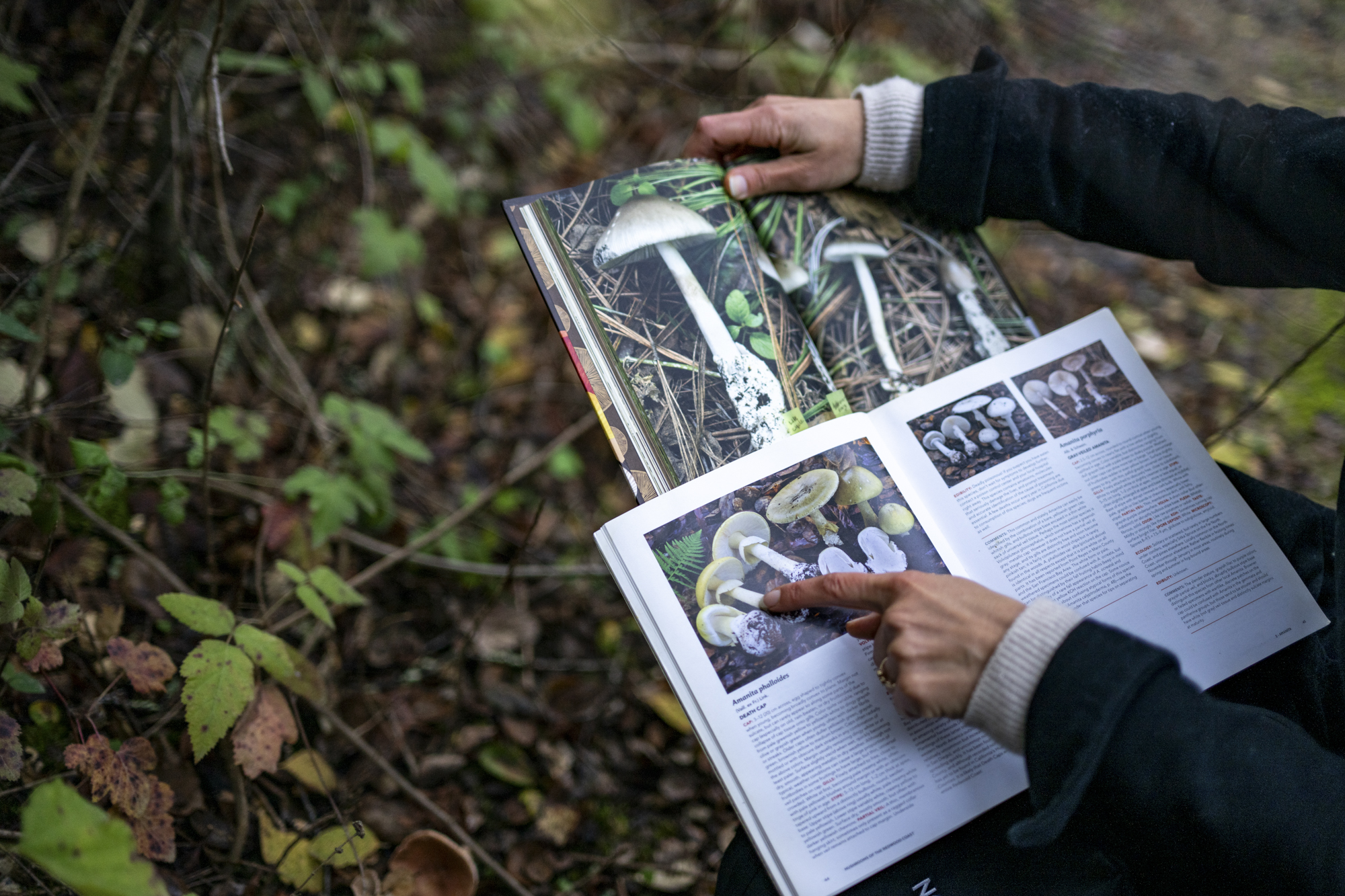
"Sita Davis, who leads foraging trips during the winter rainy season in Northern California, points to a photo of death cap mushrooms in the book "Mushrooms of the Redwood Coast" during an educational mushroom walk at Anthony Chabot Regional Park in Oakland on Dec. 12, 2025. The top image shows an edible mushroom that resembles a death cap. State health officials again warned against foraging as illness and deaths from eating the wild mushrooms known as death caps rise to new highs. (Beth LaBerge/KQED)"
"Immigrants from Mexico and China make up a disproportionate number of the cases, as death caps, or Amanita phalloides, look very similar to edible mushrooms that grow in those countries. The California Department of Public Health released a series of fact sheets and videos on Wednesday in multiple languages, including Mixteco, an indigenous language of Mexico spoken by communities in Monterey County, where the first poisonings emerged in November."
State health officials issued a second-season warning to avoid mushroom foraging as illnesses and deaths from Amanita phalloides increased to unprecedented levels. Immigrants from Mexico and China represent a disproportionate share of cases because death caps closely resemble edible mushrooms common in those countries. The California Department of Public Health produced fact sheets and videos in multiple languages, including Mixteco. Hospitalizations followed after mushrooms were eaten from sites across the Bay Area and state parks. Death caps grow along the West Coast, affecting all of California. Some dogs have also died. Local mycology groups call for education and safer identification practices.
Read at Kqed
Unable to calculate read time
Collection
[
|
...
]