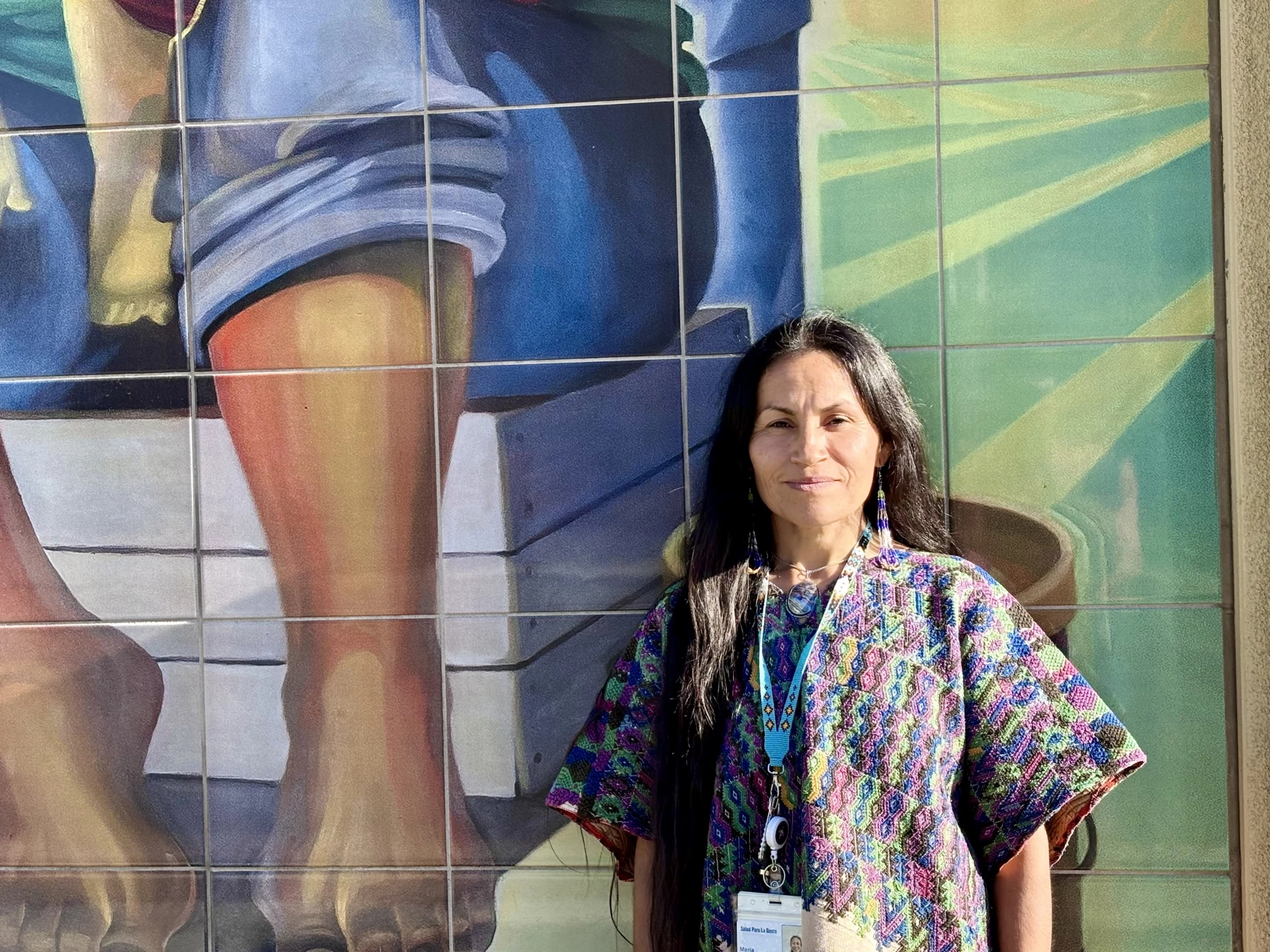
"She felt that her lack of Spanish was a hindrance to getting proper care and swallowed her fears quietly. "Sadly, there are many women who don't speak Spanish well or don't fully understand it, and we get looked down on for that. So sometimes we stay quiet out of fear or embarrassment, thinking, 'What are they going to say?' or 'I can't say it right.'""
"After her experience, Ines decided to do two things: learn Spanish and train as a doula, a non-clinical birth worker who provides emotional and physical support during and after pregnancy. "Even if it's just a small grain of sand, just being there, accompanying someone, giving a little massage, giving a glass of water, that's what I want to do," she said."
Ines, a Mixtec farmworker from Oaxaca, trained as a doula to support Indigenous pregnant women in Watsonville who face language barriers and isolation during prenatal care. She learned Spanish and completed doula training alongside 11 other farmworkers taught by nurse midwife Maria Bracamontes at Watsonville Community Hospital and the clinic Salud Para La Gente. Doulas provide emotional and physical non-clinical support, accompany patients to visits, and translate Mixtec during medical interactions. Many farmworker families lack nearby support during appointments because relatives work in the fields. A tribal group in central California regained thousands of acres of land returned by the state and is celebrating the transfer.
Read at Kqed
Unable to calculate read time
Collection
[
|
...
]