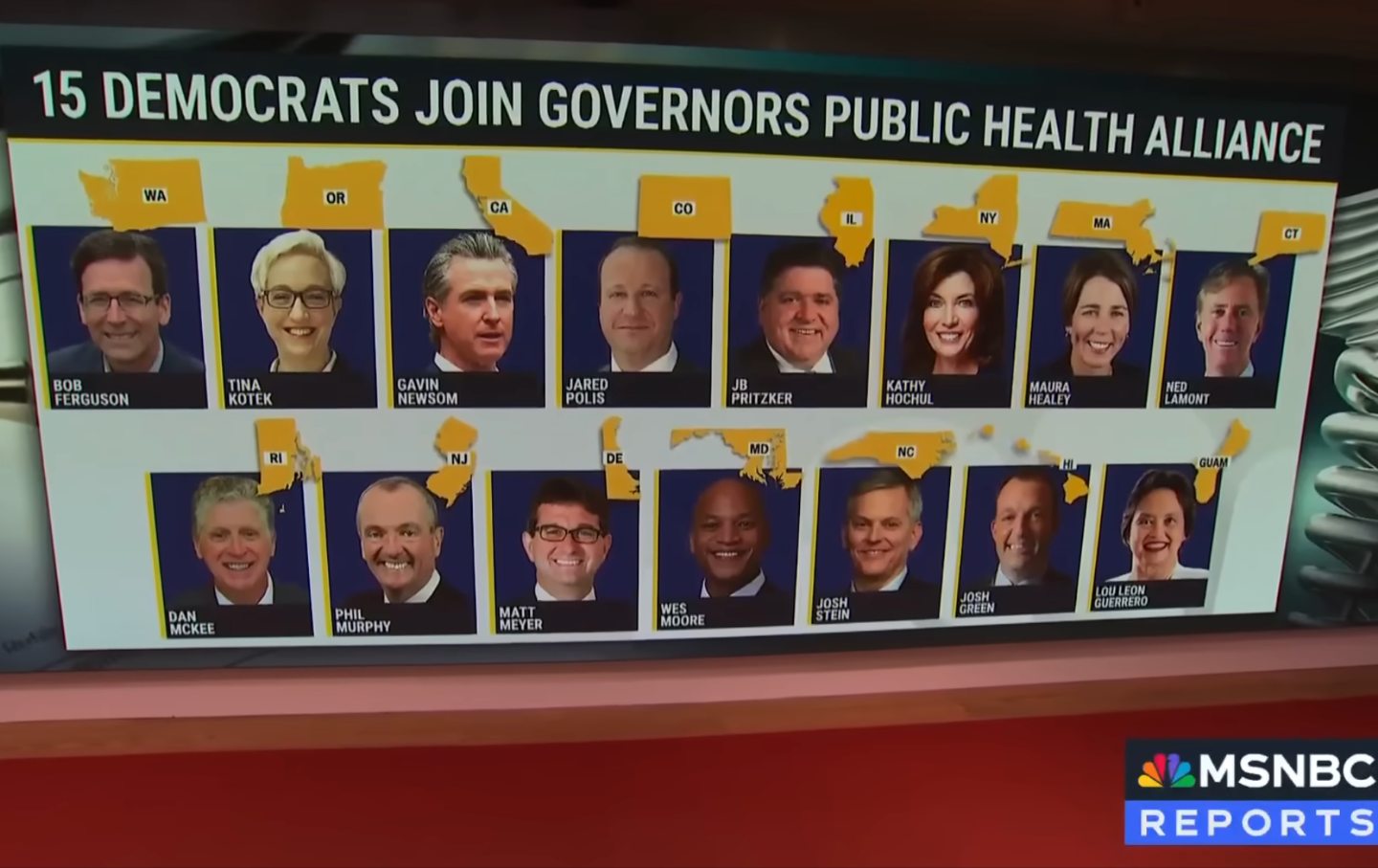
"In light of the systemic dismantling of America's public health agencies, these moves essentially create a shadow infrastructure to maintain some of what is being lost. While this is a promising development, it does nothing to stop a troubling trend that has been emerging for some time: The country is quickly becoming fragmented along partisan lines when it comes to public health."
"The federal government broadly coordinates disease surveillance for the nation, funds public health programs and scientific research, and provides guidance that local health departments and doctors rely on. The federal government also gets involved when disease transmission is an international or interstate affair. Local health departments, meanwhile, are the boots on the ground, conducting testing, coordinating immunization programs, taking care of local outbreaks, and providing supplies."
Democratic governors have established three regional public health alliances—the Governors' Public Health Alliance, West Coast Health Alliance, and Northeast Health Collaborative—to coordinate resources, share disease surveillance data, and provide public health guidance across state lines. These alliances function as shadow infrastructure to compensate for the dismantling of federal public health agencies. The U.S. public health system traditionally relies on federal coordination of disease surveillance, funding, and guidance, while local health departments handle testing, immunization programs, and outbreak response. This fragmentation creates a concerning trend where access to independent, scientifically sound public health guidance increasingly depends on partisan affiliation and state governance, undermining the unified national approach historically essential for effective disease control and public health protection.
#public-health-alliances #partisan-fragmentation #federal-health-infrastructure #disease-surveillance #state-governance
Read at The Nation
Unable to calculate read time
Collection
[
|
...
]