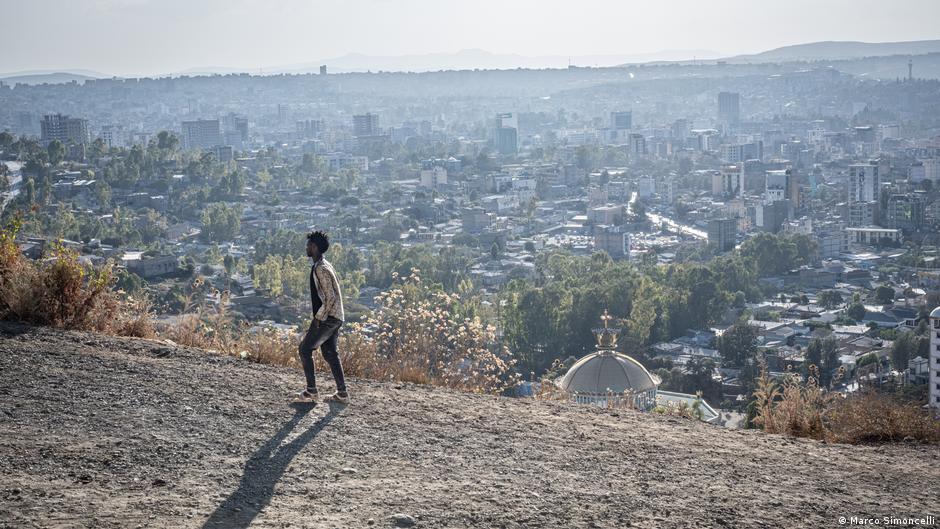
"If it were possible, I would like to live in peace and return home, and cultivate my land as in the past. It is very difficult to live like this with my children. Her fear is shared by thousands in Tshehaye. Across Tigray, around 800,000 people remain displaced and unable to return to their land, particularly in western Tigray."
"She was first displaced when war erupted in 2020. After the Pretoria Agreement formally ended the two-year conflict in 2022, she tried to return to her village in western Tigray—one of the parts of the region still under occupation by Amhara forces. But her land had been taken. Living there had become impossible."
"Life in the camp is harsh. Water is scarce. Food distributions are irregular. Medicines are limited. Humanitarian conditions have worsened following last year's aid cuts. Families rely on small rations and informal solidarity networks to survive."
In the Tshehaye displacement camp in Shire, Ethiopia's Tigray region, former school buildings now house displaced families. A mother of three describes being displaced twice: first in 2020 during the conflict, then again after the 2022 peace agreement when she discovered her land in western Tigray had been taken by Amhara forces. Her husband was arrested for being Tigrayan. Approximately 800,000 people remain displaced across Tigray, unable to return home. Conditions in the camp are severe, with scarce water, irregular food distributions, and limited medicines. Humanitarian aid cuts have worsened living conditions, forcing families to survive on small rations and informal support networks.
#tigray-displacement-crisis #humanitarian-conditions #land-occupation #internal-displacement-camps #ethiopia-conflict-aftermath
Read at www.dw.com
Unable to calculate read time
Collection
[
|
...
]