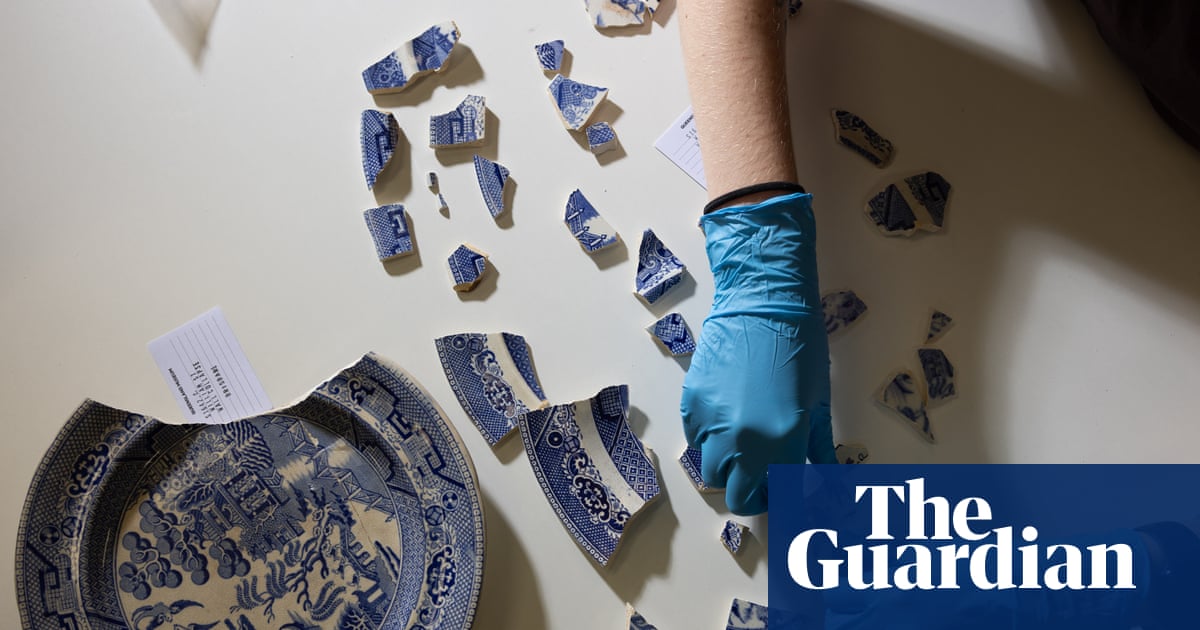
"In a white and sterile office that could belong to any one of the warehouses that dot this industrial strip between Brisbane's airport and horse-racing precinct, a young woman is engrossed in a puzzle. Only this puzzle comprises, perhaps, three different sets, each almost (but not quite) identical to the other and none likely to be completed. Emily Totivan wears blue plastic gloves. She is an archaeology student helping to catalogue artefacts."
"The office is in a Queensland Museum storage facility. The ceramic shards she assembles are from dinner plates upon which persons unknown ate about a century and a half ago in the early years of Brisbane's transition from penal settlement to river port capital of the new colony of Queensland. Frontier violence was waged in other parts the colony, but these fragments tell of a life more genteel."
"Intricate blue and white patterns on the plates depict a watery scene of pagodas, willows and swallows in a Chinese-inspired style that Totivan says was insanely common on tea sets, platters and vases of the day. It's like the world's hardest puzzle, Totivan says. But also, the most rewarding. Part of a generation hurtling into a future of artificial intelligence and climate crisis, Totivan is among a new cohort of young people choosing not only to peer into the past, but to touch it."
In a Queensland Museum storage facility on an industrial strip near Brisbane's airport, an archaeology student assembles almost-matching ceramic sets from fragmented 19th-century dinner plates. The shards come from plates used around a century and a half ago during Brisbane's shift from penal settlement to river port capital of the new colony of Queensland. Intricate blue-and-white designs show pagodas, willows and swallows in a Chinese-inspired style that was common on tea sets and vases. Many archaeology students will work in urban salvage archaeology, cataloguing and preserving artefacts as Brisbane enters a period of increased development.
Read at www.theguardian.com
Unable to calculate read time
Collection
[
|
...
]