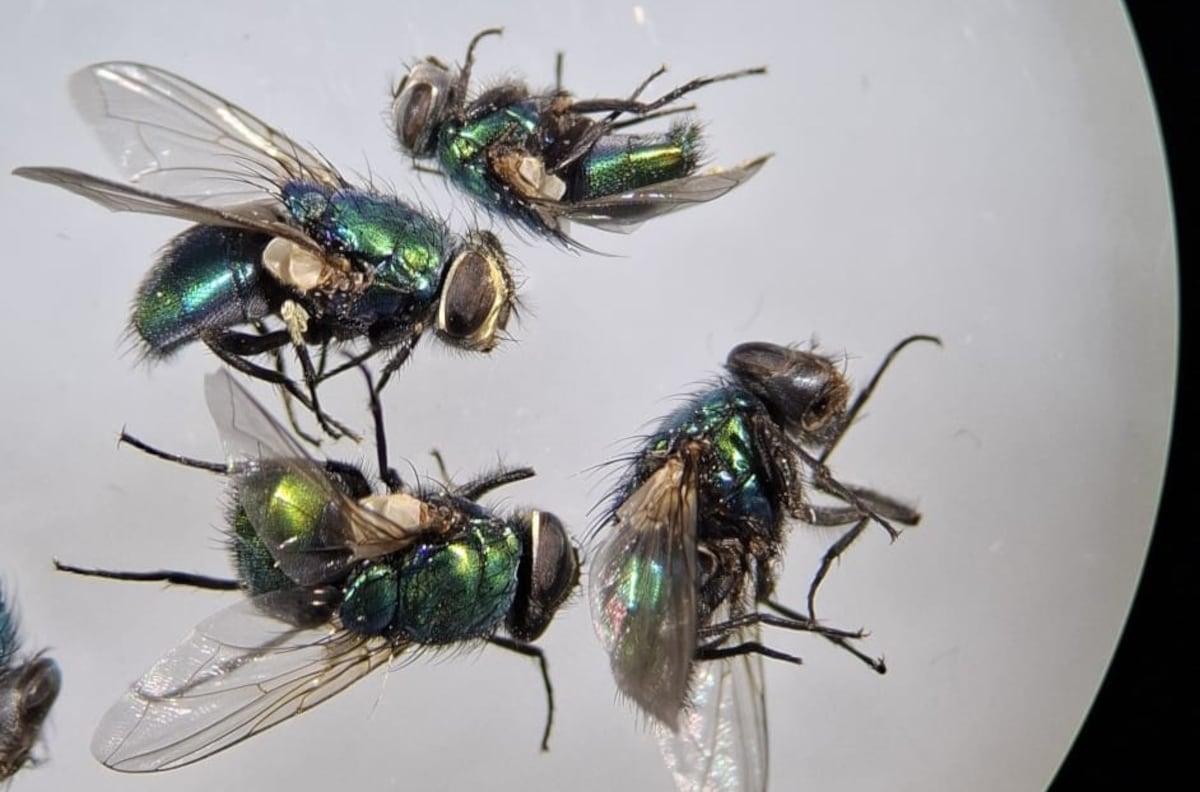
"You're dying. You don't know it yet but the Calliphoridae do. That iridescent green fly that just entered your room belongs to this family of insects. And it smelled you from miles away. It instantly detected the cellular inactivity of your agony (which is imperceptible to humans). The tiny hairs that cover the fly's entire body are acute chemosensory receptors, capable of detecting the first signs of death even before it occurs. This bug is the true grim reaper."
"The fly places its gloomy beauty at the entrance to one of your nostrils, where it's warm and humid an ideal place for its offspring to thrive. Anyone would feel a tickle and easily shake it off but remember, you're dying and you can't move. So, the fly lays hundreds of eggs and flies away peacefully, leaving its offspring inside a good place: you. In a few days, they hatch and the larvae thrive, devouring your flesh. When they're satisfied, they'll crawl away."
Calliphoridae detect early cellular signs of death through acute chemosensory hairs and can locate dying or deceased hosts from long distances. Females deposit eggs in warm, humid body openings such as nostrils, where larvae hatch, feed on soft tissues, then crawl away to pupate and later emerge as adults. The predictable arrival sequence and developmental timing of necrophagous flies provide measurable indicators used to estimate postmortem interval. Moira Battan and Ana Pereira are Argentine research entomologists at CONICET and forensic experts who analyze cadaveric fauna. Cadaveric-fauna analysis combines species succession data and insect development stages to inform medico-legal death investigations.
Read at english.elpais.com
Unable to calculate read time
Collection
[
|
...
]