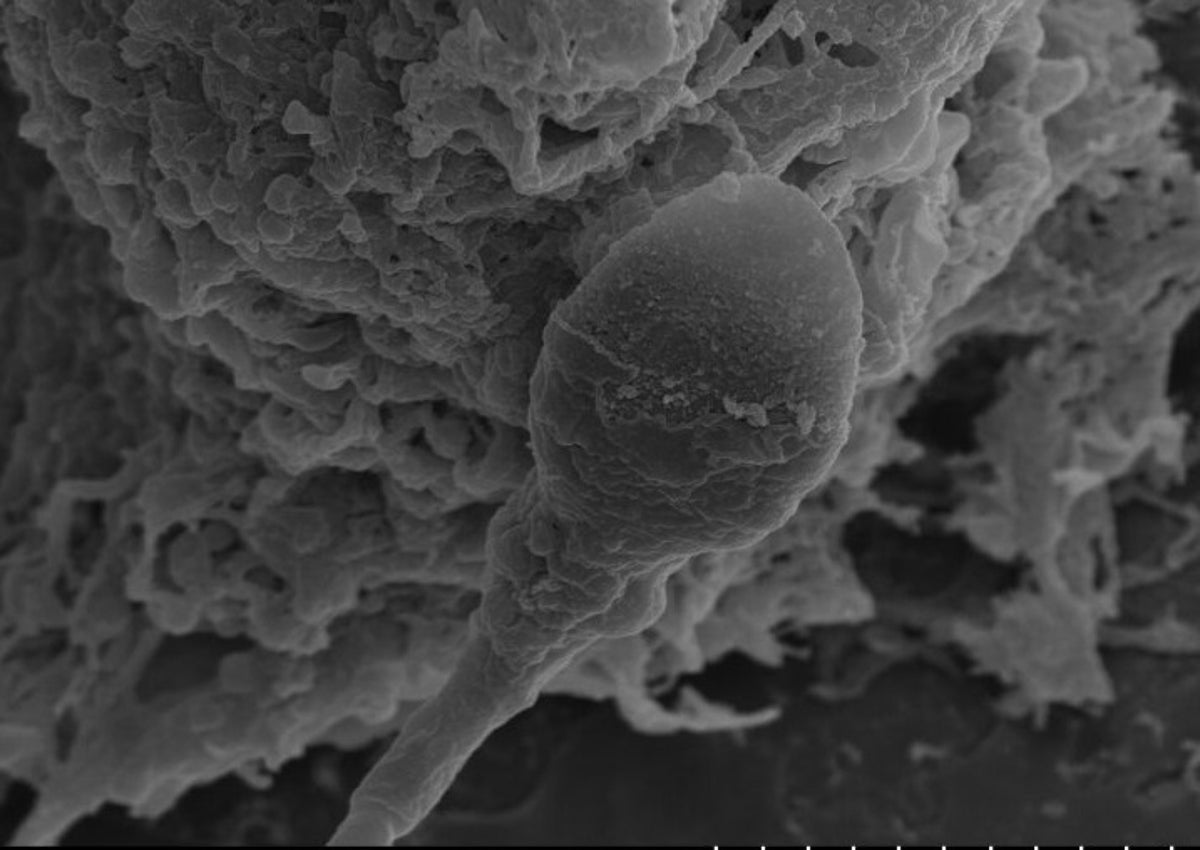
"Under microgravity conditions, the sperm saw impaired directional navigation—in other words, they got lost more often than under typical gravity conditions on Earth."
"The microgravity conditions had a measurable effect on insemination rates compared with Earth's gravity—a 30 percent decline in fertilized eggs during a period of four hours."
"Adding progesterone, a hormone released by the cells on a person's eggs, to the uterus-like chamber helped the sperm better orient themselves under microgravity."
"Understanding whether humans and the species we depend on can successfully reproduce in those environments is not a curiosity; it is a necessity."
A study indicates that human sperm have impaired navigation in microgravity, which could affect reproduction in space. In a microgravity simulation, sperm were less successful in reaching eggs compared to Earth conditions. The study found a 30 percent decline in fertilization rates of mouse eggs in microgravity. Adding progesterone improved sperm orientation in the simulation. Understanding reproduction in space is crucial as future missions to the moon and Mars may involve human families.
Read at www.scientificamerican.com
Unable to calculate read time
Collection
[
|
...
]