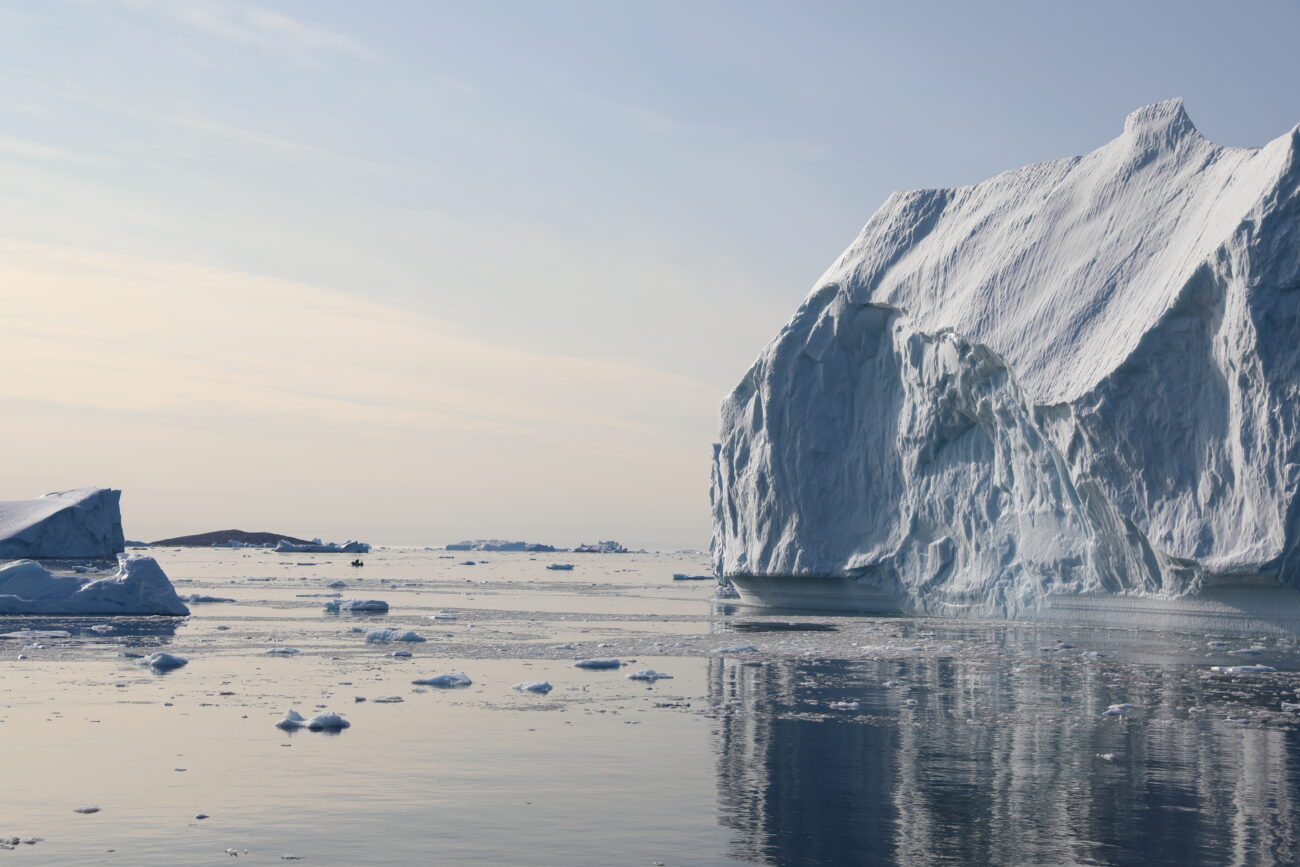
"That seemingly paradoxical dynamic results from several factors. Foremost among them is the rebound of land beneath the Greenland Ice Sheet, a mile-thick body of glacial ice that covers 80 percent of the island and is being lost to melting at a rate of roughly 200 billion tons each year. As the ice sheet loses mass, the land beneath rises."
""When the ice sheet is very large, it has a lot of mass. The sea surface is pulled toward the ice sheet because of that gravitational pull," explains Lewright. "As the ice sheet loses mass, its gravitational pull on the sea surface decreases. That translates into sea level fall. The researchers estimate that this effect will account for up to 30 percent of Greenland's future sea level decline."
Sea levels around Greenland are projected to decline roughly 0.9 meters under low-emissions scenarios and about 2.5 meters under high-emissions scenarios by 2100. The primary driver is glacial isostatic rebound: loss of ice mass causes the underlying land to uplift. A secondary driver is reduced gravitational attraction as the ice sheet shrinks, which pulls less ocean water toward Greenland and can account for up to 30 percent of the local sea-level decline. The Greenland Ice Sheet covers about 80 percent of the island and is losing roughly 200 billion tons of ice per year.
Read at State of the Planet
Unable to calculate read time
Collection
[
|
...
]