"The 'cloud' may be marketed as immaterial, but its architecture is profoundly physical: high-power, high-heat, service-heavy environments that are often sited in remote or low-density areas to take advantage of lower land costs and to minimize friction with nearby communities. Security and risk management further reinforce this logic."
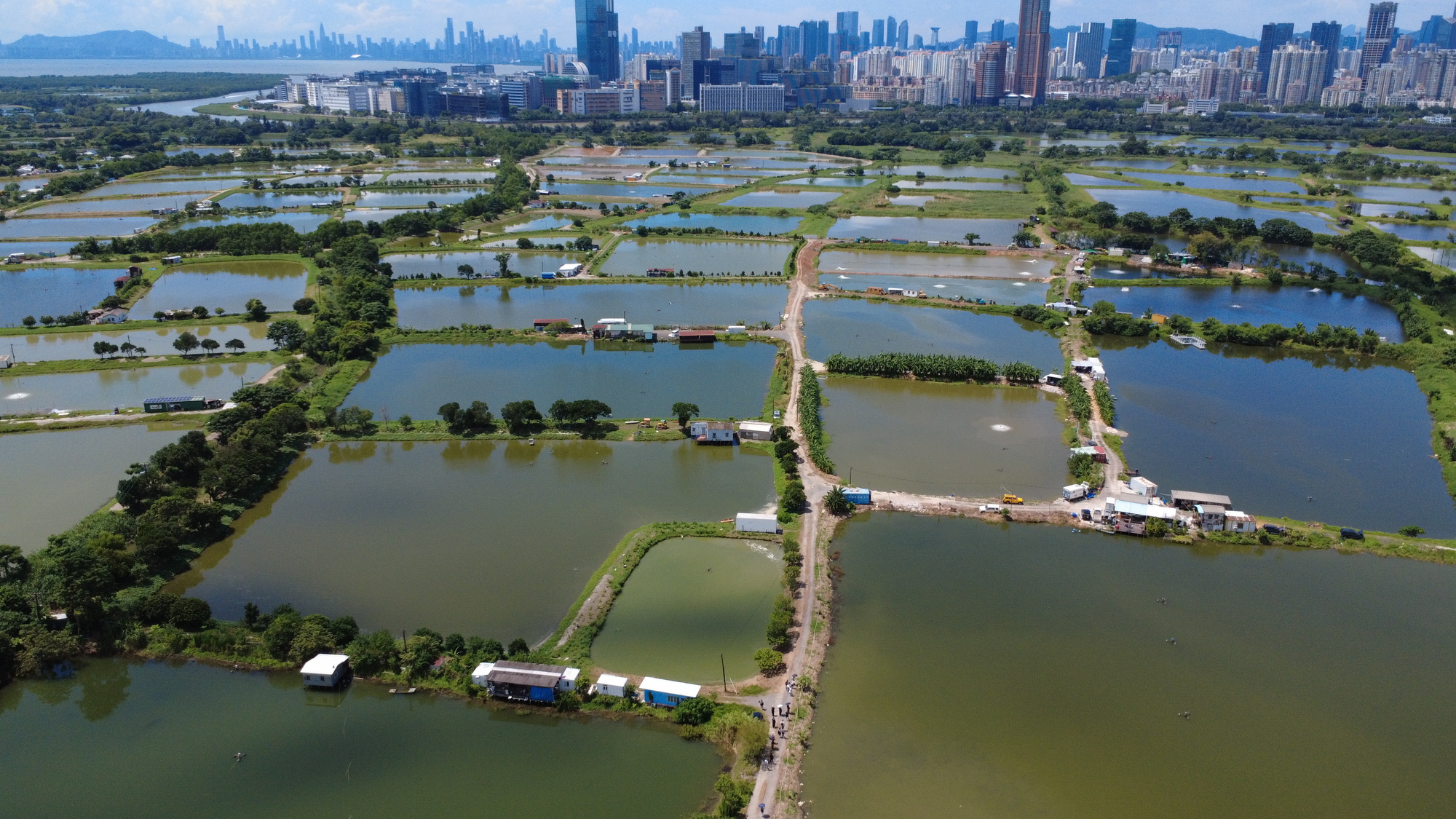
"San Tin is being positioned as one of the next I&T hubs of Hong Kong SAR and the Greater Bay Area, anchoring a major redevelopment agenda. While often described as 'on the outskirts' or reduced to a border zone adjacent to Shenzhen, San Tin is also a living landscape shaped by long histories of village settlement, lineage-based stewardship, and locally sustained economies."
"Its geographic conditions, particularly extensive low-lying tidal land, have supported a durable ecology of fishponds and tidal ponds, including shrimp cultivation, forming not only livelihoods but also a distinctive wetland fabric that has structured the region's spatial and environmental identity."
Data centres supporting AI infrastructure are intentionally sited remotely to minimize community friction, reduce costs, and maintain security around sensitive corporate and government data. However, Hong Kong's development trajectory, particularly the positioning of San Tin as an information technology hub for the Greater Bay Area, threatens this separation model. San Tin represents a living landscape shaped by centuries of village settlement, lineage-based stewardship, and locally sustained economies centred on fishponds and tidal ponds used for shrimp cultivation. This distinctive wetland fabric has structured the region's spatial and environmental identity. The planned redevelopment agenda risks displacing these established ecological and economic systems.
#ai-infrastructure-and-data-centres #san-tin-development #wetland-ecosystems-and-conservation #urban-planning-and-displacement #greater-bay-area
Read at ArchDaily
Unable to calculate read time
Collection
[
|
...
]