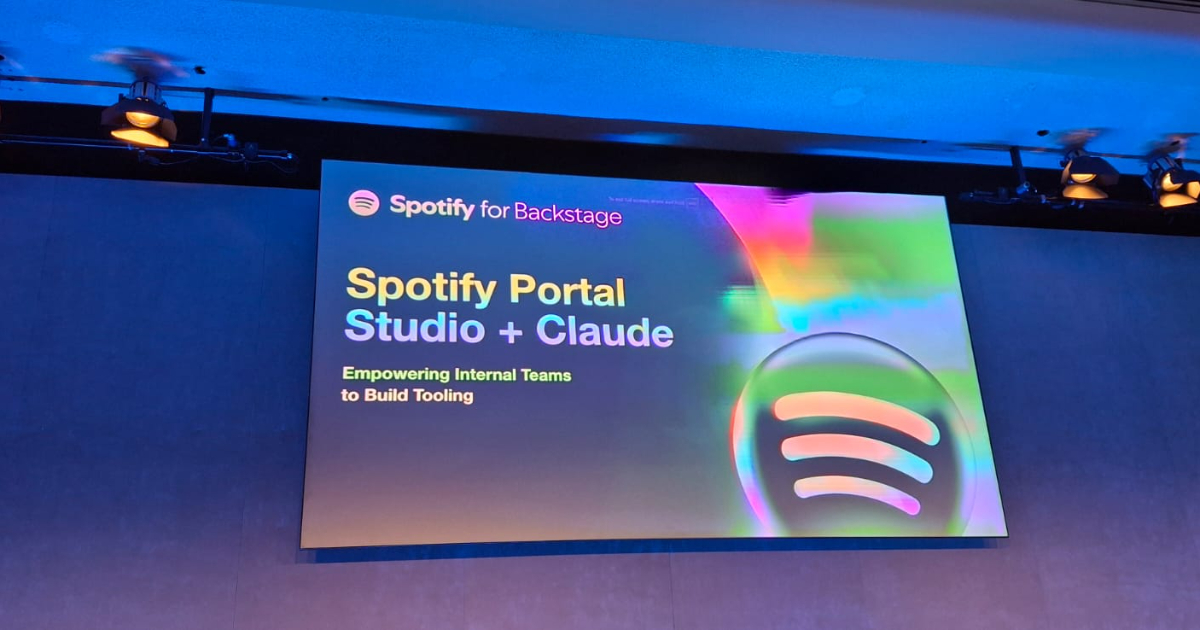
"Many of the tools teams need most, small dashboards, workflow automations, or quick utilities, are too small to justify dedicated engineering resources, yet too important to ignore. As a result, teams often rely on spreadsheets or manual processes, or they build isolated tools that cannot easily be reused."
"Because these tools rarely qualify as large engineering projects, they are often delayed or deprioritized. Over time, teams resort to spreadsheets or ad-hoc scripts that gradually evolve into informal systems. This fragmentation leads to duplicated work across teams and creates operational risk."
"Developer portals centralize access to infrastructure tools, services, documentation, and operational data. Instead of navigating multiple systems, engineers interact with a single platform that exposes internal tools through plugins and standardized interfaces."
Engineering organizations face a persistent challenge: small internal tools like dashboards, workflow automations, and utilities are critical yet too modest to warrant dedicated resources. Teams typically resort to spreadsheets, manual processes, or isolated tools that cannot be reused, creating fragmentation and duplicated work. Spotify addressed this through Portal, an internal developer platform built on the open-source Backstage framework. Developer portals centralize access to infrastructure tools, services, documentation, and operational data, allowing engineers to interact with a single unified platform. By integrating AI-assisted workflows with Portal Studio, Spotify dramatically reduces development time for internal tooling, enabling teams to quickly deliver solutions that maintain consistency and reduce operational risk.
#internal-developer-platform #developer-productivity #ai-assisted-development #infrastructure-tooling #backstage-framework
Read at InfoQ
Unable to calculate read time
Collection
[
|
...
]