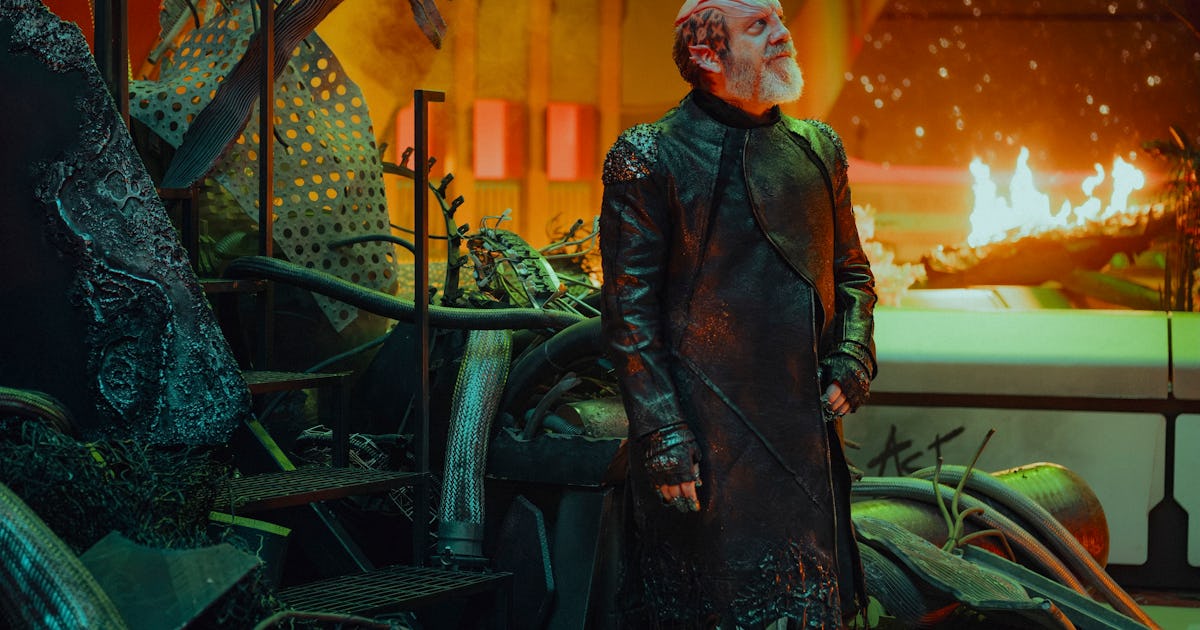
"After nearly a century of taking questionable actions to survive the cataclysm of Burn, the contemporary version of Starfleet in the 32nd Century has emerged as being closer, ideologically, to the Starfleet of the past. But Nus Braka (Paul Giamatti) and the Venari Ral aren't having it. The finale finds Nus putting all of Starfleet on trial, in front of the whole galaxy, not just for alleged warfare crimes, but negligence, too."
""I think Star Trek is only interesting when you're interrogating it," Alex Kurtzman tells Inverse. As the executive producer of all current Star Trek on TV since 2017's Discovery, Kurtzman knows a thing or two about navigating the idea of Trek versus the implementation of Trek. "I think the blind devotion to an idea is ultimately how tyranny finds its way. From a creative point of view, it's the old adage: the villain is the hero of their own story.""
Star Trek has consistently used self-reflection as a narrative tool, questioning Starfleet's altruism and the Federation's ideals rather than simply celebrating them. The franchise frequently explores scenarios where the protagonists are revealed as potentially antagonistic, from Q's trial of humanity in The Next Generation to the Maquis challenging Starfleet colonialism in Deep Space Nine. The Starfleet Academy Season 1 finale continues this tradition by literally putting Starfleet on trial before the entire galaxy. Nus Braka and the Venari Ral challenge Starfleet's actions over nearly a century, accusing the organization of warfare crimes and negligence. Executive producer Alex Kurtzman emphasizes that Star Trek remains compelling only through interrogation of its core ideals, arguing that blind devotion to any idea enables tyranny.
#star-trek-narrative-themes #starfleet-morality-and-ethics #self-reflection-in-science-fiction #trial-episodes #starfleet-academy
Read at Inverse
Unable to calculate read time
Collection
[
|
...
]