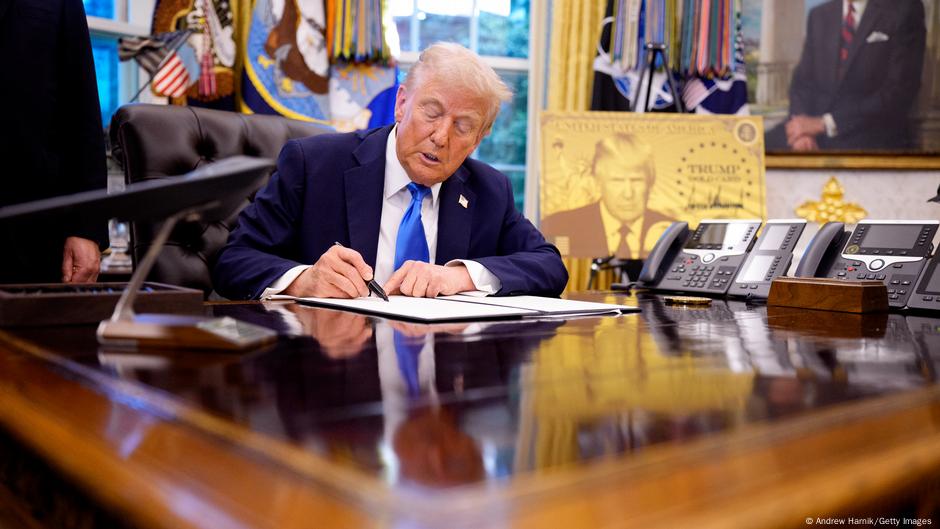
"US President Donald Trump's proposal on Friday to begin charging a $100,000 (85,000) application fee for the H-1B visa for highly skilled foreign workers has left the country's tech sector and universities scrambling to figure out the implications. The announcement came in a so-called proclamation claiming that H-1B visas have been "deliberately exploited to replace, rather than supplement, American workers with lower-paid, lower-skilled labor" and that "systemic abuse of the program has undermined both our economic and national security.""
"Since its introduction in 1990, the H-1B visa program has been mostly used to provide the tech industry with highly skilled foreign workers. There is a limit to the amount of H-1Bs made available each year. The current limit is 65,000, with an additional 20,000 for nonresidents who graduate with a master's degree or higher from a US institution. People in "computer-related" occupations currently account for about two-thirds of visa holders."
"Michael A. Clemens, professor of economics at George Mason University in the US state of Virginia, told DW that the announcement has caused "extreme chaos" and many aspects, including its legality, remain uncertain. "People are still figuring out what this extraordinarily hasty and shock policy announcement even means," Clemens said. "The best interpretation, I think, that we have now is that it is a $100,000 per person payment that applies to at least a new initial employment.""
US President Donald Trump proposed charging a $100,000 application fee for each H-1B visa for highly skilled foreign workers. The proposal prompted immediate confusion across the technology sector and universities about legal scope and implementation. The fee appears aimed at new initial employment applications, but clarity is lacking regarding renewals, reentries, or existing visa holders. The H-1B program, created in 1990, caps visas at 65,000 annually with an extra 20,000 for US master's degree holders. Approximately two-thirds of H-1B holders work in computer-related occupations. Economists warn of extreme uncertainty and cite economic and national security rationales.
Read at www.dw.com
Unable to calculate read time
Collection
[
|
...
]