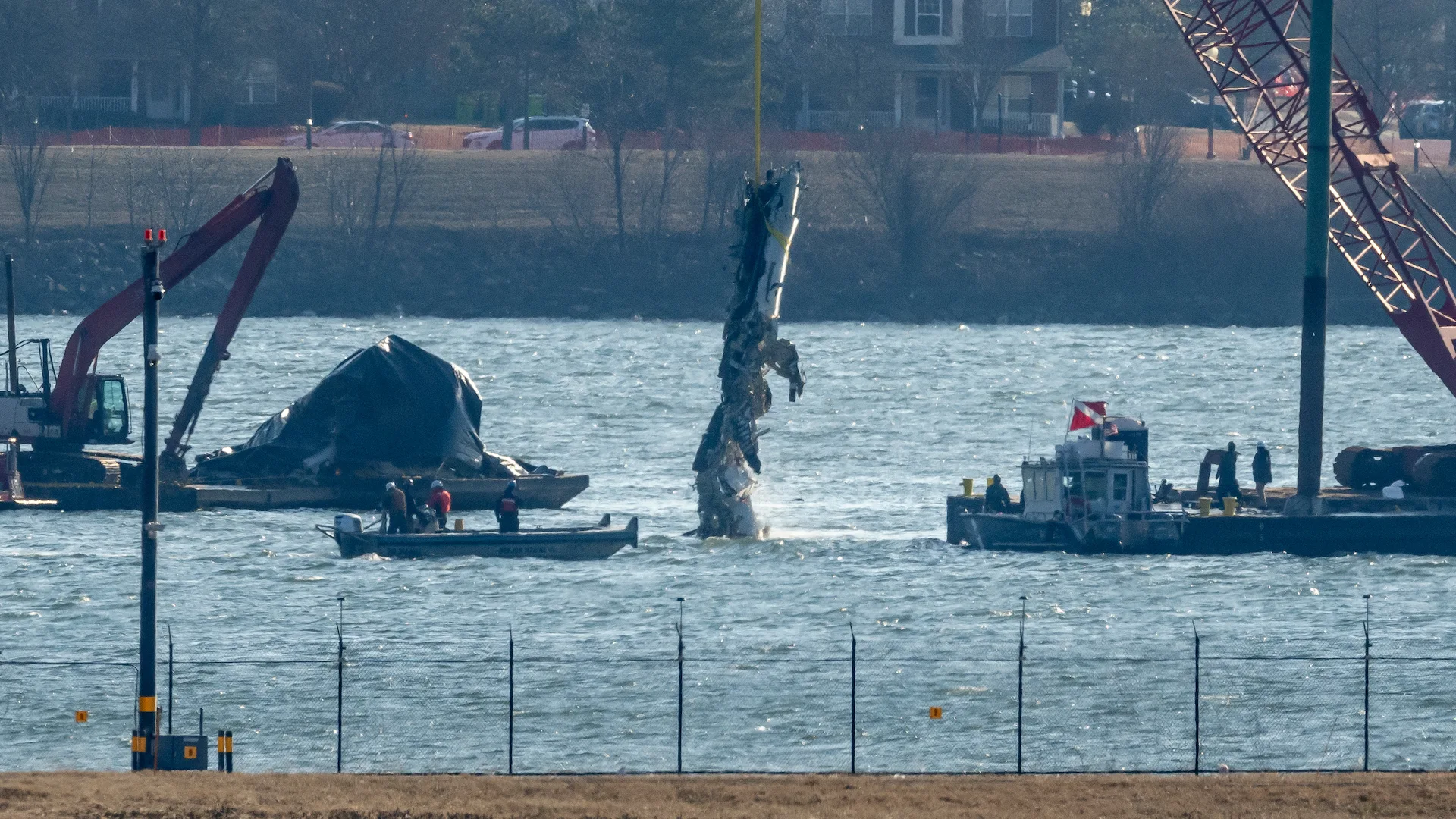
"So many things went wrong last Jan. 29 to contribute to the deadliest plane crash on American soil since 2001 that the National Transportation Safety Board isn't likely to identify a single cause of the collision between an airliner and an Army helicopter near Washington, D.C., that killed 67 people at its hearing Tuesday."
"Instead of writing aviation regulation in blood, let's start writing it in data," said Lilley, who is a pilot himself and earlier in his career flew Black Hawk helicopters in the Washington area. "Because all the data was there to show this accident was going to happen. This accident was completely preventable."
"Over the past year, the NTSB has already highlighted a number of the factors that contributed to the crash including a poorly designed helicopter route past Reagan Airport, the fact that the Black Hawk was flying 78 feet (23.7 meters) higher than it should have been, the warnings that the FAA ignored in the years beforehand and the Army's move to turn off a key system that would have broadcast the helicopter's location more clearly."
A collision between an airliner and an Army Black Hawk near Washington, D.C., on Jan. 29 killed 67 people. The National Transportation Safety Board is unlikely to identify a single cause and will instead detail multiple factors and recommend changes to prevent recurrence. The Federal Aviation Administration made temporary post-crash restrictions permanent to keep planes and helicopters out of the same airspace near Reagan National Airport. Investigations identified a poorly designed helicopter route, the Black Hawk flying 78 feet higher than appropriate, ignored FAA warnings from prior years, and the Army turning off a key location-broadcasting system. Families urge action now to prevent future tragedies.
Read at Fast Company
Unable to calculate read time
Collection
[
|
...
]