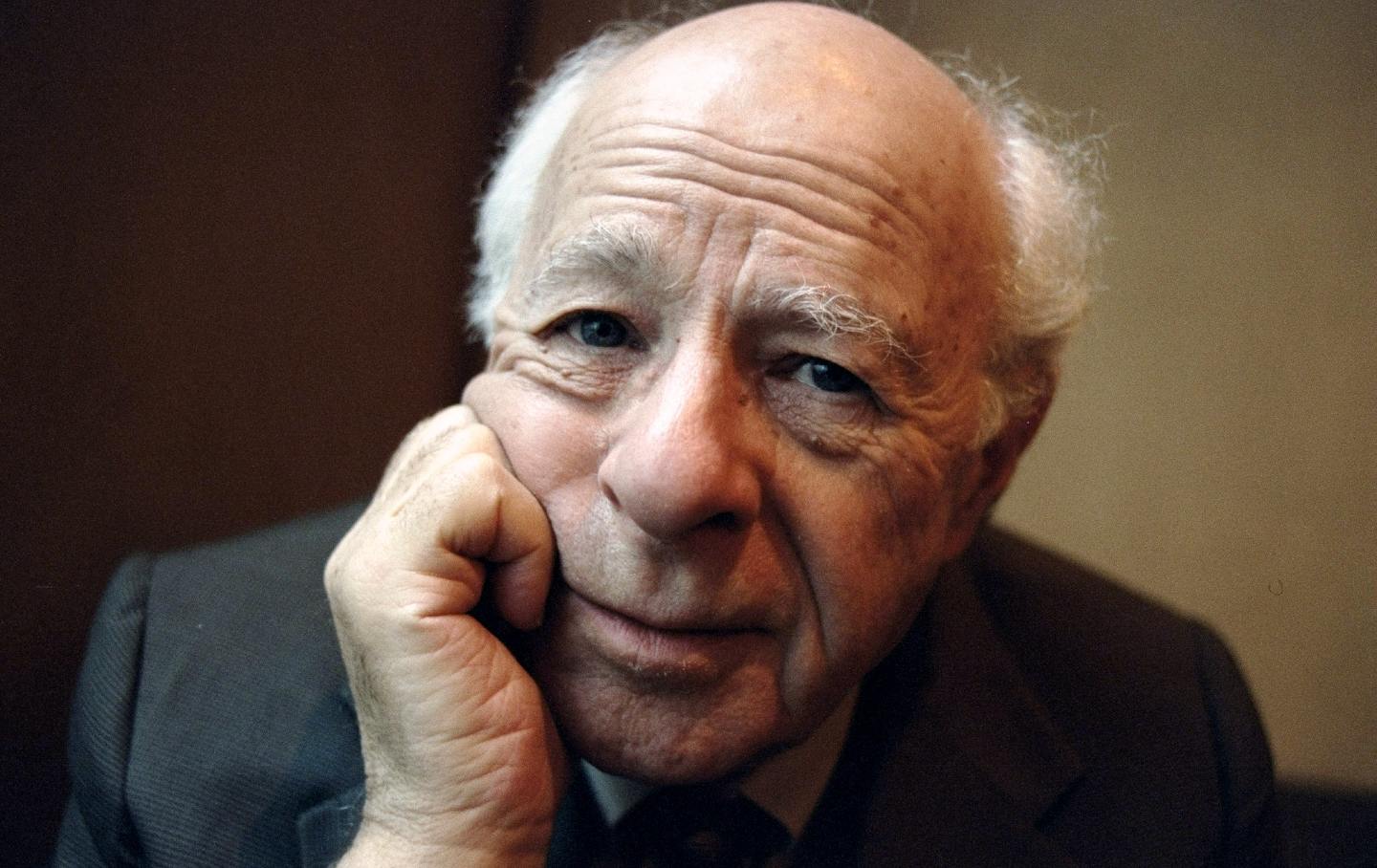
"Postwar Manhattan hosted a tight-knit, disputatious intellectual culture shaped heavily by the sons (and occasionally the daughters) of shtetl-born immigrants. Applying talmudic rigor to secular debates about literature and foreign affairs, they published little magazines whose ideas spread directly from their pages to the highest political offices. While traces of that culture remain- The New York Review of Books, Dissent, and yes, Commentary are all still publishing, as are dozens of other small-circulation journals in the same tradition-"
"its claim on the political zeitgeist has been displaced by a culture that is comparatively dumbed-down, post-literate, and rooted in petty grievances and cheap provocation. The singular figure who bridged these two sensibilities, Norman Podhoretz, is dead at 95. He was the last canonical New York intellectual, and the first of a now-familiar breed of discourse demagogue. A star student born and raised in the slums of Brownsville, Brooklyn to a Yiddish-speaking milkman from Galicia,at the age of 16,"
Postwar Manhattan fostered a close, disputatious intellectual culture shaped by children of shtetl-born immigrants who applied talmudic rigor to secular debates and ran influential little magazines. Those journals transmitted ideas directly into high political offices and sustained a highbrow public discourse. Norman Podhoretz embodied and bridged that tradition and the later, more abrasive style of public argument; he rose from Brownsville, studied under Lionel Trilling, earned notoriety for provocative reviews, and led Commentary for 35 years. Commentary was remade twice under his editorship, and its editorial succession passed to Neal Kozodoy and then to Podhoretz’s son, John.
Read at The Nation
Unable to calculate read time
Collection
[
|
...
]