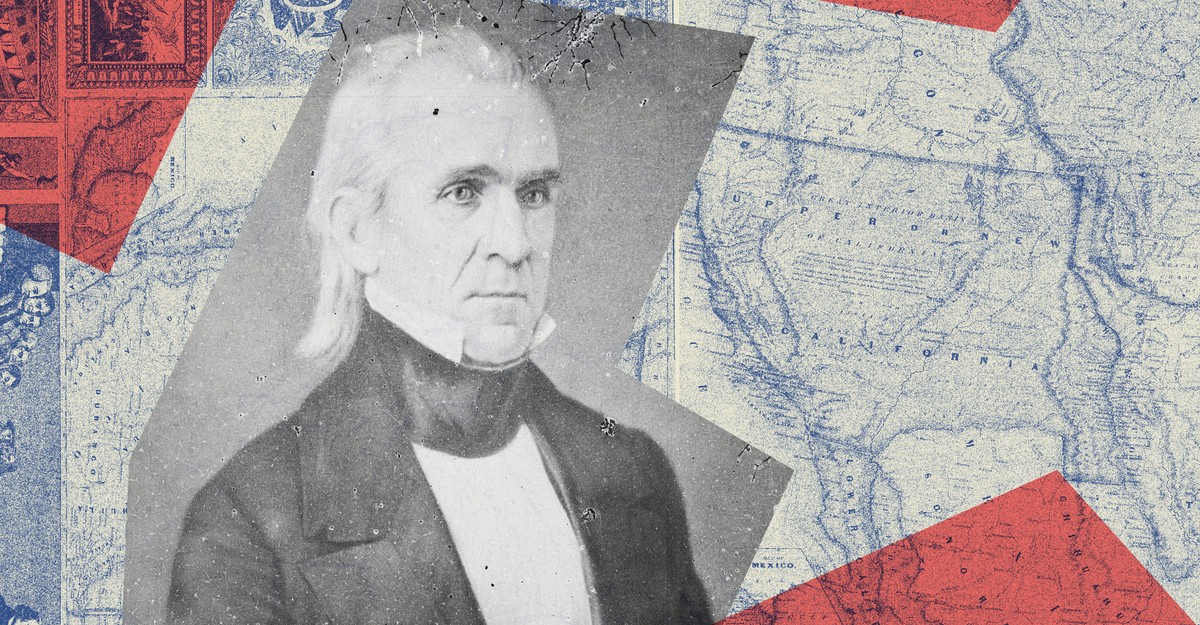
"America's 11th chief executive believed that expansion was America's God-given right and duty. He argued that broadening America's borders would deliver access to natural resources and enhance national security-and that no nation, not even an ally, should get in the way of that. Beginning with the annexation of Texas, which voted to become the 28th state in 1845, Polk aggressively expanded America's footprint, enlarging the young nation more than any other president."
"Polk sought to acquire Cuba, even if it meant the end of America's alliance with Spain, pursuing an ambition that dated back to Thomas Jefferson. He preached the doctrine of "manifest destiny," proclaiming that American settlers were divinely ordained to expand. He warned that if Cuba wasn't annexed by the U.S., it would fall into British hands, leaving America vulnerable to attack."
"In a 21st-century revival of the same expansionist spirit, Donald Trump is fixated on annexing Greenland whether America's Danish allies like it or not. Other presidents have invoked the legacies of George Washington and Abraham Lincoln, but for Trump, Polk is among the list of paragons. He has referred to Polk as a "real-estate guy" who got "a lot of land," and he hung Polk's portrait in the Oval Office last year, replacing one of Jefferson."
James K. Polk asserted that American expansion was a God-given right and duty and argued that broader borders would yield natural resources and stronger national security. Polk annexed Texas in 1845 and expanded U.S. territory more than any other president. He sought Cuba, warning that British control would imperil the United States, and offered Spain $100 million in 1848 to relinquish its claim. In the 21st century, Donald Trump revived similar expansionist impulses by pursuing Greenland, citing security, mineral resources, Arctic positioning, and expressing admiration for Polk.
Read at The Atlantic
Unable to calculate read time
Collection
[
|
...
]