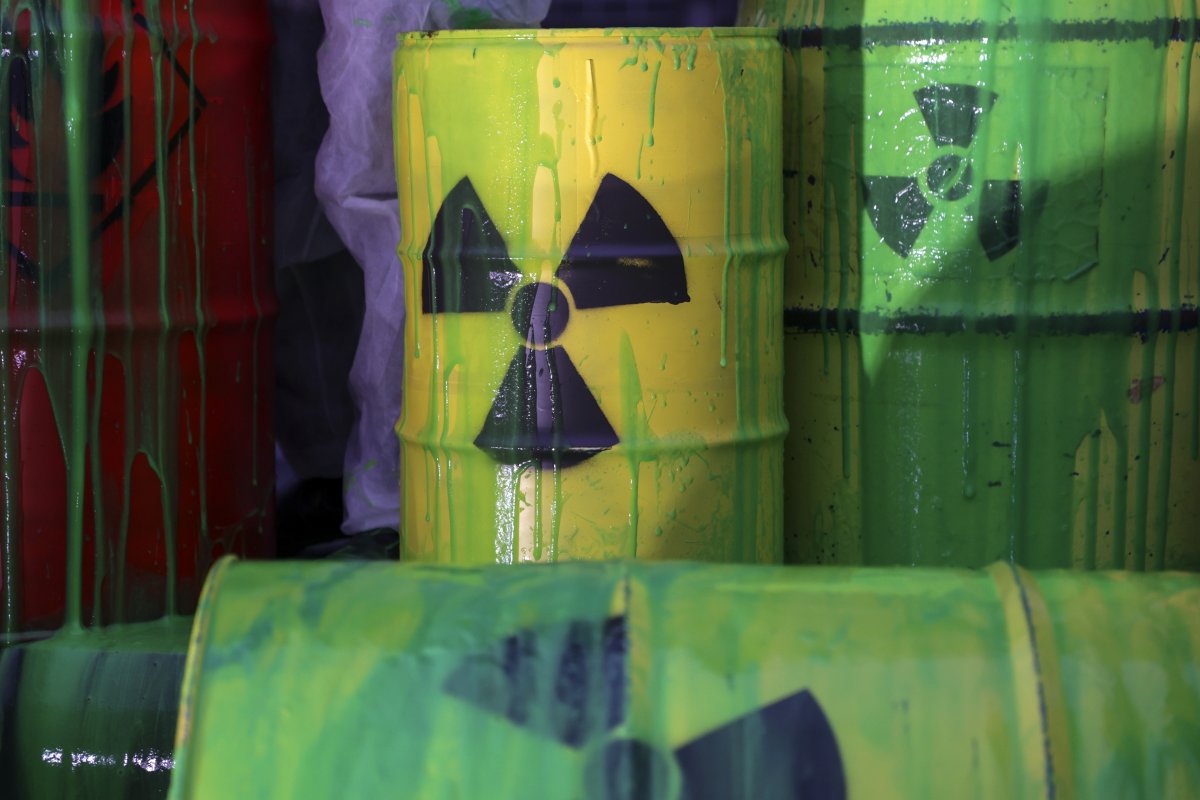
"Since the first nuclear power plant went online in the US in December of 1957, administrators have been scrambling for a solution to the inevitable and decidedly nasty waste that comes out at the end of the process. Almost seven decades have gone by, but an elegant solution has remained elusive - due to the inconvenient fact that the waste is horrendously toxic, a potential target for terrorists, and needs to be stored securely for thousands of years."
"New reporting by Reuters reveals the Trump administration's latest attempt to solve the nuclear waste dilemma. A fresh directive by the Department of Energy is asking individual US states to volunteer to host a new "permanent geological repository" for spent fuel rods. States wouldn't be taking on the burden without any reward. The upside would be potential economic growth in the form of vast investments and "thousands of jobs," in an era when layoffs and austerity are taking a heavy toll."
"For interested states, the nuclear waste storage would come as part of a Nuclear Lifecycle Innovation Campus, production sites planned around new reactor buildouts and uranium enrichment facilities. In other words, while having to store the country's nuclear waste forever might be a drag, it could come with a boost to energy production, jobs, and exports. Per Barrett, states including Utah and Tennessee already expressed an interest. Any other state which hopes to hop on has 60 days to answer the call."
Highly radioactive spent nuclear fuel remains hazardous, a terrorism risk, and requires secure storage for thousands of years. The Department of Energy is inviting states to volunteer to host a permanent geological repository for spent fuel rods, offering economic incentives and job creation. Storage would be integrated into a Nuclear Lifecycle Innovation Campus alongside new reactor buildouts and uranium enrichment facilities to spur energy production and exports. States including Utah and Tennessee have shown interest, and other states have a 60-day window to respond. The plan connects to a goal of quadrupling US nuclear capacity by 2050, emphasizing small modular reactors that remain largely untested domestically.
Read at Futurism
Unable to calculate read time
Collection
[
|
...
]