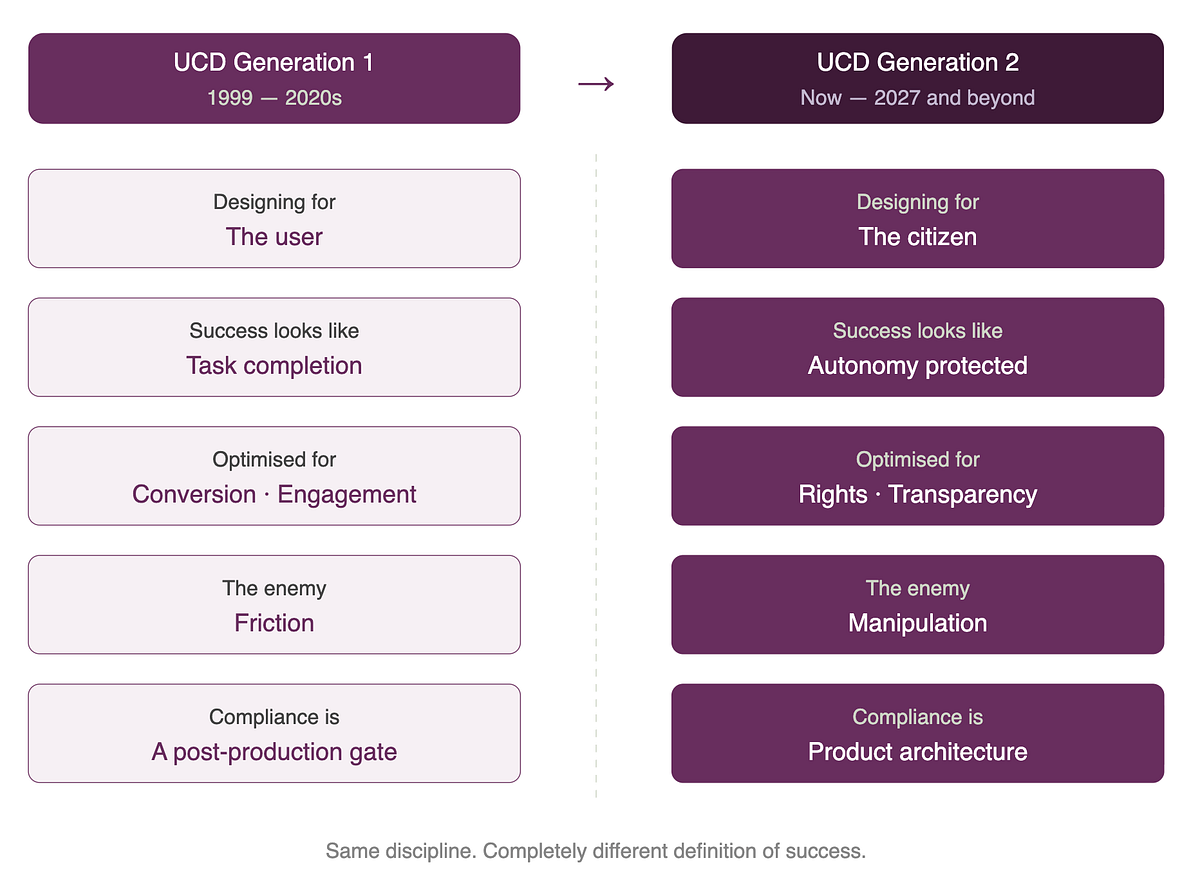
"In the year 2000, Steve Krug published three words that became the operating philosophy of a generation of designers: Don't Make Me Think. The message was radical in its simplicity - technology should work for people, not the other way around."
"Twenty-five years later, how did that dream turn out? We did not build the information superhighway. We built an attention economy."
"As the friction between humans and technology dissolved, something else happened. We became the product. Not metaphorically. Structurally. Architecturally."
"Our attention became a commodity. Our data became a strategic asset. Our decision-making became the territory over which platforms competed."
Over twenty-five years, technology evolved to prioritize usability, making interfaces intuitive and seamless. However, this shift led to a commodification of human attention and data. The initial promise of technology as a liberating force transformed into an attention economy where users became products. The usability movement, while successful in reducing friction, inadvertently contributed to a structural change where human decision-making and data became competitive assets for platforms, highlighting a significant departure from the original vision of technology enhancing human capabilities.
Read at Medium
Unable to calculate read time
Collection
[
|
...
]