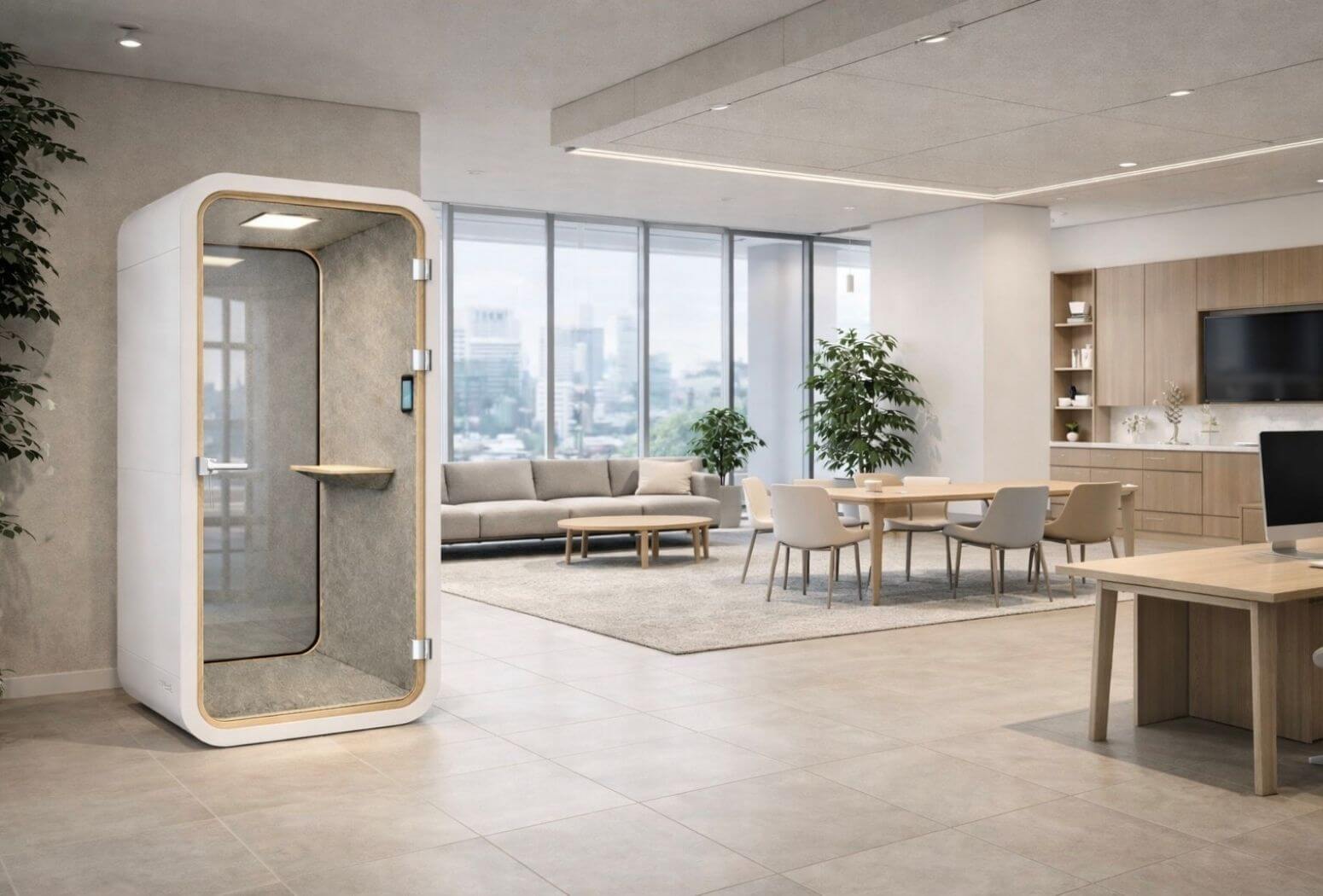
"Contemporary workplaces promise collaboration, yet they increasingly struggle to provide spaces for privacy. In an era dominated by open-plan layouts, small acoustic spaces like phone booths and focus pods have become essential for maintaining productivity and privacy. However, the paradox of "booking conflicts" alongside "underutilized spaces" has turned these areas into operational challenges. The question, then, is how workplaces can balance efficiency, productivity, and individualized user experiences within increasingly complex environments."
"Acoustic pods function as essential spaces for calls, focused work, and private conversations. Yet their management often reveals a structural tension. Systems based on rigid advance booking tend to suppress spontaneity, while first-come-first-served approaches frequently result in disputes, uncertainty, and idle time. At the core of this imbalance lies a fundamental mismatch: traditional scheduling models fail to reflect the fragmented, short-term, and often unpredictable ways these spaces are actually used."
"Addressing this issue requires more than optimizing availability. It also involves rethinking the quality of the experience inside the pod. Preferences related to ventilation, lighting modes, or furniture configurations also play a crucial role in shaping whether these spaces truly support concentration and comfort. Designing for efficiency, therefore, must go hand in hand with designing for adaptability and user-centered control."
Open-plan offices create a need for acoustic pods for privacy and productivity. Booking conflicts and underutilization create operational challenges. Rigid advance booking suppresses spontaneity; first-come-first-served fosters disputes and idle time. Traditional scheduling models mismatch short-term unpredictable usage patterns. Quality of pod experience—ventilation, lighting, furniture—affects concentration and comfort. Solutions should treat time as a resource and add dynamic buffers. Smart interfaces can visualize time as modular 15-minute blocks on interactive touchscreens, enabling more responsive, adaptable, and user-centered control. Balancing efficiency, productivity, and individualized user experience requires designing for adaptability and user control. Patented smart booking approaches can integrate visual time blocks and dynamic buffers to reduce conflicts and underuse while preserving spontaneity.
Read at ArchDaily
Unable to calculate read time
Collection
[
|
...
]