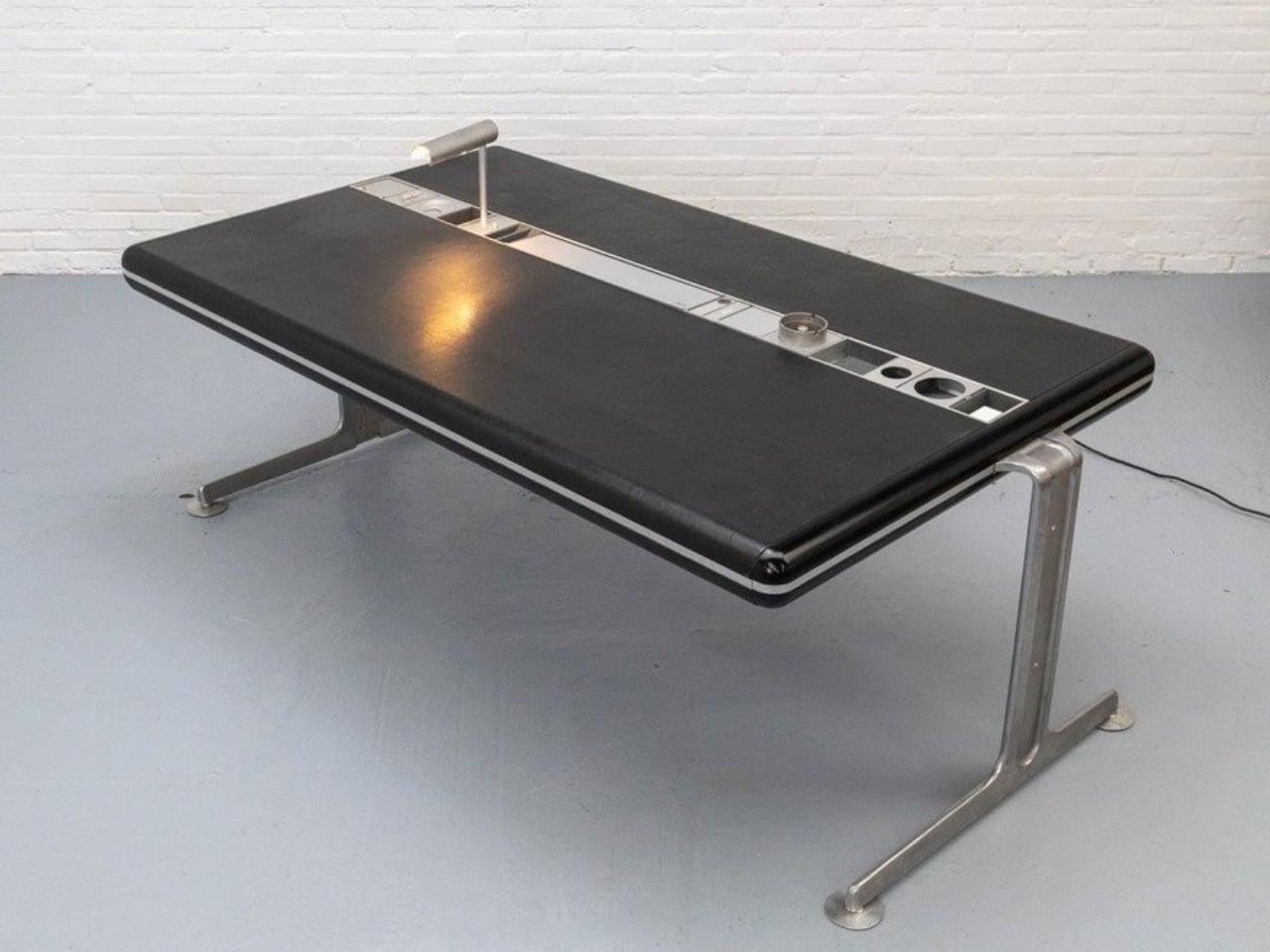
"Linder built a recessed aluminum rail directly into the desk surface. Into that rail, you slot accessories: a rotating desk lamp, a clock, a calendar, a mechanical countdown timer presumably for meetings, small storage compartments for pens and miscellaneous objects, and, because it was the '70s, an ashtray."
"Linder looked at the way people used a desk and decided that the answer wasn't more storage hidden underneath, but a curated surface system you could reconfigure based on what you actually needed."
"That's not a small idea. That's the kind of thinking that entire product categories are built on today. It's about designing for adaptability rather than completeness, which is a genuinely harder problem to solve."
Alex Linder's Executive Desk from the 1970s showcases modular design principles that prioritize adaptability. The desk features a recessed aluminum rail for customizable accessories, including a lamp, clock, and storage compartments. Linder's design eliminates traditional drawers, focusing instead on a curated surface that can be reconfigured based on user needs. This approach reflects a deeper understanding of functionality and user interaction, challenging the notion that modular design is a modern innovation. The desk's aesthetic and practical elements highlight the timelessness of Scandinavian design principles.
Read at Yanko Design - Modern Industrial Design News
Unable to calculate read time
Collection
[
|
...
]