"About 70% of new installs of a Chrome extension I co-built never come back for a second session. The empty state is the single biggest reason. We rebuilt it three times. The version that performed worst was the one that looked most like every modern AI product."
"For most of UI history, the empty state was where designers spent their best work. Templates, sample data, a guided tour, a 60-second video, a CTA labeled “Start here.” Then AI products shipped. The empty state became a centered text field with placeholder copy that says “Ask me anything.” Every AI tool launched since 2023 ships a variation of the same blank prompt. We called this minimalism. It isn't minimalism. It is the absence of design."
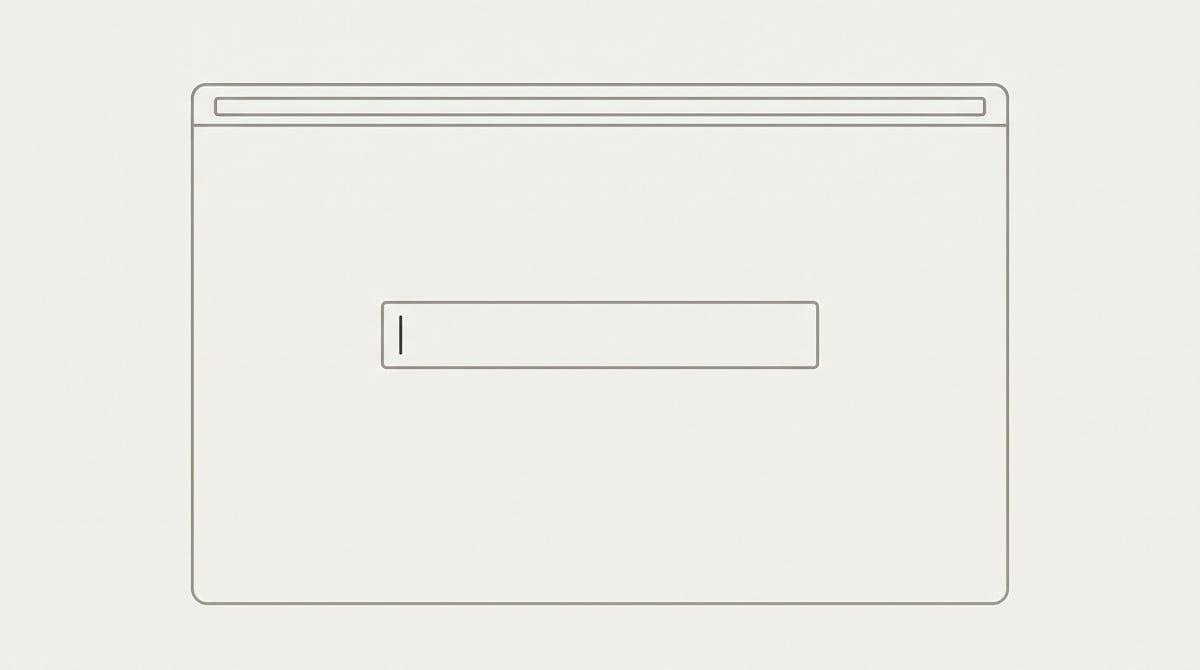
"This is what most AI products show you on first open. The blinking cursor is supposed to be the affordance. It isn't one. Credit: Image by author, designed in Canva."
"The empty state, the screen a new user sees on first open, was historically the most over-designed surface in any software product. Linear, Notion, Figma, Airtable, Slack, Trello, Intercom, Asana all invested years in their first-run experiences. There was a reason. Don Norman established in The Design of Everyday Things that a well-designed object communicates its function"
Most AI products present a first-open experience dominated by a centered prompt box with a blinking cursor and placeholder text like “Ask me anything.” Empty states historically received extensive design work using templates, sample data, guided tours, short videos, and clear calls to action. New installs of a Chrome extension show that about 70% do not return for a second session, and the empty state is identified as the biggest reason. Rebuilding the empty state three times produced the worst performance when it resembled modern AI product patterns. The result is described as a lack of design rather than minimalism, reducing user understanding of what to do next.
Read at Medium
Unable to calculate read time
Collection
[
|
...
]