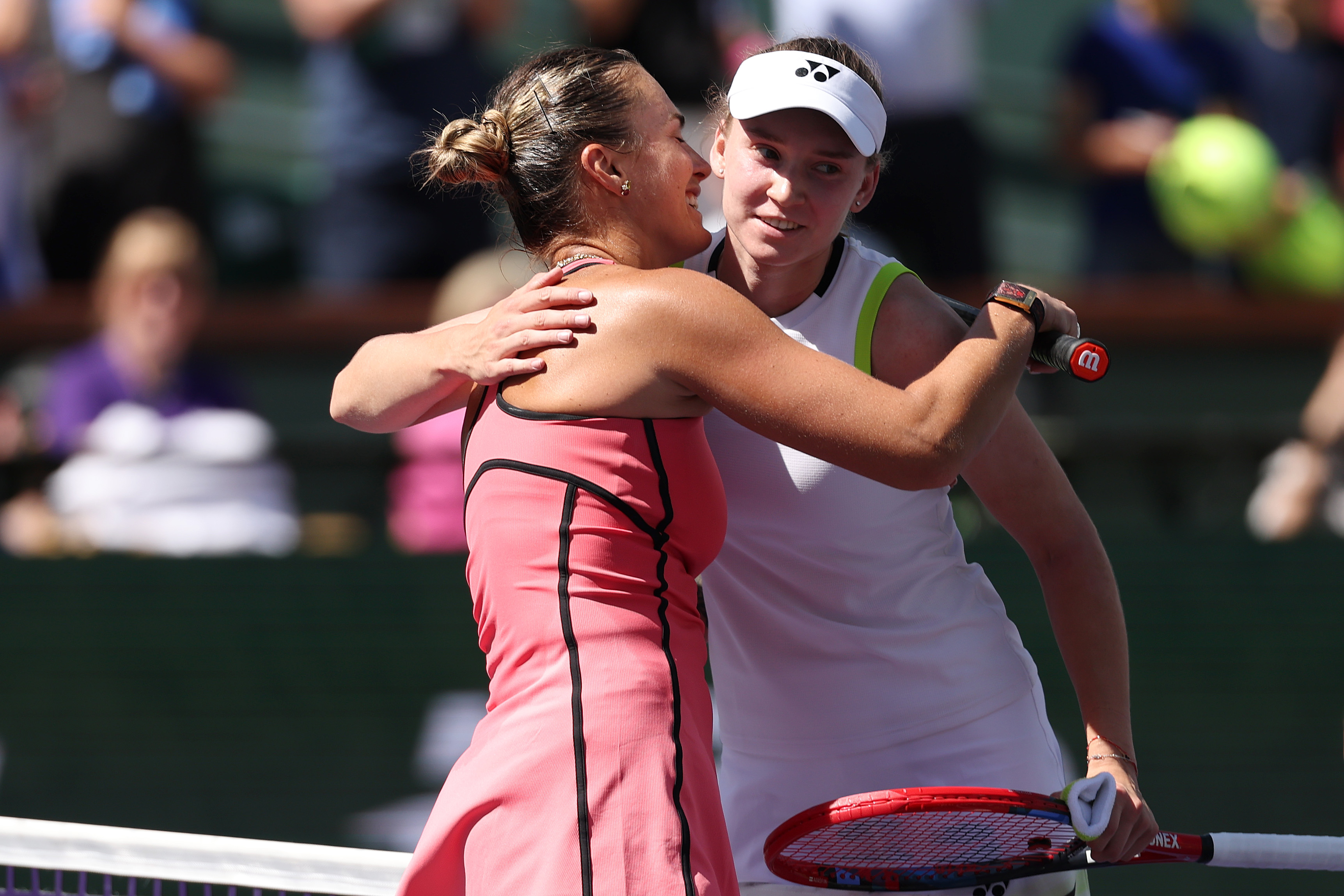
"Raw power is winning out these days. While one of the great pleasures of the sport is watching the intersection of sharply contrasting styles of play, I have temporarily set aside all those nuances. The main matchup I want to watch right now involves two players with almost identical agendas: Hit the winner at the soonest opportunity."
"Despite being unambiguously the best player on the tour for a while now-she's now held the No. 1 ranking for 81 consecutive weeks, and she is the most consistent performer at the majors-her title haul doesn't quite live up to her reputation. From the start of the 2025 season up to the 2026 Indian Wells final, Sabalenka had played in 11 finals and won just five of them."
"Even at its best, Sabalenka's tennis is a volatile compound. Self-implosion is always on the menu. World-beating tennis and abject misery are separated by perhaps two ill-timed unforced errors. Sabalenka has point-ending power, some of the best the WTA has ever seen, but she rather vividly illustrates that this can also be a curse: The onus is almost always on her to finish the rally."
Modern tennis increasingly favors aggressive, power-based play over extended rallies and defensive strategies. Aryna Sabalenka and Elena Rybakina exemplify this trend, both prioritizing early winners over drawn-out exchanges. In their 16th career matchup at Indian Wells, Sabalenka claimed her first title at the event by saving a match point in the deciding tiebreak. This victory held significant narrative weight, as Sabalenka had won only five of eleven finals since the 2025 season despite holding the No. 1 ranking for 81 consecutive weeks. Rybakina had previously defeated Sabalenka twice in major finals and maintained a 12-match winning streak against top-10 opponents. Sabalenka's power-based game, while capable of producing world-class tennis, carries inherent volatility and places constant pressure on her to finish points decisively.
Read at Defector
Unable to calculate read time
Collection
[
|
...
]