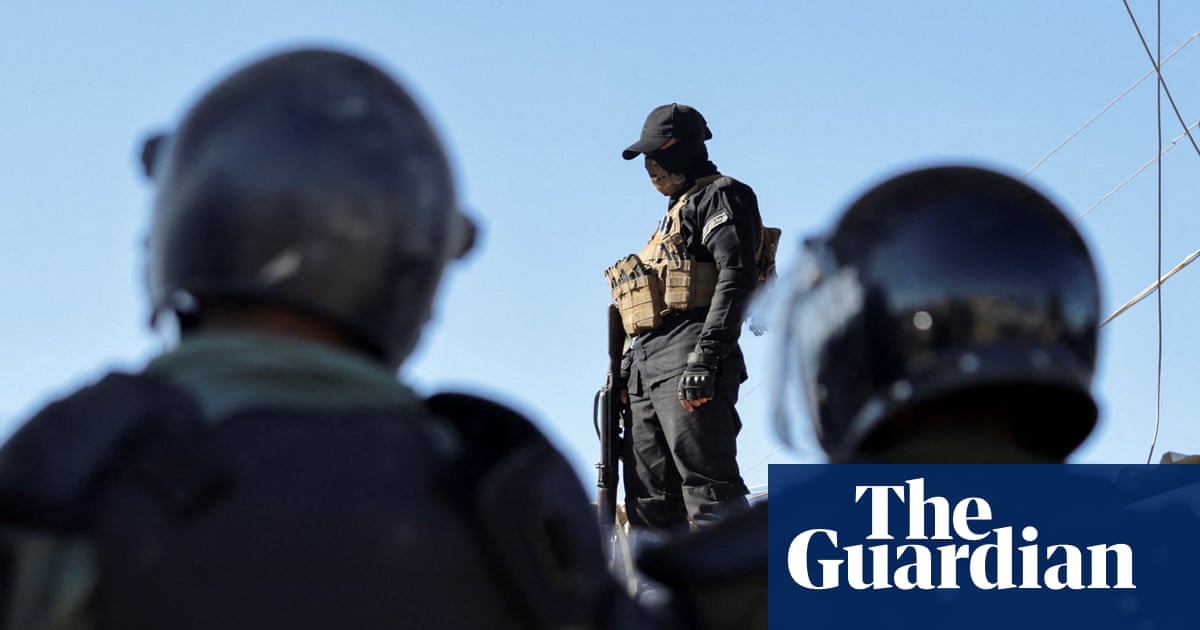
"All of a sudden, two major provinces that were under the Kurdish forces' control fell in a number of hours and Syrian government forces swept in, he tells Annie Kelly. Soon the forces were at al-Hawl camp, the largest camp holding suspected Islamic State militants and then they were taking it over. In the chaos of the handover, more than 100 prisoners escaped and not all were found again."
"The camps have long been controversial: al-Hawl has an area filled with foreign fighters whose governments, for the most part, refuse to take them back. Then there are the women and children, some of whom have grown up at the camp. Thousands are languishing there, suspected but never tried. The first thing you notice about al-Hawl is how far away it is from everything else in the world, Christou says."
The Syrian government rapidly retook large areas of the north-east and moved on to al-Hawl camp, the largest facility holding suspected Islamic State militants. During the handover more than 100 prisoners escaped and many were not recovered. Al-Hawl contains foreign fighters whose home governments largely refuse repatriation, alongside thousands of women and children, some born in the camp, who remain suspected but untried. The camp is remote, vast, and heavily fenced, making management difficult. The Syrian state lacks resources after a 14-year civil war and may struggle with long-term detention, posing broader regional security risks.
Read at www.theguardian.com
Unable to calculate read time
Collection
[
|
...
]