"The explanation, which has gained some currency in U.S. media, is at best half-true. Quite a bit of infighting is indeed happening within the Iranian regime. However, it does not map neatly onto a military-versus-civilian divide, and it does not suggest that Iran's negotiating team is disempowered to speak for the country."
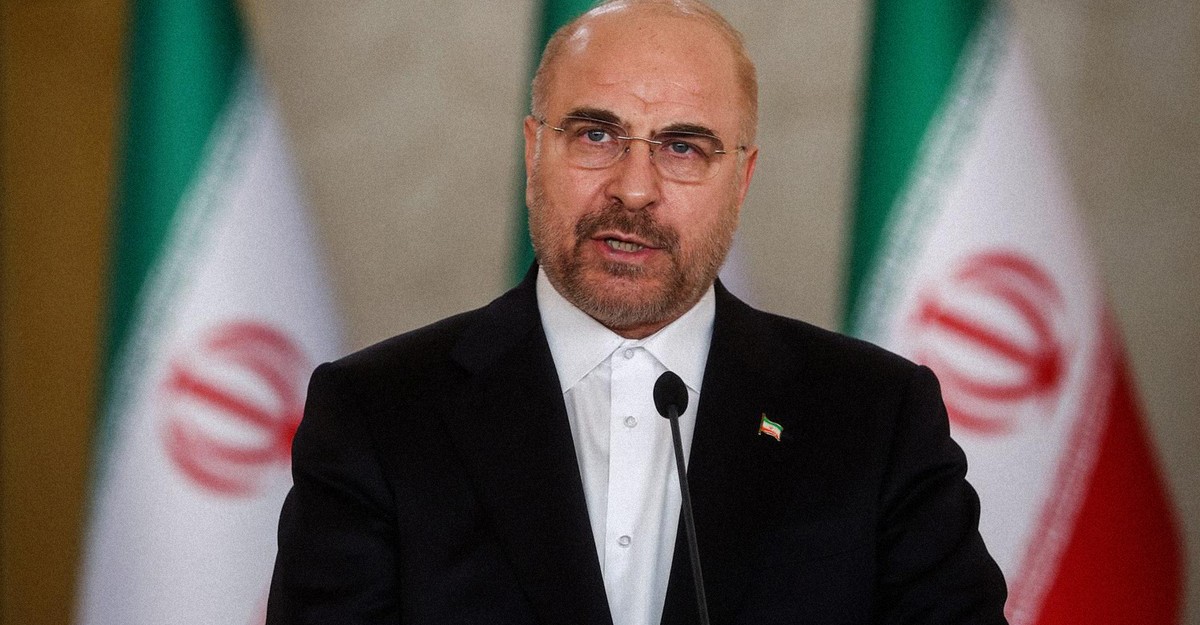
"Consider the role of Mohammad Baqer Qalibaf, the man who led the Islamabad talks with Vice President Vance. His American interlocutors can't quite decide where to place him in their schema of Iran's internal politics."
"Qalibaf is the speaker of Iran's Parliament, but he has amassed power mostly through his membership on the Supreme National Security Council and its smaller subsidiary, the Defense Council. The Defense Council was founded last summer to consolidate Iran's military leadership."
The Trump administration claims U.S.-Iran talks are stalled due to infighting in Tehran, suggesting military hard-liners hinder civilian diplomats. While infighting exists, it does not align with a clear military-civilian divide. Iran's negotiating team remains empowered. Mohammad Baqer Qalibaf, speaker of Iran's Parliament, exemplifies this complexity, holding significant authority through his roles on the Supreme National Security Council and Defense Council. His influence stems from his military background and leadership during the Iran-Iraq war, complicating perceptions of Iran's internal politics.
Read at The Atlantic
Unable to calculate read time
Collection
[
|
...
]