"The landmark 2016 peace deal between the Colombian government and the largest insurgent army in Latin America succeeded in some ways: the Revolutionary Armed Forces of Colombia (Farc) agreed to lay down their weapons, and the violence that had racked the country was substantially reduced."
"When Gustavo Petro, a former member of another rebel faction, became president in 2022, he pledged to achieve total peace, signing deals with all of the country's armed groups, including leftwing rebels and organised crime factions."
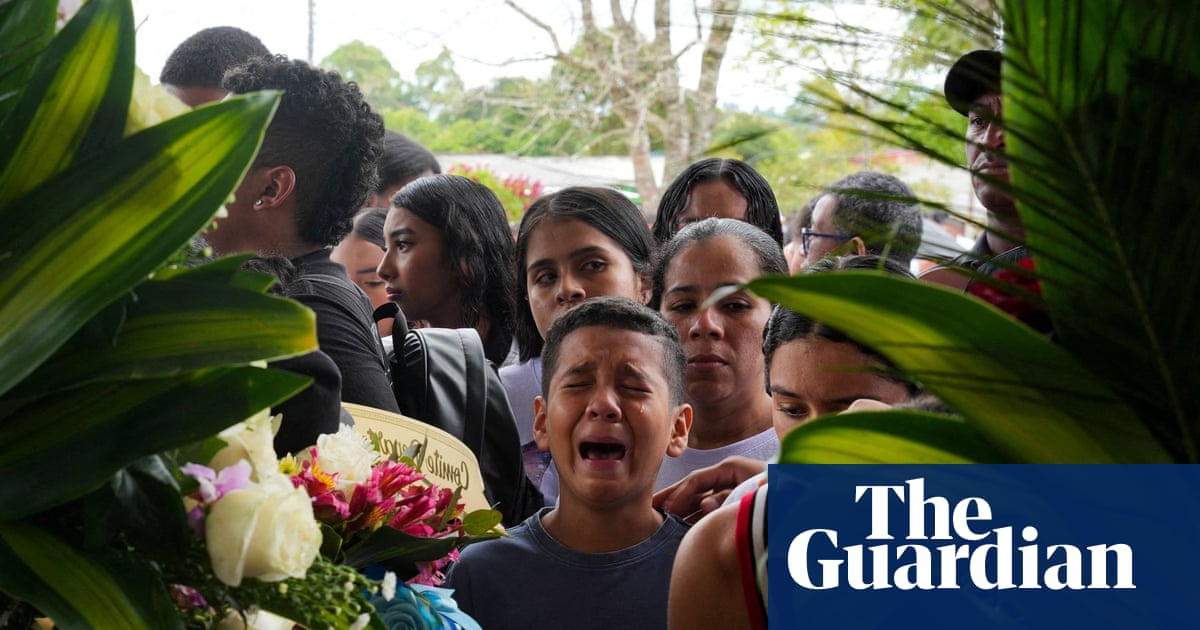
"Twenty-one people were killed in a bombing on a major road at the weekend, one of the deadliest attacks on civilians in the country's history, carried out by one of the most powerful Farc dissident groups, the Central Command."
"Petro's peace promise has become a key issue before the election's first round on 31 May, with his chosen candidate supporting the continuation of the peace program."
The 2016 peace deal between the Colombian government and Farc reduced violence but did not resolve the armed conflict. Implementation was slow, and dissidents rejected the agreement. President Gustavo Petro, elected in 2022, aimed for total peace by negotiating with various armed groups. However, violence has surged, with increased homicides and attacks, including a recent bombing that killed twenty-one. The upcoming election is heavily influenced by the ongoing conflict and Petro's peace initiatives, with his candidate supporting the continuation of the peace program.
Read at www.theguardian.com
Unable to calculate read time
Collection
[
|
...
]