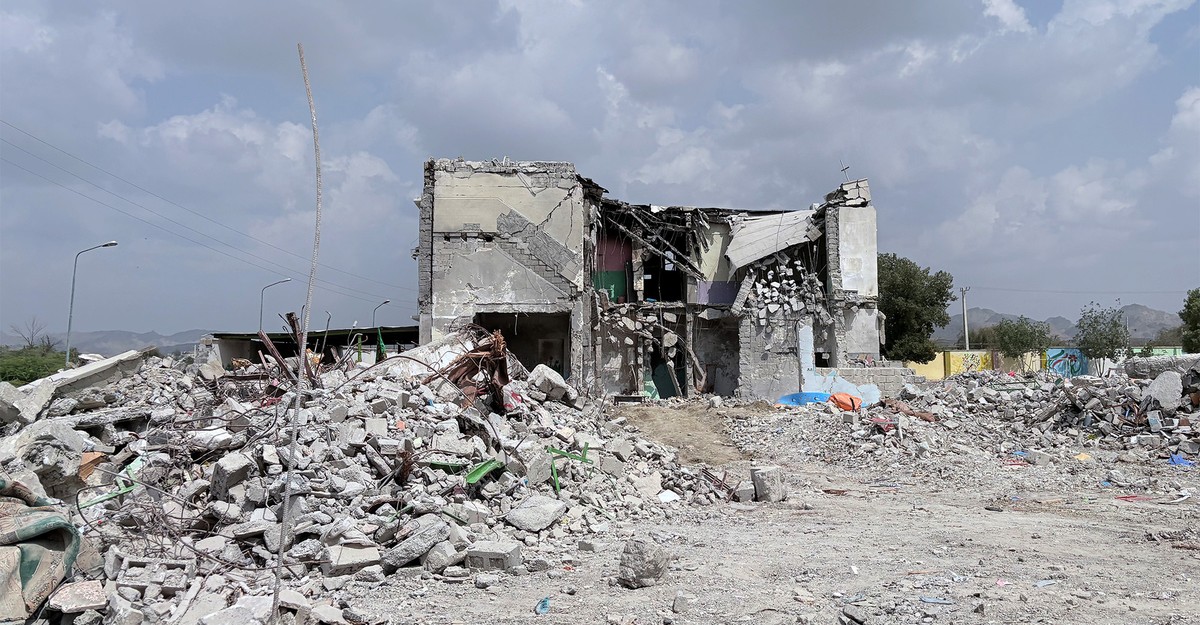
"What is more troubling than the possibility of error is the instinct to deny responsibility when the facts point clearly in one direction. President Trump has so far shown a reluctance to accept blame for the strike. That response may feel politically convenient, but it misunderstands something fundamental about leadership and American strength."
"Great powers don't strengthen their credibility by pretending obvious mistakes never happened. Acknowledging mistakes in war does not project weakness. It demonstrates confidence."
"In 1988, during the Iran-Iraq War, the Navy cruiser USS Vincennes mistakenly shot down an Iran Air passenger plane, Flight 655, over the Persian Gulf, killing 290 civilians. President Ronald Reagan expressed deep regret, and the United States later compensated the victims' families."
War inevitably produces tragic incidents despite disciplined military operations. The recent bombing of a school in Iran appears to have been carried out by U.S. forces, resulting in civilian casualties. Rather than denying responsibility when evidence clearly indicates error, leadership requires acknowledging such mistakes. Accepting blame for military errors strengthens credibility and demonstrates confidence in American institutions. Historical precedents show that great powers have acknowledged tragic incidents, including the My Lai massacre during Vietnam, the USS Vincennes shooting down of Iran Air Flight 655 in 1988, and the NATO bombing of the Chinese embassy in Kosovo. These acknowledgments, coupled with investigations and compensation, reflected responsible leadership.
#military-accountability #leadership-responsibility #civilian-casualties #historical-precedent #credibility-and-transparency
Read at The Atlantic
Unable to calculate read time
Collection
[
|
...
]