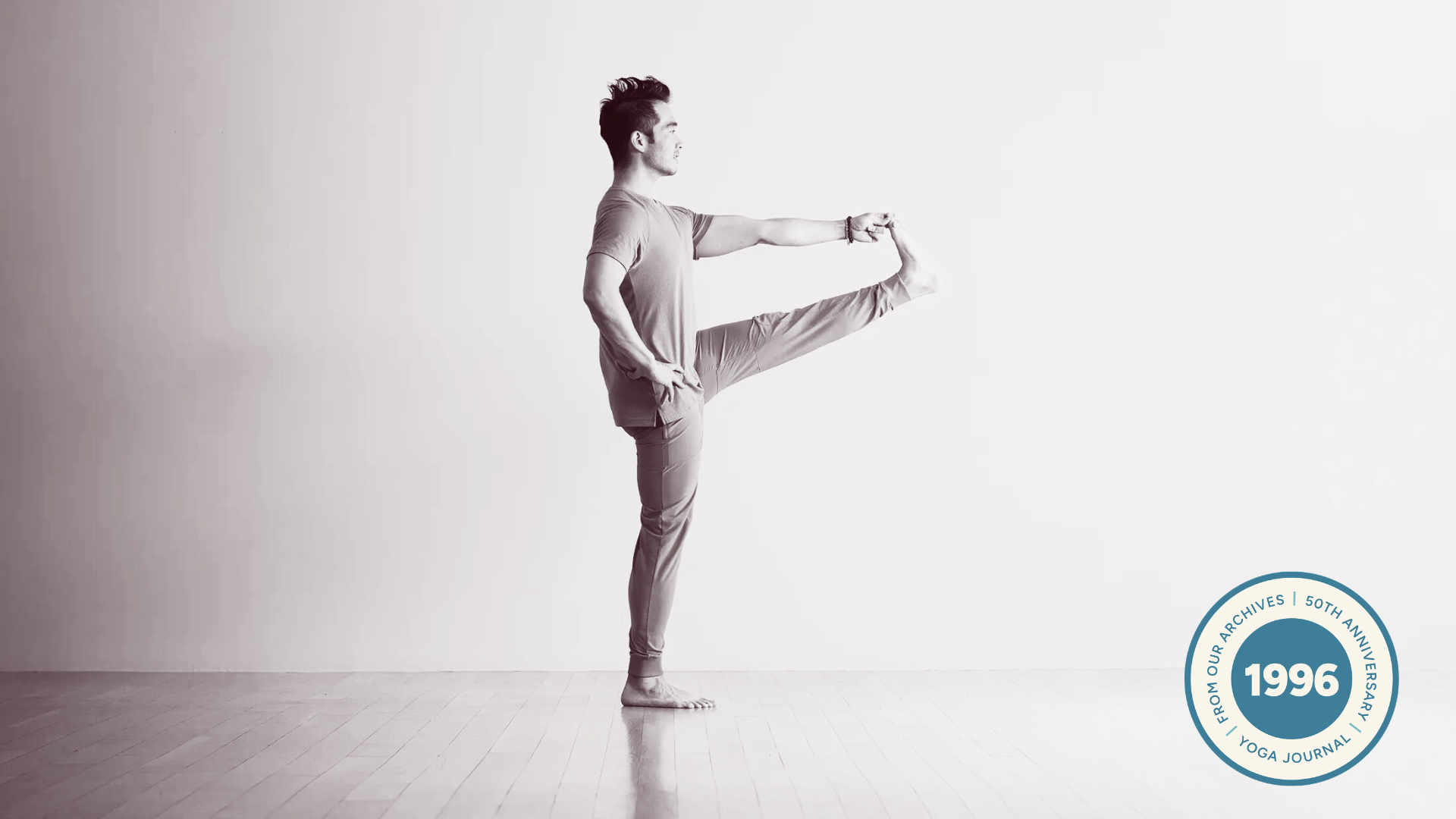
"We usually think of yoga postures as static physical positions, a perception perhaps encouraged by connotations of the word "posture." But postures are better conceived of as coordinated sequential movements with a beginning, middle, and end, more like a movie than a photo. It's the middle phase—which is just one aspect or frame of the entire process—that we tend to isolate and emphasize as "the posture," virtually ignoring what comes before and after it."
"Mountain Posture (Tadasana), a basic upright stance, is the jumping off point, as well as the terminus, of all the standing postures. It is a condition of poise in which our major skeletal segments—the skull, rib cage, pelvis, and spine—are strung like beads on the thread of our body's central line of gravity."
"Much of the success of this middle phase—whether we actually "fit in" or become fitful or discomfited—depends on our willingness to consciously immerse ourselves in the transition, to stay alert and receptive during the passage and not hurry ahead to what we imagine to be the destination."
Yoga postures are better understood as coordinated sequential movements rather than static physical positions. Mountain Posture (Tadasana) serves as both the starting point and endpoint for all standing postures, establishing proper skeletal alignment and foundational awareness. The middle phase of a posture—the transition and active positioning—requires conscious immersion and alertness rather than rushing toward an imagined destination. Success depends on staying receptive during the passage between positions. Utthita Hasta Padangusthasana, meaning elevated hand-and-big-toe posture, exemplifies this principle by beginning and ending in Tadasana while asking practitioners to explore an unusual standing position.
Read at Yoga Journal
Unable to calculate read time
Collection
[
|
...
]