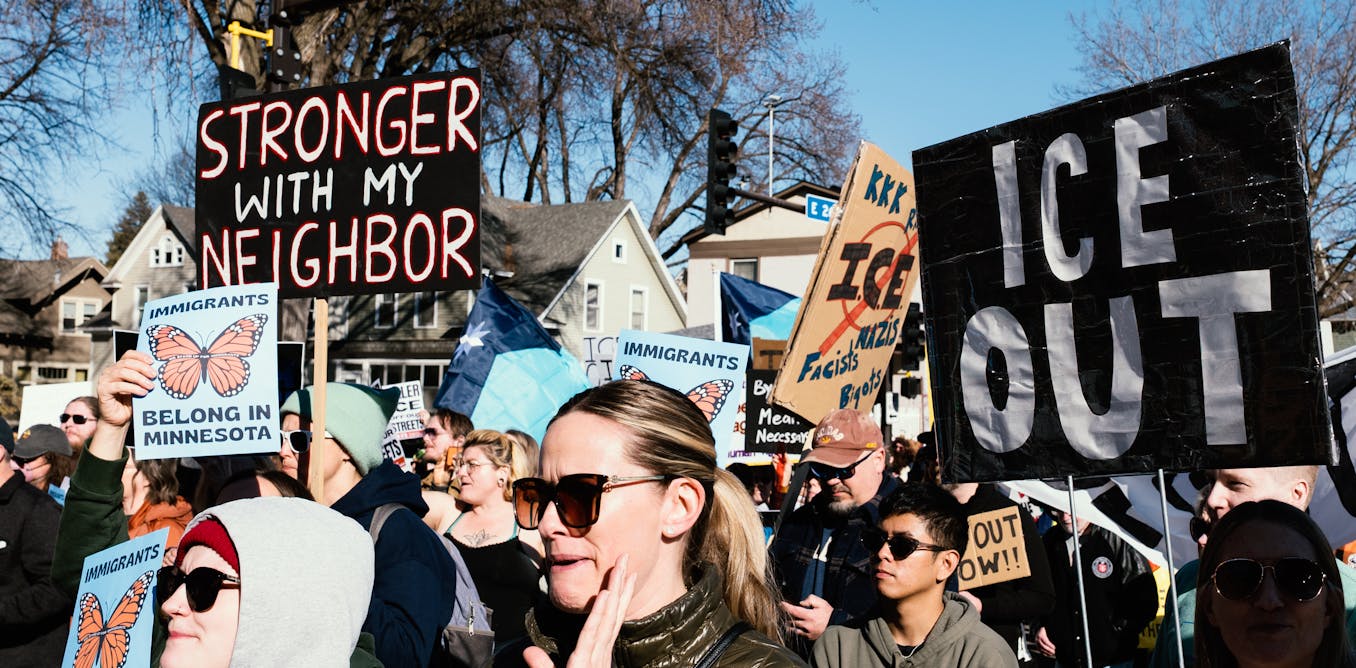
"Simply put, mutual aid is when communities work together to distribute resources people need to survive, whether it's food, shelter, clothing or help paying bills. Unlike charity or government assistance, mutual aid is decentralized, grassroots-led and not channeled through nonprofits or government agencies."
"Within weeks, the number of federal agents in what the Department of Homeland Security dubbed "Operation Metro Surge" had topped 3,000, outnumbering those in local police forces and ushering in widespread fear and uncertainty. As in other cities, including Los Angeles and Chicago, "ICE Watch" volunteers in Minneapolis sound 3D-printed whistles and car horns to alert neighbors during ongoing raids."
"Federal agents have targeted schools and bus stops, apprehending adults and children. Parents and neighbors across the region have begun patrolling school drop-off zones to shield students from federal immigration actions."
Mutual aid—decentralized, grassroots-led resource distribution through communities rather than nonprofits or government—has flourished in Minneapolis during recent crises. The COVID-19 pandemic, George Floyd's death, and Operation Metro Surge, which deployed over 3,000 federal agents for immigration enforcement, catalyzed community organizing. Residents organized ICE Watch volunteer networks using 3D-printed whistles to alert neighbors during raids, with constitutional observers documenting details. Parents patrolled school zones to protect students from federal apprehension. Crowd-sourced campaigns directed rent assistance to families afraid to work. Minnesota's mutual aid networks have historical roots in the state, enabling rapid mobilization during these interconnected crises.
#mutual-aid-networks #immigration-enforcement #community-organizing #grassroots-resistance #minneapolis
Read at The Conversation
Unable to calculate read time
Collection
[
|
...
]