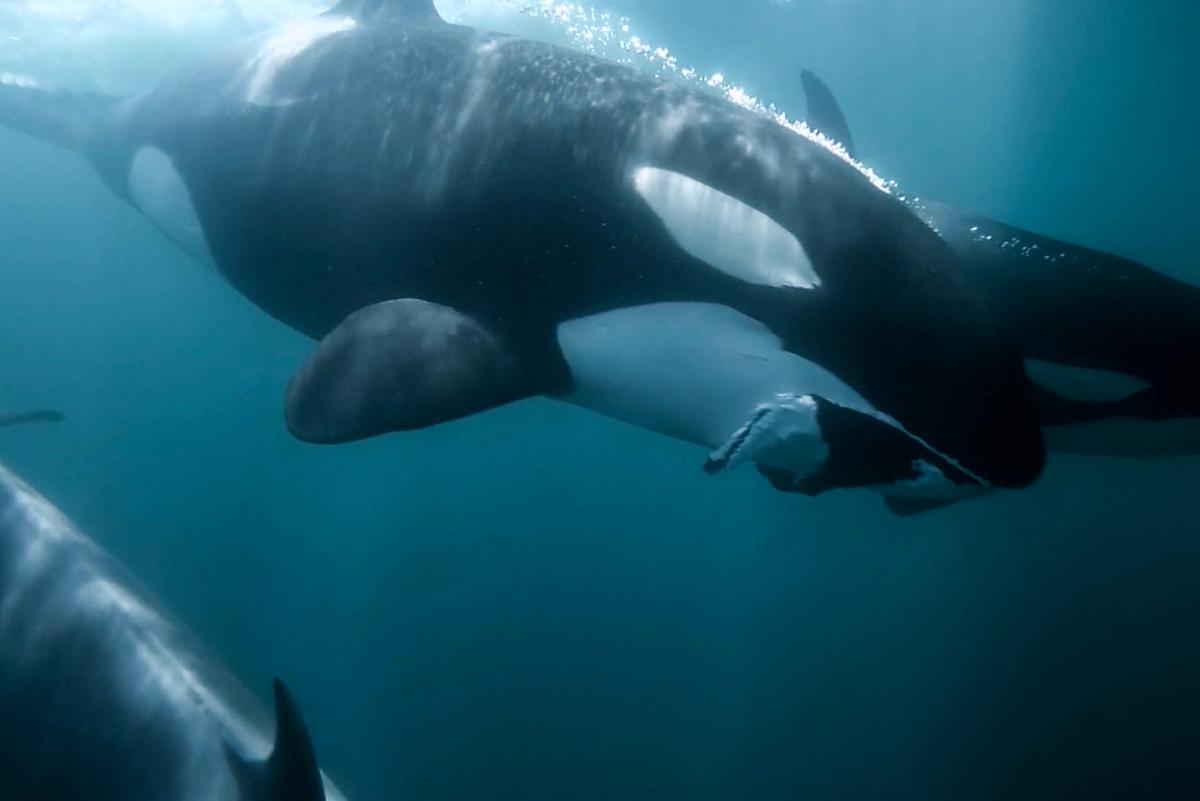
"'Orcas are psychos,' quipped a close friend recently. He wasn't joking, nor was he ill-informed. In fact, he is probably the world's leading historian of whales and people. He had just watched a BBC Earth clip, narrated by David Attenborough, in which three killer whales separate a male humpback calf from his mother in the waters of Western Australia. The video's closing footage, with two of the orcas escorting the naive youngster to his imminent death, resembles nothing so much as a kidnapping:"
"Many people might regard my friend's comment as anachronistic. Following the first live display at marine parks in the mid-1960s, the frightening reputation of orcas vanished almost overnight. For decades after, when most people thought of the species, they pictured commercialised versions such as Shamu or the eponymous orca of Free Willy (1993) - virtual sea pandas. That warm and fuzzy image survived Blackfish (2013), whose viewers generally accepted the documentary's thesis that orca attacks on trainers were due to the evils of captivity."
"Researchers have observed orcas apparently offering gifts to human swimmers, as well as sophisticated group behaviours such as food sharing. Even the recent trend of killer whales disabling and sinking yachts near Gibraltar seems to have elicited sentiments of environmental guilt and socioeconomic catharsis rather than fear - at least from people not on the boats. Orcas have decided to 'eat the rich' and 'take back the ocean', declared the Twitterverse. The top marine predators were taking revenge for the harm humans had done them."
Orcas combine sophisticated social intelligence with lethal hunting tactics. Wild killer whales have been filmed separating and killing humpback calves, exhibiting coordinated predation. Public perception shifted after 1960s marine-park performances and family-friendly media that presented orcas as benign. Documentaries about captivity reinforced ideas that aggression stems from confinement. Recent wild encounters show orcas offering gifts, sharing food, and coordinating attacks on yachts near Gibraltar, provoking mixed public reactions ranging from admiration to jokes about retribution against wealthy boat owners. Long-term study of captive and wild individuals reveals distinct personalities and ongoing surprises in behavior and social complexity.
Read at Aeon
Unable to calculate read time
Collection
[
|
...
]