"when referring to God - often the deity described in the Bible - as "He." Whether it's Alanis Morissette's iconic portrayal of God in the 1999 comedy " Dogma" or Ariana Grande's titular declaration in her 2018 track " God is a Woman," the effect is the same: a mixture of irreverence and empowerment. It dovetails, moreover, with a ubiquitous political slogan: " The future is female.""
"But in a historical moment when society is bitterly contesting ideas about gender, we'd note that these notions still rely on a simplistic binary. As two scholars who study the entangled history of spirituality and gender, we often observe an especially fraught version of this dynamic playing out among "spiritual but not religious" practitioners, often called spiritual seekers. To many such people, the divine feminine represents an escape from oppressive gender norms,"
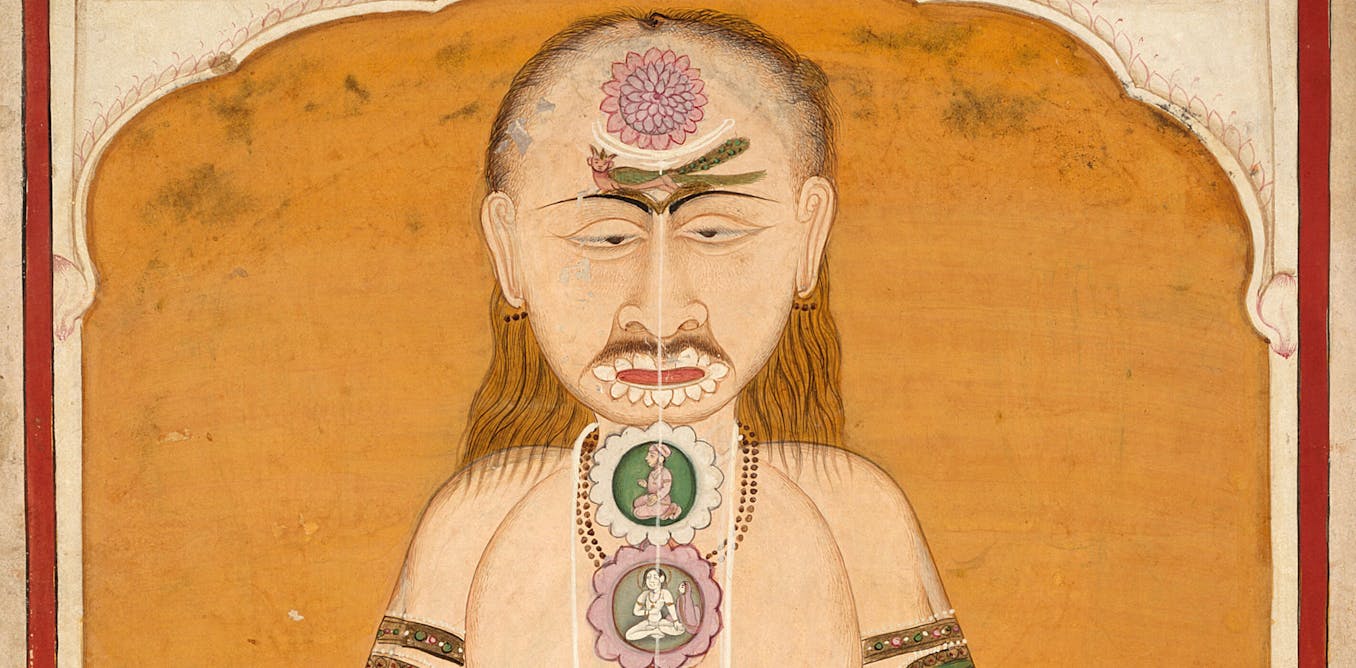
American pop culture frequently reimagines the divine feminine, casting God in female form to combine irreverence with empowerment. Popular portrayals align with slogans like "the future is female," yet often depend on a simplistic gender binary. Many spiritual seekers adopt the divine feminine as liberation from oppressive gender norms but struggle to reconcile that image with embodied biological sex. The Kundalini tradition offers an alternative by portraying Shakti as a divine feminine energy that manifests within the human body, drawing from South Asian tantric frameworks that value the material world and the body.
Read at The Conversation
Unable to calculate read time
Collection
[
|
...
]