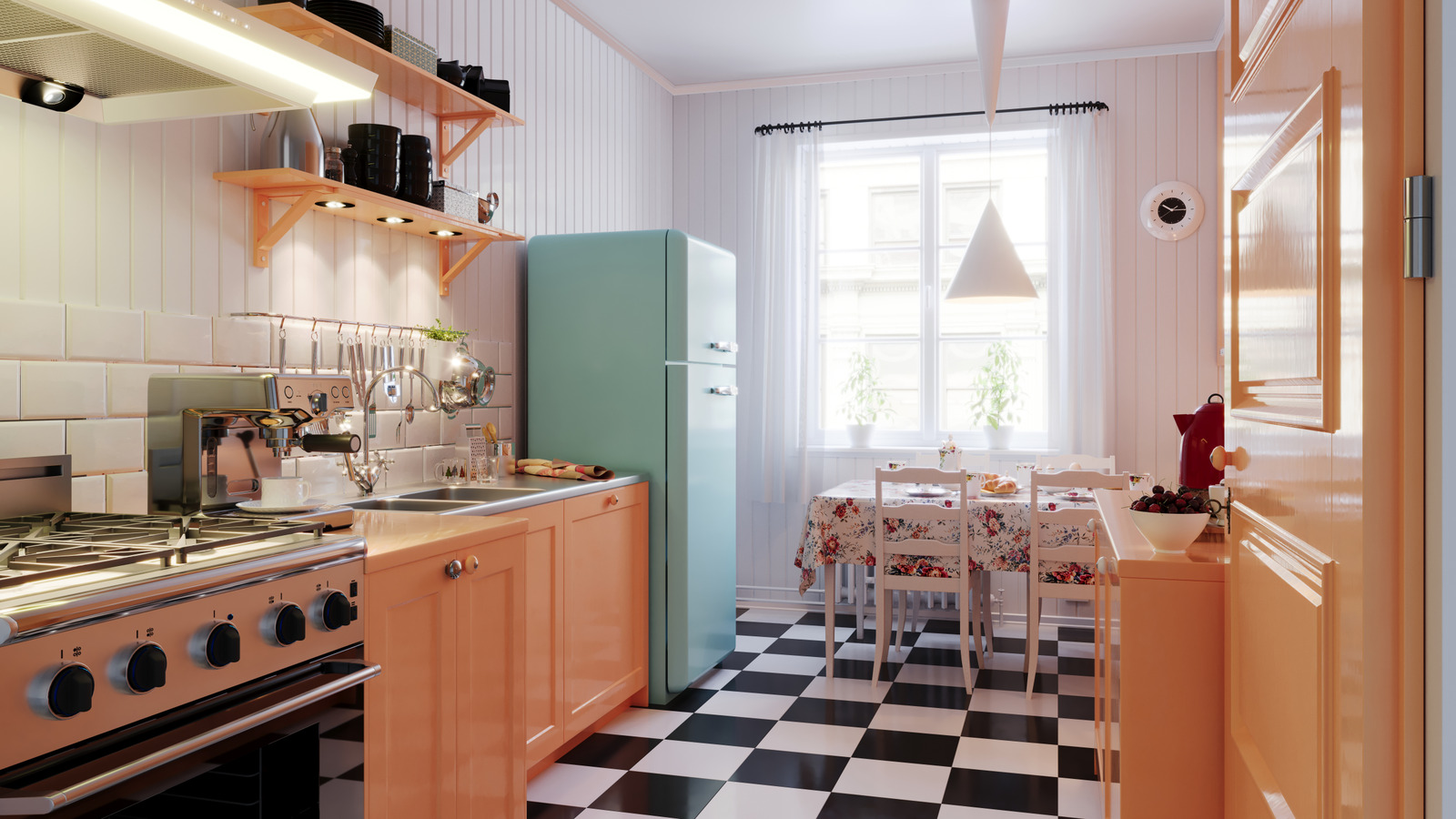
"Traditional rules of design have viewed the kitchen as a closed-off, industrial space devised to be hidden away from view. This one-size-fits-all mindset meant that everything was designed with cohesion and visual conformity in mind. However, these formulas don't match pace with the modern needs of homeowners. The modern kitchen has a heavy list of duties to service: It must be equipped to support multiple cooks at once, double up as an entertainment zone, and house a wide array of appliances."
"With its roots in the early 20th century, the work triangle has held sway as the default kitchen layout for the longest time - and with good reason. The theory was simple: By positioning the sink, stove, and the refrigerator in a triangular formation in the kitchen, you could optimize your workflow. However, this theory was designed for houses with one primary cook. As more people join in the prep and clean-up, the work triangle doesn't make sense for all kitchens."
Kitchen design traditions treated the kitchen as a closed, industrial space meant to be hidden and visually uniform. Modern kitchens must serve many functions: support multiple cooks, accommodate numerous appliances, and act as entertainment spaces. The early 20th-century work triangle positioned sink, stove, and refrigerator to optimize a single cook's workflow, but that model is increasingly impractical. Definitions of major appliances now include microwaves and ovens, and social habits require more flexible layouts. Homeowners should prioritize everyday habits and rituals and adapt layouts to real use rather than follow one-size-fits-all design rules.
Read at Tasting Table
Unable to calculate read time
Collection
[
|
...
]