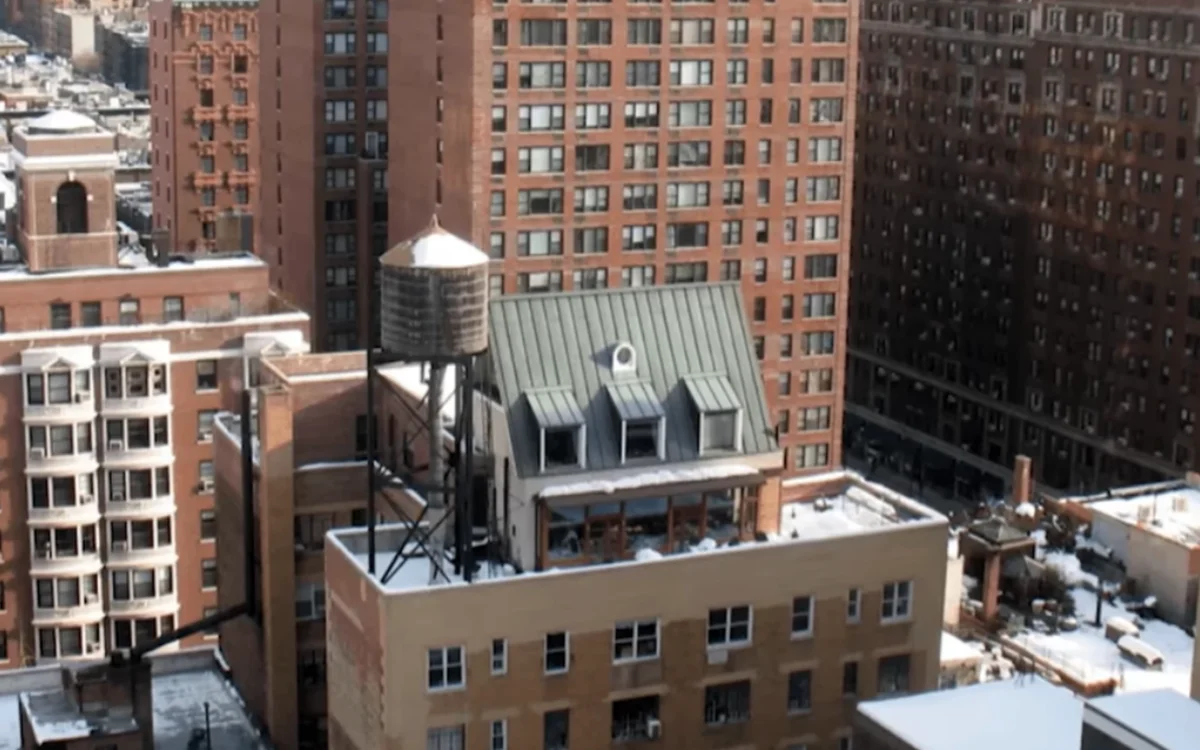
"In the late 1980s, architect Andrew Tesoro had what he calls a fantasy. He'd toured a $19,999 mobile home and thought about buying one, then airlifting it onto a Manhattan roof. The appeal wasn't the trailer itself, it was the light, the outside space, the idea of carving out something airy in a city that feels permanently stacked on itself."
"It stretched his budget, but he'd already confirmed the crucial detail: the property still had development rights. That meant he could legally build upward. The original skylight became the opening for a stair. Walls came down. A large window facing the park went in. Over time, the roof transformed into a multi-level wooden chalet with bedrooms, open living space, and a top room with windows in all four directions."
"He chose a copper roof - expensive, but designed to last a century - because it felt right for New York. It's not polished. The main stair is still technically a temporary construction stair because he ran out of money. For years he barbecued outside instead of installing a proper kitchen, and one faucet was pieced together from a Home Depot run and duct tape. But Tesoro doesn't seem bothered. He says homes shouldn't be too perfect. After all, people aren't."
Andrew Tesoro conceived a rooftop dwelling in the late 1980s after touring an inexpensive mobile home and imagining light and outdoor space above the city. He purchased a small janitor's apartment on a 1926 Upper West Side building for over $150,000 and confirmed the property retained development rights to build upward. He reconfigured the space by opening the skylight into a stair, removing walls, and installing a large park-facing window. The roof became a multi-level wooden chalet with bedrooms, open living areas, and a top room with panoramic windows and a durable copper roof. The space remains lived-in despite unfinished details and improvised fixtures.
Read at Supercar Blondie
Unable to calculate read time
Collection
[
|
...
]