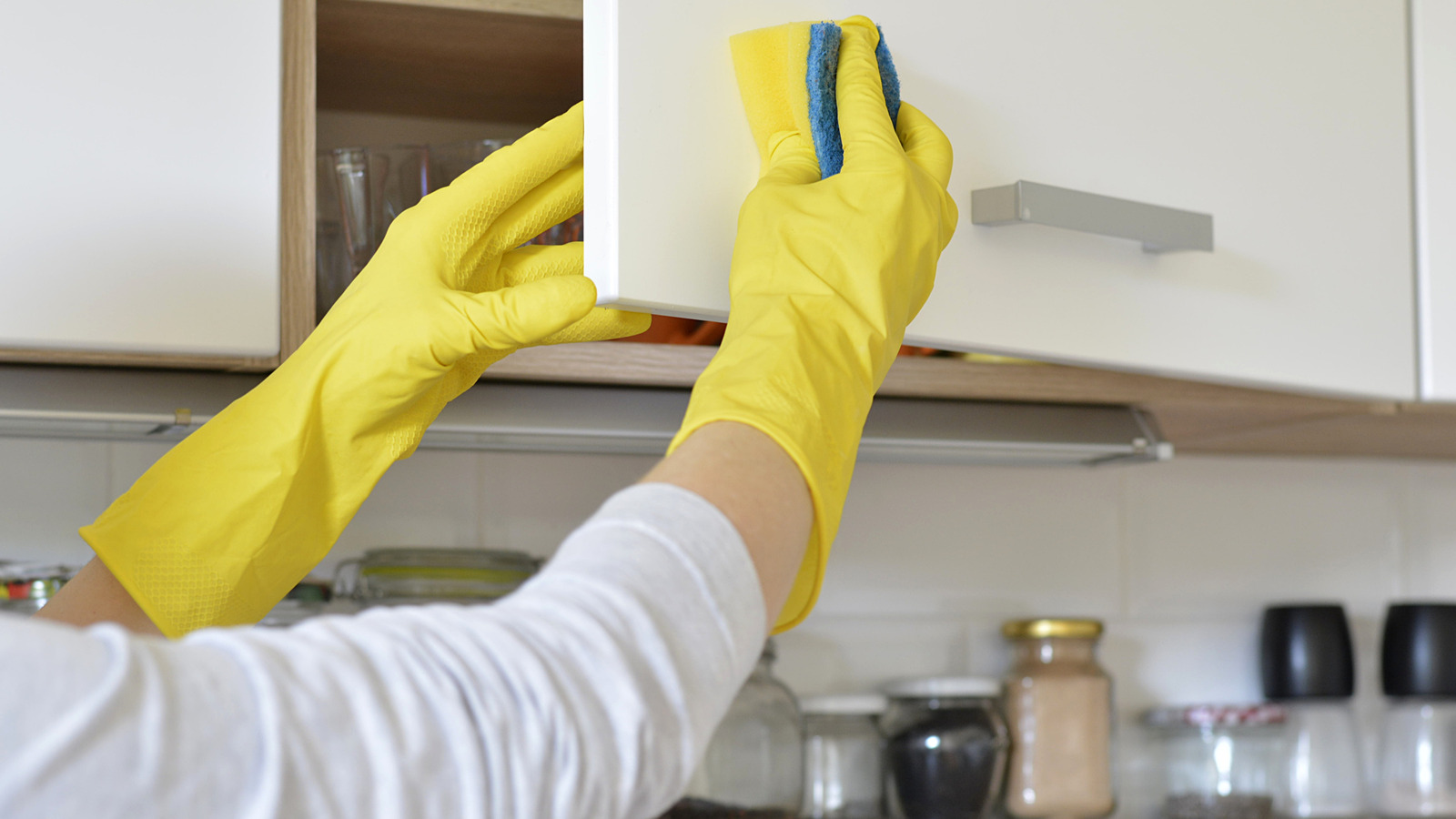
"That fog of aerosolized cooking vapor drifts upwards, carried by hot air, landing on cabinet surfaces, where it slowly dehydrates into a thin, tacky skin of concentrated fat. Then, over time, as the flotsam of dust bunnies inevitably float through the room, happily colonizing the sticky layer, it builds up, fortifying and refusing to budge with just a reasonable swipe of a sponge."
"Oil-based grime bonds to itself, which is why the usual soap-and-water sometimes just smears it around without lifting it. Fresh oil softens and loosens the old, oxidized grease because they're structurally similar. Instead of stripping or scratching the cabinet's finish the way harsh, toxic degreasers can, oil works as a gentle solvent, melting the residue so you can actually wipe it up."
"It also works on painted wood, vinyl laminate, and metal hardware, whereas strong cleaners risk damaging the surface or leaving streaks. For light buildup, a few drops of neutral cooking oil on a soft cloth are enough to break down the grime. Massage the oil into the sticky areas with small, steady circles; you'll feel the resistance disappear as the grease softens."
Cooking releases a fine mist of oil that becomes airborne and settles on cabinet surfaces, where it dehydrates into a thin, tacky skin of concentrated fat. Dust particles adhere to the sticky layer, accumulating into a fortified, stubborn grime that resists simple soap-and-water cleaning. Fresh cooking oil dissolves and softens oxidized grease because oil-based residues bond to themselves, allowing safe, gentle removal without harsh degreasers that can damage finishes. For light buildup, apply a few drops of neutral cooking oil and rub in small circles until the resistance disappears. For stubborn, lacquered-on grime, mix two parts baking soda with one part cooking oil to form a spreadable, mildly abrasive paste that removes polymerized layers without scratching.
Read at www.tastingtable.com
Unable to calculate read time
Collection
[
|
...
]