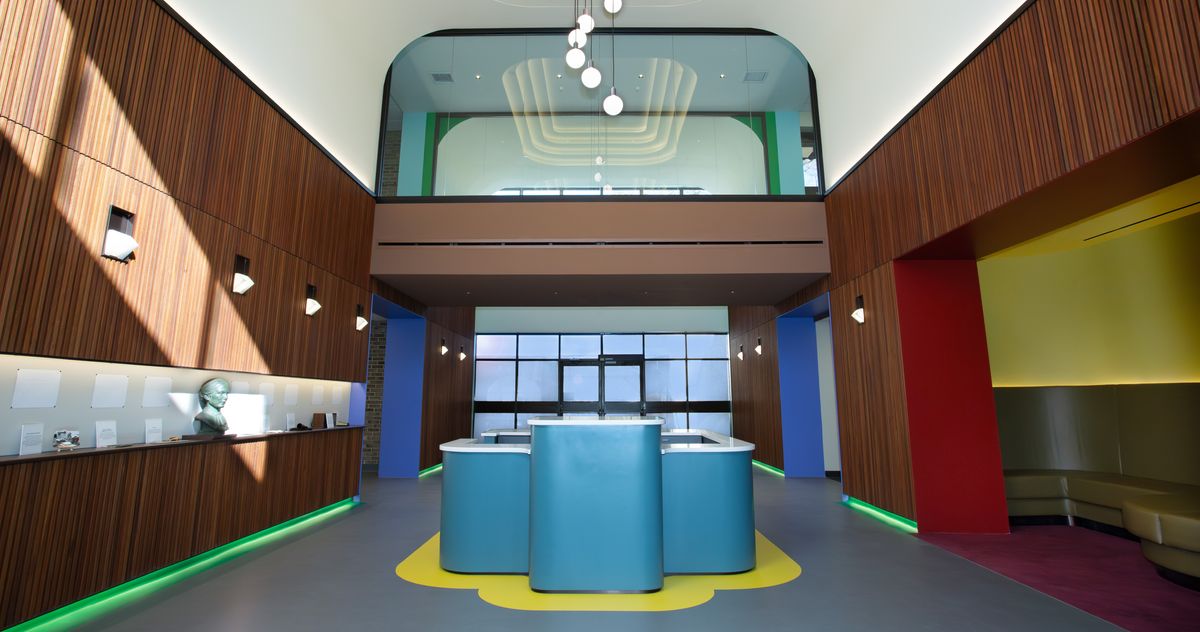
"A class at the New York School of Interior Design had even spent a summer imagining how to redesign its public spaces, meeting with the staff and clients - deaf-blind people, or people whose sight and vision is limited, who come to the center to learn strategies for interacting and thriving in a wider world not typically built with them in mind."
"The television reporter had long said the "most memorable" interview of her career had been with Dr. Robert J. Smithdas, the first deaf-blind person to earn a master's degree, who helped found the center and lived nearby. Walters interviewed Smithdas a couple of times, including at his home, with a report that showed Smithdas and his wife, who was also deaf-blind, cooking dinner and using a teletype to respond to a phone call."
"The center decided to use the donation to renovate at long last. Sue Ruzenski, the CEO, tapped an architecture firm to bring some of the students' ideas to life and make tweaks, and designer Siobhan Barry, with Gensler, said she "jumped" at the opportunity. Barry specializes in hotels and saw the job as a way to learn how to make spaces intended to feel welcoming actually welcoming to as wide a swathe of people as possible."
Helen Keller National Center's Long Island campus, built in 1976, showed its age with boxy brick buildings and speckled beige tile floors. A design class once proposed public-space redesigns after meeting staff and deaf-blind clients who learn strategies to interact and thrive in environments not built for them. Years passed without changes until a donation following Barbara Walters' death funded a renovation. The CEO hired an architecture firm and designer Siobhan Barry of Gensler. Barry, who specializes in hotels, embraced the project to learn how to make spaces genuinely welcoming to a broader range of people and began questioning prevailing design assumptions.
Read at Curbed
Unable to calculate read time
Collection
[
|
...
]