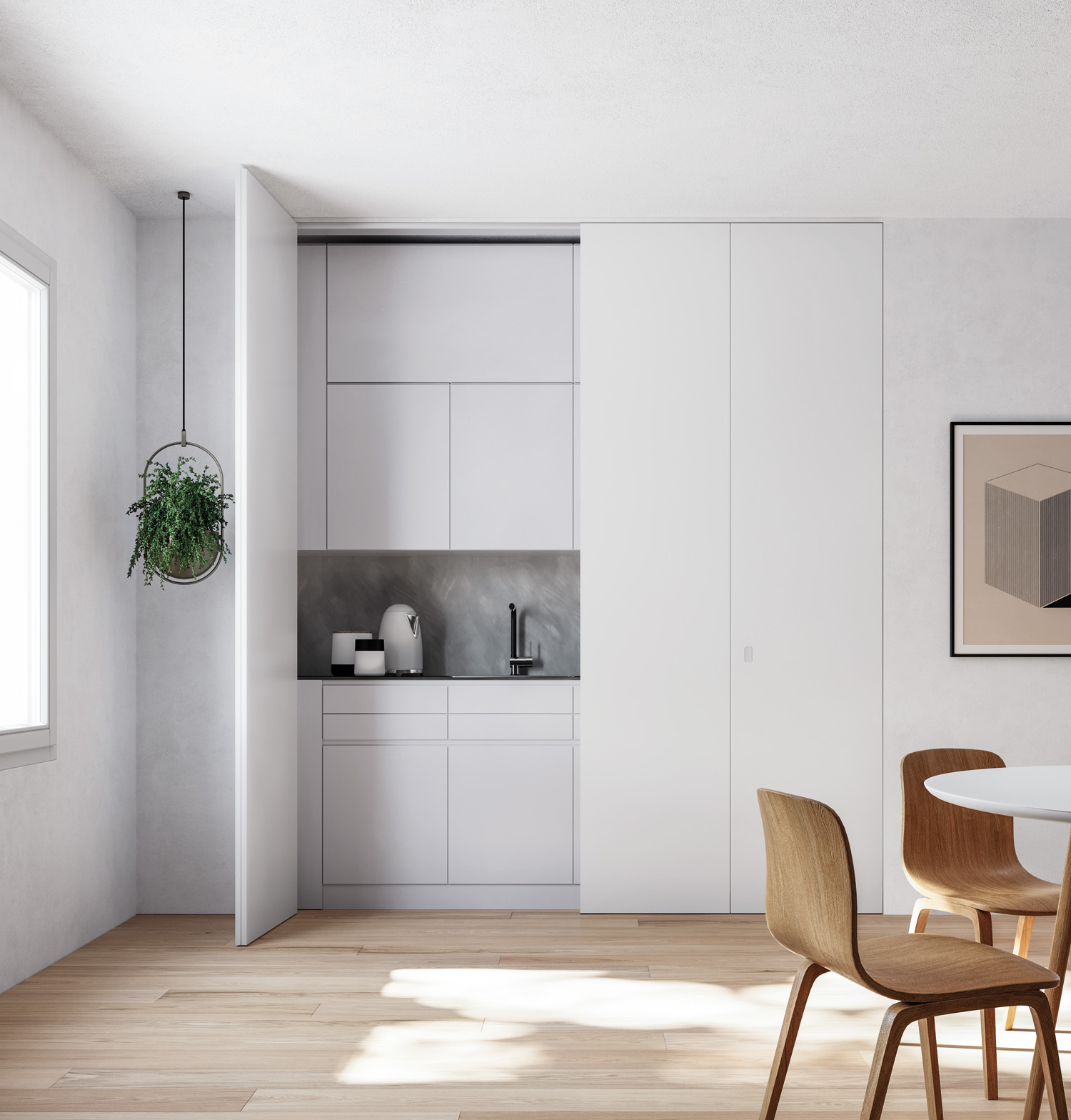
"The niche has been a space of visible intention throughout the history of architecture. In ancient Roman architecture, it served as a formal device carved into masonry to display statues, vases, or other objects. These recesses animated the walls of temples, bath complexes, and civic buildings, adding rhythm, depth, and focal points to otherwise massive structures. The interior spaces of the Pantheon framed statues of gods, and the Baths of Caracalla used similar voids to structure expansive halls."
"By the Renaissance, the niche evolved into a refined architectural frame. In Florence, the external cavities of Orsanmichele held guild-commissioned statues, while the Uffizi Palace's recesses displayed sculptural works. Whether filled or intentionally left empty, these openings articulated internal and external walls and facades, introduced hierarchy, and provided visual interest, serving as deliberate gestures meant to be seen. In contemporary architecture, however, the niche has shifted from display to concealment, hiding technical and everyday elements such as cables, panels, pipes, or appliances."
The niche functioned historically as a visible architectural device that displayed statues, vases, and other objects within carved masonry. These recesses animated temple, bath, and civic walls by adding rhythm, depth, and focal points, as seen in the Pantheon and the Baths of Caracalla. During the Renaissance the niche became a refined frame for commissioned sculpture on buildings such as Orsanmichele and the Uffizi. In contemporary practice the niche often conceals technical and everyday elements like cables, panels, pipes, and appliances. The shift reflects continued commitment to firmitas, utilitas, and venustas, adapting form to changing practical needs.
#architectural-niche #roman-and-renaissance-architecture #vitruvius-firmitas-utilitas-venustas #contemporary-concealment-and-spatial-organization
Read at ArchDaily
Unable to calculate read time
Collection
[
|
...
]