"Kyoto's preservation codes make renovation a negotiation between what a building was and what its residents need it to become. The result is not a museum piece or a minimalist showroom. It is a home that treats historical material as a living framework rather than a frozen artifact, and the distinction matters more than it might seem."
"Sukiya architecture grew out of the Japanese tea ceremony tradition, where timber construction, open spatial flow, and natural materials created rooms designed for contemplation rather than display. The original home had lost much of that character over the years as its tatami rooms were modified beyond recognition through successive, uncoordinated changes."
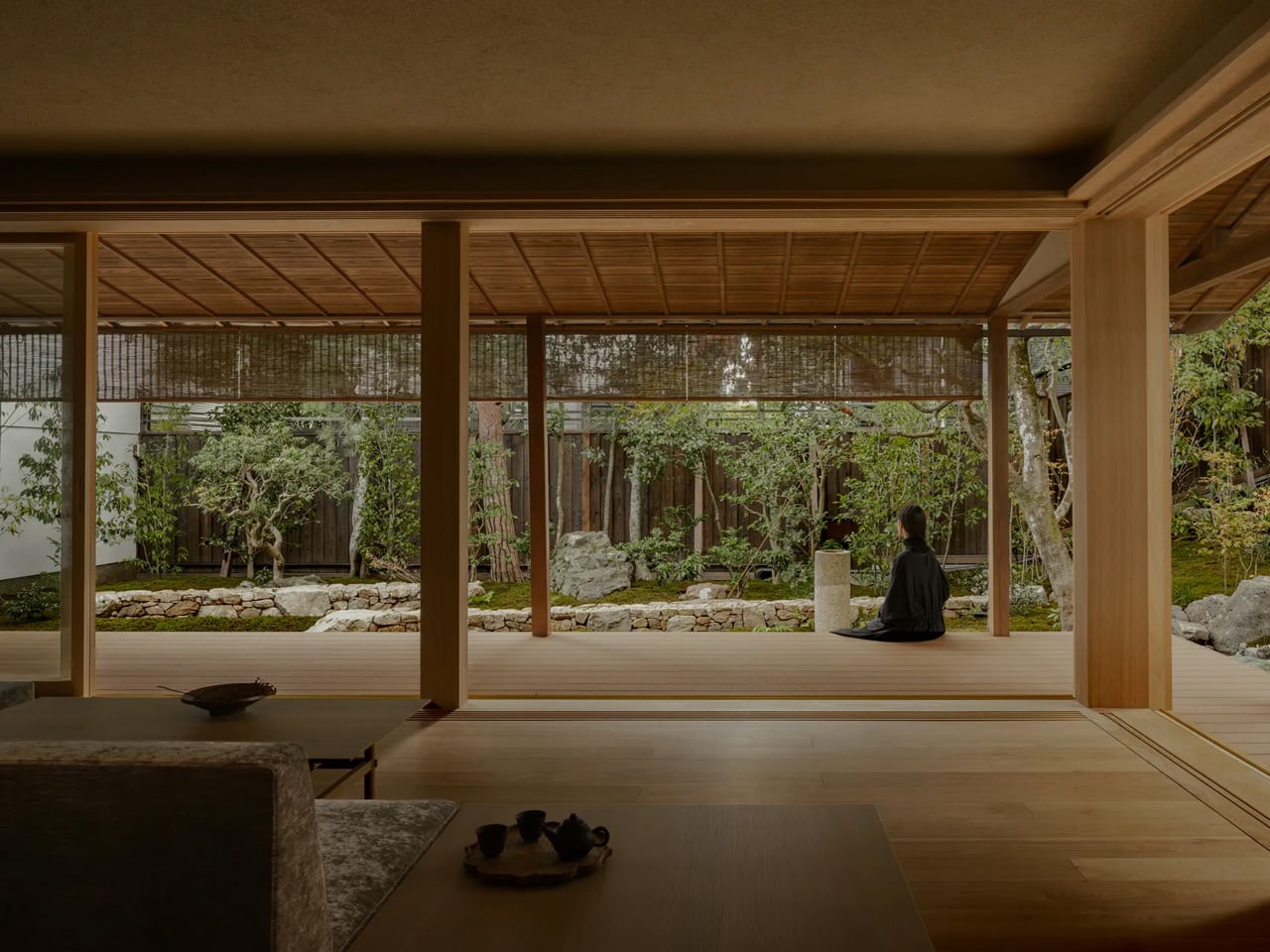
"A room that exists to frame a view is a commitment most residential renovations cannot afford, and its presence here signals that the project's priorities sit closer to atmosphere than to square-footage optimization."
kooo architects completed a renovation of a traditional Sukiya-style residence in Kyoto's Narutaki district by stripping away decades of piecemeal modifications to recover the original spatial clarity. Sukiya architecture, rooted in Japanese tea ceremony traditions, emphasizes timber construction, open flow, and natural materials for contemplation. The renovation reorganized the interior into three connected spaces: an earthen-floored passage linking the main structure to a detached annex, a reception room, and a dedicated garden room designed solely for viewing the seasonal landscape. Material choices including exposed cherry wood beams and Juraku plaster reinforce Sukiya traditions. The project prioritizes atmospheric quality and historical integrity over space optimization, treating the building as a living framework rather than a frozen artifact.
#architectural-preservation #sukiya-design #kyoto-renovation #traditional-japanese-architecture #residential-design
Read at Yanko Design - Modern Industrial Design News
Unable to calculate read time
Collection
[
|
...
]