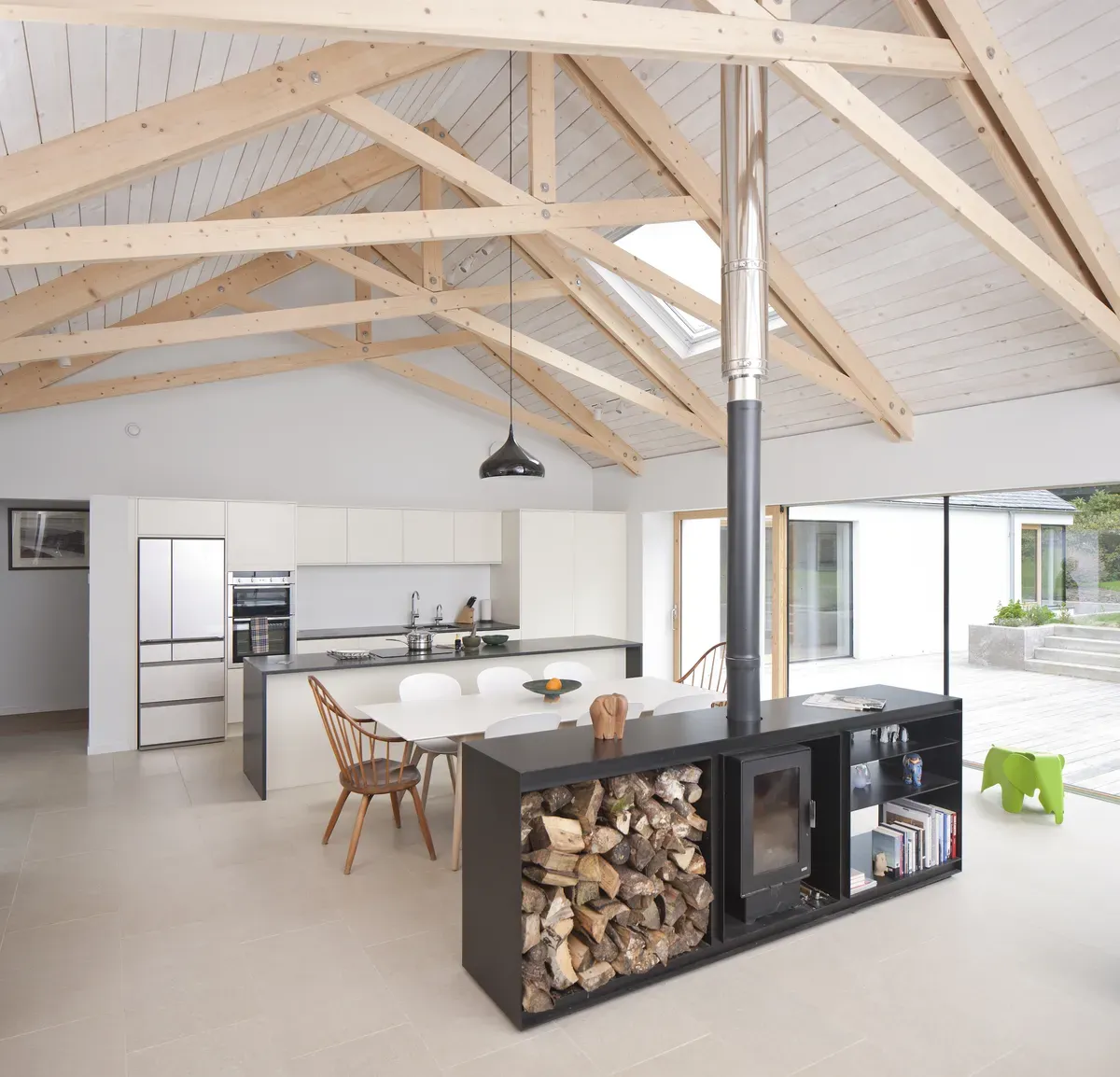
"Barn conversions offer unique charm and spacious living, but their open-plan layouts and often historic structures can present challenges when it comes to efficient barn conversion heating. They are definitely not a "formula solution" product and come in very many different shapes and sizes. Mix these size and spatial differences in with a potentially rural location, and although you have the recipe for a unique and beautiful home, you also face the challenge of a rather complex set of parameters for a successful heating system."
"The two main key performance details for any home are insulation and draft proofing ( air tightness). Insulation is the mechanical separation between a cold and warm area which slows down heat transfer. The thicker, and better performing it is, the better. More is always better but there comes a point where there will inevitably be diminishing returns, meaning there is a level of when you can have too much insulation."
"As an example you may have very ornate structural roof trusses that you want to retain. You could wrap the insulation around the truss ends, but ideally the insulation should be placed on top of the sarking. You will ideally need to strip the roof covering (tiles, slate, metal), insulate above the trusses, re-membrane the roof and then replace the cladding."
Barn conversions combine unique charm and spacious, often open-plan living with historic structures that complicate heating design. Variable sizes, layouts and rural locations prevent a one-size-fits-all heating solution and require bespoke systems tailored to specific parameters. Insulation and airtightness are the two principal performance factors; thicker, better-performing insulation reduces heat transfer but yields diminishing returns at a certain point. Retaining visible architectural features can constrain insulation placement. For example, ornate roof trusses often require insulating above the sarking, which typically involves stripping roof coverings, adding insulation, re-membraning and recladding. Practical heating choices must balance preservation, efficiency and installation constraints.
Read at Homebuilding
Unable to calculate read time
Collection
[
|
...
]