#algorithmic-feeds

[ follow ]
fromThe Atlantic
1 day ago

How to Be a Citizen in the Information War (And Stay Sane)

Charlie Warzel opens with what it means to live in 2026, when our phones can drop us into graphic, real-time violence without warning-and when documenting that violence can be both traumatizing and politically consequential. Using recent footage out of Minneapolis as a lens, he explores the uneasy collision of algorithmic feeds, misinformation, and the moral weight of witnessing. Charlie also traces how viral documentation can puncture official narratives, pushing stories beyond political circles and even into "apolitical" corners of the internet.
Digital life
fromReason.com
1 week ago

How to build your own internet in 2026

The internet you experience daily-endless scrolling, algorithmic feeds serving content you didn't ask for, AI-generated slop clogging search results-isn't the only internet available. It's just the one that's easiest to stumble into. You're not stuck with the internet that has evolved alongside the rise of hegemonic platforms. We're 20-plus years into the social internet, and the winners of the last round of audience capture have made clear they're shifting to optimize for social broadcasting instead of networking, to maximize market share and market cap.
Digital life
Marketing
fromTechCrunch
1 month ago

Social media follower counts have never mattered less, creator economy execs say | TechCrunch

Algorithm-driven feeds have diminished follower-count value, prompting creators to cultivate direct, trust-based relationships to reach and monetize audiences.
California
fromSFGATE
2 months ago

Calif. says the new law is about protecting kids. Tech companies hate it.

California law would require parental consent for algorithmic social media feeds for minors, prompting Meta, TikTok, and YouTube to sue on First Amendment grounds.
EU data protection
fromSocial Media Today
3 months ago

Meta May Be Forced to Offer Default Chronological Timelines in its Apps

Meta must provide users with directly accessible options to select non-algorithmic timelines under the EU DSA, removing design barriers that steer users to ad-driven feeds.
fromFlowingData
3 months ago

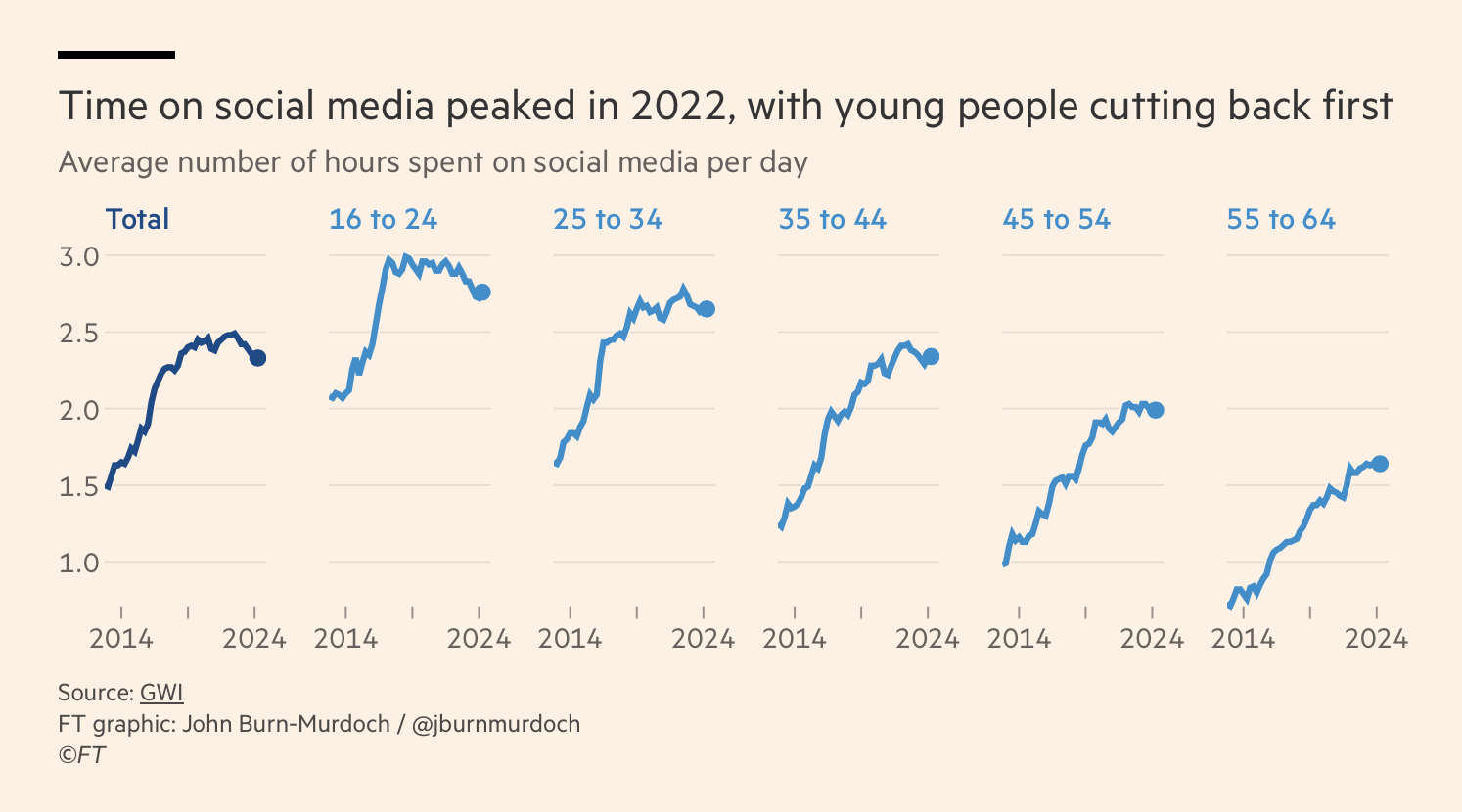
Passed peak social media, maybe

As we descend towards slop-based social media, where the videos are fake and the people are bots, we might be rounding up our time with algorithmically generated feeds. For Financial Times, John Burn-Murdoch shows time spent on social media over the past decade. The key signal seems to be in young people's usage. It looks like usage plateaued for 16- to 24-year-olds and has been inching its way down. Although usage over two and a half hours per day is still a lot. Also when
Digital life
[ Load more ]