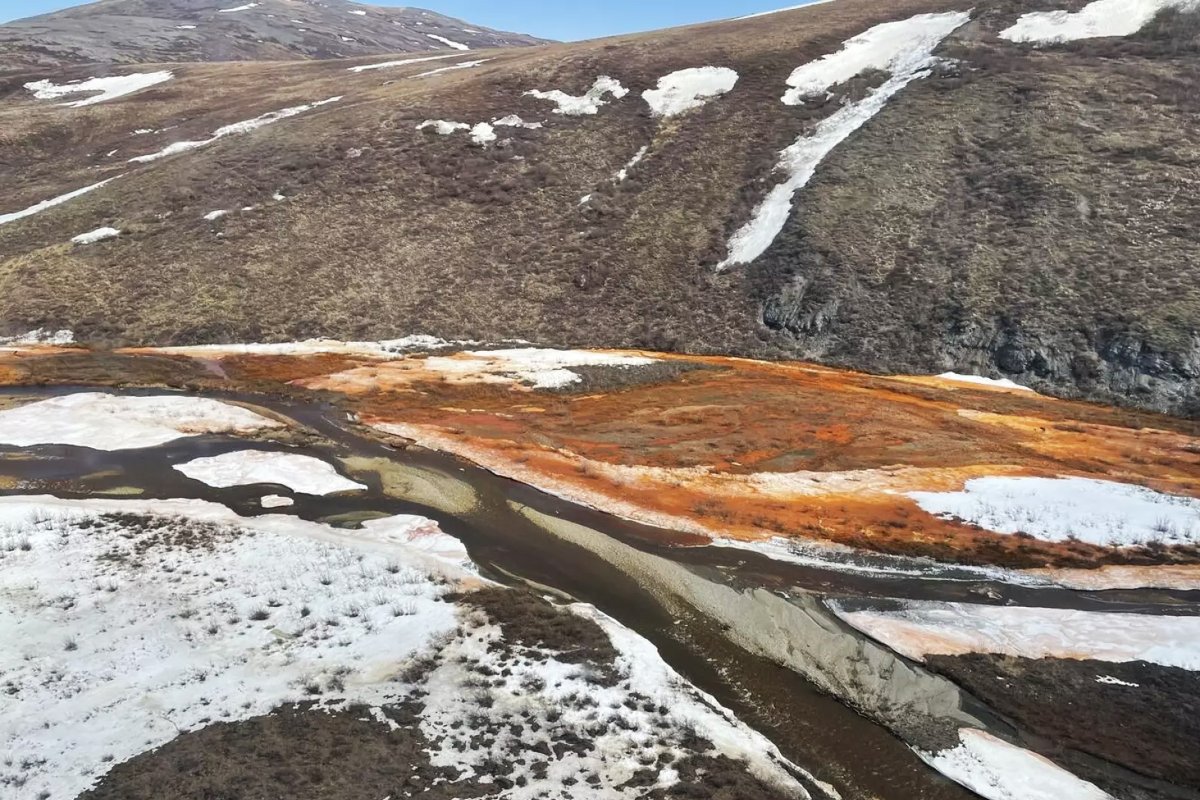
Hundreds of Arctic rivers and streams are turning bright red-orange, not from chemical pollution, but from naturally occurring iron spilling from long-frozen ground as temperatures warm. The "rusting rivers" phenomenon, which has been documented across the Brooks Range in northern Alaska, offers a vivid example of the effects of climate change in a region that is warming faster than the global average. The finding was reported in the National Oceanic and Atmospheric Administration's annual Arctic Report Card, released Tuesday. NOAA has released the report for 20 years as a way to track rapid changes in the northernmost part of the planet.
Back in 2016 an article in the New York Times referred to Iceland as a mosquito-free island paradise. While nearby countries host mosquito populations during warmer times of the year, one of the going theories was that Iceland's propensity for harsh swings between thawing and freezing helped keep the bloodsuckers from getting a foothold. But that same Times piece warned that this skeeter-free status could be in peril.
High atop the Luossavaara Mountain in northern Sweden, Sami reindeer herder Lars-Marcus Kuhmunen mapped out a bleak future for himself and other Indigenous people whose reindeer have roamed this land for thousands of years. An expanding iron-ore mine and a deposit of rare-earth minerals are fragmenting the land and altering ancient reindeer migration routes. But with the Arctic warming four times faster than the rest of the planet, herders say they need more geographic flexibility, not less, to ensure the animals' survival.