#basic-research-funding
#basic-research-funding
[ follow ]
#research-funding #nih #science-policy #higher-education #artificial-intelligence #brain-drain #nih-funding
#artificial-intelligence
Science
fromNextgov.com
2 weeks agoEnergy opens applications for $293 million in research funding
The Department of Energy is allocating $293 million to fund interdisciplinary teams using artificial intelligence to solve critical challenges in advanced manufacturing, biotechnology, critical materials, nuclear energy, and quantum information science.

fromNature
1 week agoNow is the time for scientific societies to guide global research
Modern scientific societies are increasingly vulnerable due to their dependence on membership fees and journal subscriptions, which are being challenged by the rise of virtual networking and open-access publishing.
Science
European startups
fromenglish.elpais.com
2 weeks agoWelcome, American scientists: Europe, a haven for researchers struggling under Trump
Safe Place for Science initiative successfully attracted U.S. researchers to Europe amid restrictive policies, receiving over 900 applications shortly after its launch.
fromwww.scientificamerican.com
1 week agoWhat happens when AI starts checking mathematicians' work
Computer programs that check mathematical arguments have existed for decades, but translating a human-written proof into the strict programming language of a computer is extremely time-consuming, often taking months or even years.
OMG science


US politics
fromInside Higher Ed | Higher Education News, Events and Jobs
3 weeks agoFederal Grant Makers May Lose Job Protections: 5 Things to Know
A new federal employee category with reduced job protections and easier firing procedures took effect, potentially affecting federal grant-making employees and raising concerns about research funding politicization.
fromNature
3 weeks agoThe problem with Canada's plan to buy scientific prestige
CIRC posts come with excellent resources and generous salaries. But the current round is being filled on an extraordinarily tight timeline. We assume that this is to take advantage of some US scholars' urgency to leave, and to keep pace with other countries hoping to achieve similar results (such as France, which is running a high-profile campaign to lure US scholars).
Canada news
Coronavirus
fromArs Technica
3 weeks agoNIH director launches "Scientific Freedom" lectures with non-scientist
NIH Director Jay Bhattacharya launched 'Scientific Freedom Lectures' featuring a journalist with fringe COVID and climate views, prioritizing his personal censorship grievances over scientific rigor.
Non-profit organizations
fromNature
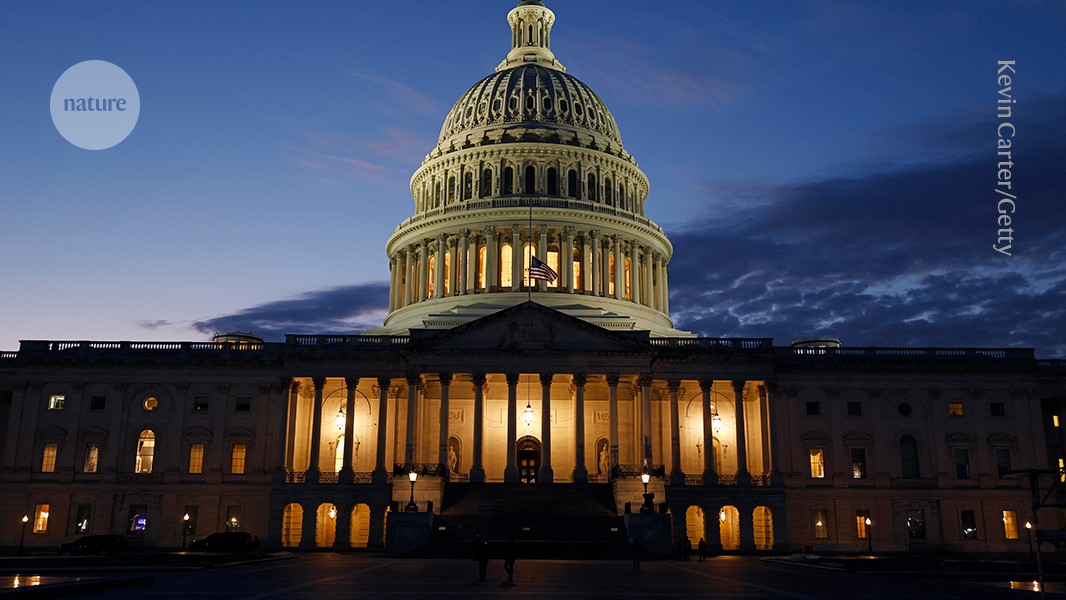
2 weeks agoNIH pivots away from agency-directed science
The NIH is shifting from solicited grants addressing agency-identified priorities to unsolicited grants driven by individual researchers' interests, reducing administrative costs but potentially limiting large collaborative projects and understudied research areas.


OMG science
fromArs Technica
1 month agoResearch roundup: Six cool science stories we almost missed
Scientists revived Edison's nickel-iron battery design using protein scaffolding and graphene oxide, creating an aerogel structure for improved renewable energy storage with extended range and longevity.
Science
fromNature
3 weeks agoChina pledges billion-dollar spending boost for science
China plans to increase R&D expenditure by at least 7% annually over five years and boost its science and technology budget by 10% to 426 billion yuan, aiming to shift R&D leadership from state enterprises to private companies.
fromNature
1 month agoAI help in grant proposals tied to higher funding odds at NIH
Scientists are increasingly turning to artificial-intelligence systems for help drafting the grant proposals that fund their careers, but preliminary data indicate that these tools might be pulling the focus of research towards safe, less-innovative ideas. These data provide evidence that AI-assisted proposals submitted to the US National Institutes of Health (NIH) are consistently less distinct from previous research than ones written without the use of AI - and are also slightly more likely to be funded.
Artificial intelligence

Science
fromNature
3 weeks agoPhysics at risk: UK science leader on what's wrong with the latest funding cuts
UK Research and Innovation suspended grant reviews and cut funding in particle physics, astronomy, and nuclear physics to prioritize economically-focused research, prompting concerns from the physics community about inadequate government planning.
fromNature
2 months agoNIH rolls back red tape on some experiments - spurring excitement and concern
Many researchers are surprised and relieved over an unusual step taken by the US National Institutes of Health (NIH): the agency is rolling back the red tape on a host of basic-science experiments that involved human participants and had been classified as clinical trials. The decision, which was announced on 29 January and is part of a broader NIH effort to reduce administrative burden, should free such research from the heavy bureaucratic requirements that are designed for clinical trials but are sometimes ill-suited to other fields, such as basic psychology and behavioural studies.
Medicine
fromNature
2 months agoI know science can't fix the world - here's why I do it anyway
His message is clear: our world is built on abundant energy, around 80% of which has come from fossil fuels over the past 50 years. Because supplies are limited, energy consumption will peak in decades - sooner if humans attempt to limit climate change. To keep global warming below 1.5 °C by 2100, the use of fossil fuels must fall by 5-8% each year - a pace that is too fast for low-carbon energy to keep up with.
Environment
fromTruthout
2 months agoTrump Admin Has Made Future of Federal Funding for Cancer Research Uncertain
Brugge and her research team have analyzed the cell structure of more than 100 samples. Using high-powered microscopes and complex computer algorithms, they diagram each stage in the development of breast cancer: from the first sign of cell mutation to the formation of tiny clusters, well before they are large enough to be considered tumors. Their quest is to prevent breast cancer, a disease that afflicts roughly 1 in 8 U.S. women over their lifetimes, as well as some men.
Cancer
fromInside Higher Ed | Higher Education News, Events and Jobs
1 month agoNSF Plans to Boost Staffing, Halve Grant Solicitations
The fewer solicitations you have, the less time grant applicants have to figure out which of our pigeonholes they fit into. In the past, a solicitation might have been for an individual program, which means it's attached to an individual program officer and a specific dollar amount. Now, instead of going to one program officer's area, the NSF will use technology to better route applications to wherever within the agency they can best be reviewed.
Science
fromCornell Chronicle
2 months ago$1.5M grant boosts postdoctoral research across 4 colleges | Cornell Chronicle
Postdoctoral researchers are an essential part of academic science and the knowledge Cornell brings into the world. They often mentor students and lead projects, helping advance discoveries in areas like quantum materials, genomics and biomedicine - work that will fundamentally transform technologies, medicine and public health," said Gary Koretzky '78, vice provost for research, who will administer the grant to researchers in the College of Arts and Sciences, the College of Agriculture and Life Sciences, the College of Veterinary Medicine and Cornell Engineering.
Higher education
Public health
fromArs Technica
2 months agoTrump admin is "destroying medical research," Senate report finds
Widespread NIH leadership vacancies and expiring advisory committees threaten grant approvals; nominee Bhattacharya gave equivocal vaccine-autism answers, raising concerns about anti-vaccine influence.
Higher education
fromInside Higher Ed | Higher Education News, Events and Jobs
1 month agoGreat Grants Need Far Away Deadlines
Unreasonably tight grant timelines and limited grant-writing capacity disadvantage community colleges, reducing their ability to compete for Workforce Pell and civil discourse funding.
Higher education
fromInside Higher Ed | Higher Education News, Events and Jobs
1 month agoCongress, Courts Stymie Trump's Effort to Cap Research Costs
Congress blocked federal agencies from altering university indirect-cost reimbursement rates for fiscal year 2026, preserving current rates through Sept. 30.
US politics
fromInside Higher Ed | Higher Education News, Events and Jobs
2 months agoCongress Plans to Mostly Buck Trump's NSF, NASA, Energy Cuts
Congressional appropriations plans largely reject the administration's proposed steep cuts to NSF and NASA, and instead propose increased funding for the Department of Energy Office of Science.
US politics
fromNextgov.com
2 months agoTech Bills of the Week: Expanding AI education via NSF; Commerce public awareness campaign; and more
Congressional proposals seek to expand AI education access, launch a national AI public-awareness campaign, and require age verification protections for chatbot users.

fromTheregister
2 months agoCongress saves NASA budget, kills Mars sample mission
US Congress has rejected plans to slash NASA's science budget, restoring most funding with one notable exception: Mars Sample Return remains cancelled. A joint explanatory statement was released earlier this month, and lawmakers have passed the bill. The legislation, passed with 82 senators voting for it, 15 against, and three abstaining, reverses an earlier proposal that would have cut NASA's overall budget by nearly 25 percent and halved science spending - potentially shutting down many active missions.
US politics
fromBig Think
2 months agoThe four paths forward for US scientists in 2026
For nearly 100 years, the United States has been the world's leader in a wide variety of scientific fields. No other country has: invested as much in fundamental scientific research, has made more scientific breakthroughs and scientific advances, has attracted more scientific researchers to move there to conduct their research, or has conducted more projects and been home to more scientists that have won Nobel Prizes.
Science
Science
fromInside Higher Ed | Higher Education News, Events and Jobs
1 month agoNSF Returns Fellowship Applications With Minimal Reasoning
NSF returned numerous Graduate Research Fellowship Program applications without review, citing eligibility issues, leaving uncertain how many students were affected.
Science
fromwww.scientificamerican.com
2 months agoAmericans Overwhelmingly Support Science, but Some Think the U.S. Is Lagging Behind
A majority of Americans value U.S. scientific leadership, but Democrats increasingly believe the country is losing ground while Republicans view scientific standing more positively.
fromNature
1 month agoNanoscience is latest discipline to embrace large-scale replication efforts
Calling nanoscientists: your field needs you to try to replicate a landmark finding that quantum dots can act as biosensors inside living cells. As part of the first large-scale effort in the physical sciences to tackle the reproducibility crisis, researchers in France and the Netherlands are offering funds and resources in exchange for a few months of work. "We are trying to use
Science
Science
fromCornell Chronicle
2 months agoThree early-career professors win NSF development awards | Cornell Chronicle
NSF CAREER awards fund Cornell early-career faculty to study microplastics’ environmental transport and toxic interactions and to develop human-like robot learning, with required education components.
fromwww.bbc.com
1 month agoUK's 8bn research fund faces 'hard decisions' as it pauses new grants
The boss of UK Research and Innovation (UKRI), the public body which spends 8bn of taxpayer money each year on research and innovation in the UK, has warned the organisation faces "hard decisions" on funding future projects. In an open letter, Ian Chapman said the government had told it to "focus and do fewer things better", which "will result in negative outcomes for some".
Science
[ Load more ]