#bronze-casting
#bronze-casting
[ follow ]
Arts
fromThe Art Newspaper - International art news and events
1 week agoOne of Donatello's most important bronze statues is being restored: should it ever be shown outdoors again?
Donatello's Gattamelata statue is undergoing restoration and its future location remains uncertain after being moved indoors due to corrosion.
History
fromwww.thehistoryblog.com
3 weeks ago2,000-year-old bronze drum found by farmer in China
A 2,000-year-old bronze drum from the Eastern Han Dynasty was discovered in Yunnan Province, China, representing a significant archaeological find of the Shizhaishan type used in ancient Dian Kingdom rituals and warfare.
Arts
fromArtnet News
2 weeks agoLost Parthenon Piece Unearthed From Lord Elgin's Shipwreck | Artnet News
Greek underwater archaeologists recovered a small Parthenon marble fragment off Kythira island, likely from the temple's ornamental crown, during an excavation of Lord Elgin's sunken ship from 1802.
fromwww.thehistoryblog.com
3 weeks agoSamnite burials of children with bronze warrior belts found
The excavation ultimately unearthed 34 burials, 15 of them belonging to children between two and ten years old when they died. The graves are clustered in groups, probably reflecting family nuclei. Most the grave types are earthen pits covered with roof tiles angled against each other.
History
History
fromMedievalists.net
3 weeks agoMedieval Bronze Doors by Donatello Return to Florence After Restoration - Medievalists.net
Donatello's fifteenth-century bronze doors have been restored and returned to the Old Sacristy of San Lorenzo in Florence, showcasing innovative sculptural techniques and Medici family patronage.


fromOpen Culture
1 month agoRoman Statues Weren't White; They Were Once Painted in Vivid, Bright Colors
One tenet of classical idealism is the idea that Roman and Greek statuary embodied an ideal of pure whiteness-a misconception modern sculptors perpetuated for hundreds of years by making busts and statues in polished white marble. But the truth is that both Greek statues and their Roman counterparts were originally brightly painted in riotous color.
History
fromwww.scientificamerican.com
2 months agoHumans Made Poisoned Arrowheads Thousands of Years Earlier Than Previously Thought
Researchers have found traces of what appears to be plant-derived poison on tiny stone arrowheads from South Africa dated to 60,000 years ago. The finding pushes back the origin of this revolutionary hunting technology by tens of thousands of years. Scientists have long been fascinated by the development of poisoned hunting weapons. For one thing, they would have seriously leveled up our ancestors' foraging game.
Science
fromYanko Design - Modern Industrial Design News
2 months agoThis 3D-Printed Roof Is Saving 2,000-Year-Old Roman Tombs - Yanko Design
What makes this canopy special isn't just that it uses 3D printing technology, though that's certainly impressive. It's the way the designers thought about the entire system. Rather than simply throwing a roof over the tombs and calling it a day, they created what's essentially a climate-control system disguised as architecture. The canopy features a double-layer envelope that does way more than keep rain off ancient stone. Built into this roof are ventilation and air extraction components that actively regulate temperature and humidity.
Design
History
fromMedievalists.net
1 month agoDreaming of Owning a Medieval Artefact? Here's Your Chance - Medievalists.net
TimeLine Auctions' March 3 online sale features hundreds of medieval historical objects including a 13th-century Limoges cross, 1224 Chinese armor, Viking silver mount, and Anglo-Saxon brooch.
fromNature
2 months agoOldest known poison arrows show Stone Age humans' technological talents
Making poisoned arrows is about as hard as following a "complex cooking recipe", says study co-author Marlize Lombard, an archaeologist at the University of Johannesburg in South Africa. "You have to add to it the danger of the poison, and planning to work with it without getting poisoned yourself, then you have to hunt and track the prey animal under difficult and dangerous conditions sometimes for a day or two."
Science
fromwww.thehistoryblog.com
1 month agoBronze Neptune from Lyon arrives in Rome
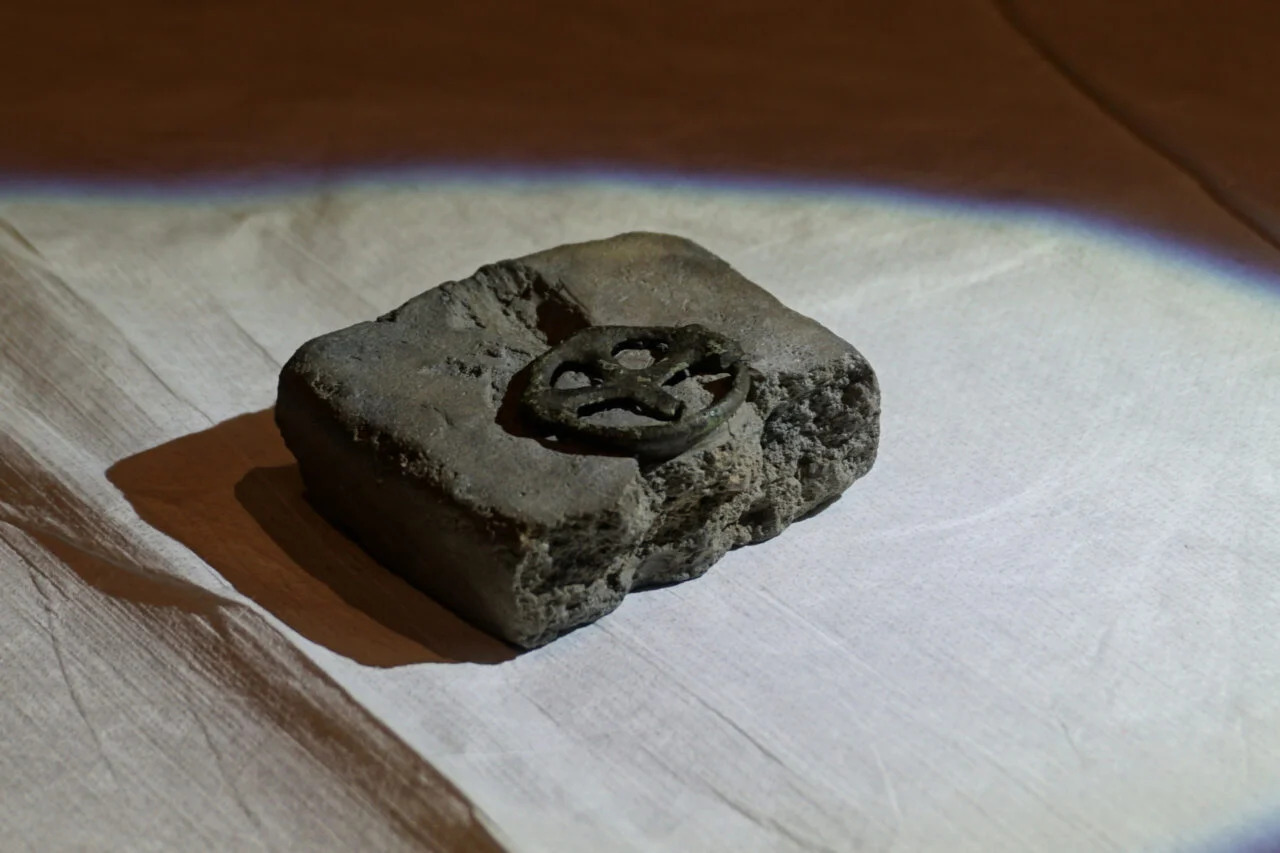
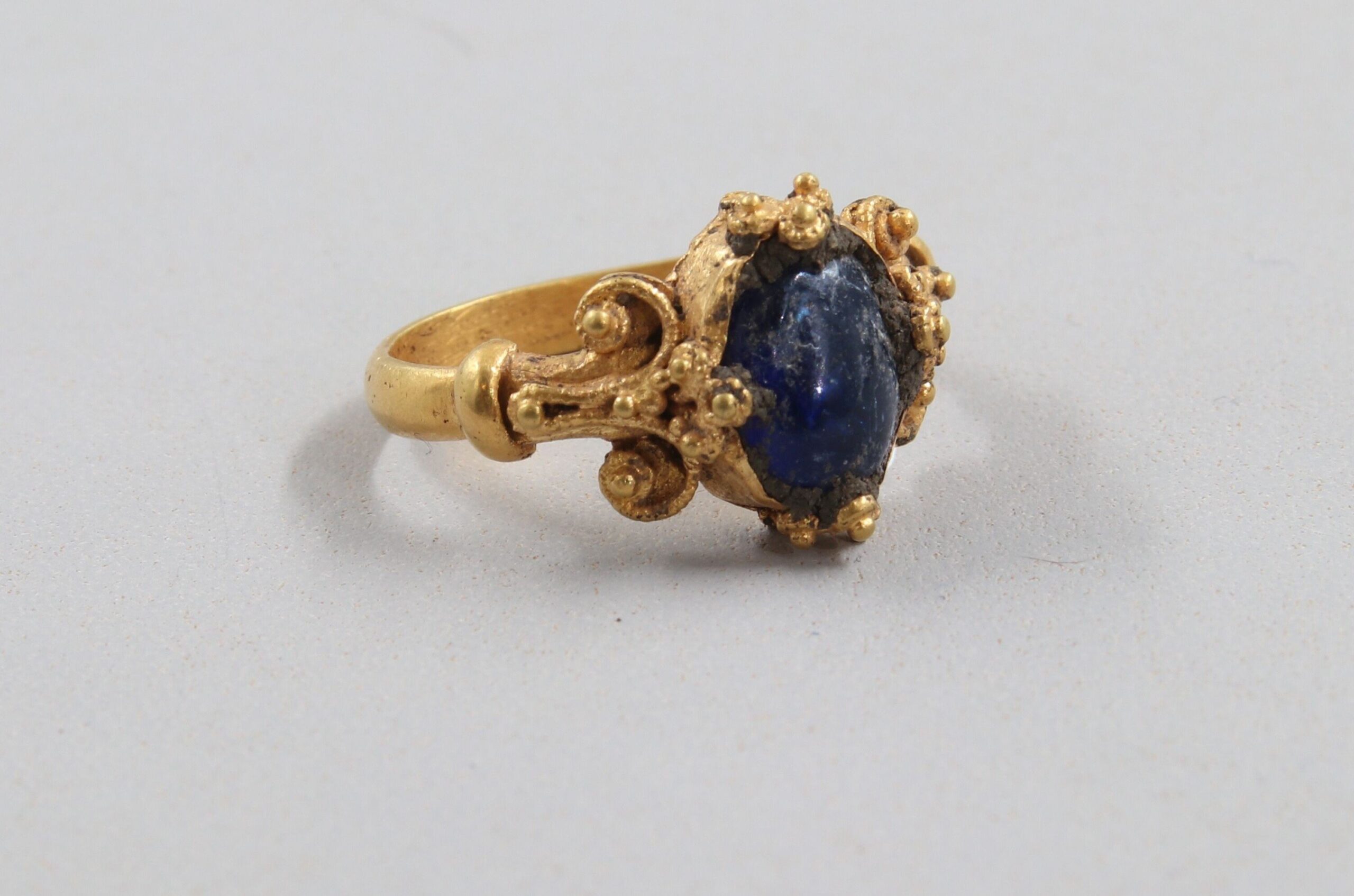
The Neptune of Lyon, one of the largest and most important bronze statues from Roman Gaul, has arrived in Rome for a one-time guest starring appearance at the Giovanni Barracco Museum of Ancient Sculpture. The statue is in the permanent collection of the Lugdunum Musee et Theatres Romains in Lyon, and is being loaned to the sculpture museum as part of an extraordinary exchange of ancient works between the two cities.
History


History
fromwww.thehistoryblog.com
1 month agoAnalysis Nordlingen bronze sword shines spotlight on Bronze Age craftsmanship
A 3,400-year-old Nordlingen bronze sword shows exceptional Bronze Age metallurgy, precise tang-and-rivet construction, and copper-wire inlay revealing advanced metalworking skill.
fromwww.thehistoryblog.com
2 months agoRemains of only building by Vitruvius found after centuries of searching
The only building known to have been designed by Vitruvius himself was found under Piazza Andrea Costa in a preventative archaeology excavation before redevelopment. Unlike the ancient public building found in 2023 which was speculated to be the long-sought basilica, the newly-discovered structure matches the detailed description in Vitruvius' De Architectura. The accuracy with which the remains found coincided with Vitruvian descriptions left experts astonished.
History
fromwww.thehistoryblog.com
2 months agoFirst ancient mosaic in 70 years found in Izmir
It is approximately 10 by 13 feet in dimension and features two main sections consisting of a central hexagonal panel bordered on each side with five square panels and one rectangle. The space between the squares is filled with triangular panels. Each panel contains different geometric and abstract botanical designs. The hexagonal panel in the center contains a Solomon's Knot (two interlocked ovals). The square panels contain flowers with four pointed petals. The triangular panels contain small solid triangles.
History
[ Load more ]