#character-driven-fiction
#character-driven-fiction
[ follow ]
#literature #science-fiction #fiction #romance #life-is-strange #video-games #character-development #poetry
fromwww.theguardian.com
1 week agoDaunting, inspiring, comforting, terrifying: the writers who can make silence as eloquent as words
A vision lay before him: Fleet Street blanketed with snow, silent, empty, pure white, and, at the end of it, the huge and majestic form of Saint Paul's Cathedral. It was a spellbinding moment: the great thoroughfare temporarily devoid of carts and carriages, the cathedral looming blurrily out of the still-falling snowflakes a real-life snow globe.
London
Artificial intelligence
fromThe Atlantic
2 weeks agoThe Human Skill That Eludes AI
Generative AI has paradoxically declined in creative writing quality since GPT-2, despite advancing in technical capabilities, with current models producing formulaic, flawed prose despite access to centuries of literature.



Writing
fromBig Think
3 weeks ago"If it sounds literary, it isn't": The deceptively simple rules behind good writing
Neal Allen and Anne Lamott co-authored Good Writing by combining Allen's 36 writing rules with Lamott's annotations, creating a collaborative guide where Allen explains rules and Lamott provides practical examples and alternative perspectives.
fromBustle
1 month agoExclusive: Leo Woodwall Breaks Down The *Very* Twisted Ending Of 'Vladimir'
There is an allure about him. There's a warmth to him, and something new about him, but also it's the timing. The backlash of her open relationship with John is really starting to take on a new shape, and I think he's a sort of exciting escape from it too.
Television
fromMedium
1 month agoThings that don't matter when you write
To deny one's own experiences is to put a lie into the lips of one's own life. It is no less than a denial of the soul. The concept I stick to - my core principle - is simple: I write in plain English, and only when I actually have something to say.
Writing
Music
fromwww.npr.org
1 month agoWhy music has become such a big part of the romance novel reading experience
Romance novel readers increasingly use pop music playlists to enhance their reading experiences, creating a community that bridges book fandom and music fandom, exemplified by Charli XCX's Wuthering Heights album.
Books
fromwww.npr.org
3 weeks agoAuthor Luke Kennard talks about his novel, 'Black Bag'
Luke Kennard's novel 'Black Bag' fictionalizes a 1967 psychology experiment where a silent, bagged actor in a classroom gradually becomes liked by students through repeated exposure, exploring how familiarity transforms perception.
Books
fromwww.theguardian.com
3 weeks agoDaisy Johnson: I wasn't a fan of David Szalay, but Flesh is a masterpiece'
Reading shapes identity across life stages, from childhood memories through formative teenage years to adult perspectives, with specific books creating lasting connections and inspiring creative ambitions.
fromPsychology Today
1 month agoBurn Your Romance Novels!
The short answer is yes, unless you take fiction for what it is-fiction. When you long for something you don't have, it can lead to dissatisfaction with what you DO have. Romantic fiction has witty, heartfelt dialogue, buckets of romantic gestures, and protagonists who have a preternatural ability to read each other's minds. It's easy to forget it is not real. This can set up unrealistic expectations both conscious and unconscious.
Relationships
fromGameSpot
1 month agoThe Best Co-Op Story Games With Great Tales To Tell
Famous as a series of uncompromising multiplayer JRPG greatness, our one pic from the whole franchise has to be Tales of Vesperia. The game blends classic JRPG storytelling with fast-paced, real-time combat that works surprisingly well in co-op. The story follows Yuri Lowell, a former knight who takes justice into his own hands in a world powered by magical technology.
Video games
Arts
fromBrooklyn Paper
1 month agoAt Caveat, Laibson's tech-heavy Chekhov adaptation The HARMNF examines digital-age alienation * Brooklyn Paper
Contemporary theater uses virtual, mixed reality, and AI technologies to create immersive, interactive performances that blur traditional audience and performer roles.
Books
fromwww.theguardian.com
1 month agoSaba Sams: I've no interest in reading Wuthering Heights again'
Jacqueline Wilson's unflinching approach to children's literature, alongside works by authors like Gwendoline Riley and Clarice Lispector, demonstrates that literary courage and emotional complexity resonate more powerfully than conventional safety or virtuousness.
fromwww.theguardian.com
2 months agoThe best recent crime and thrillers review roundup
Obnoxious jewellery dealer Rodney Manderson has been killed outside the Bowery auction rooms, stabbed through the eye with the Victorian hatpin that his boss, Rose Bowery, has brandished in front of the nation on Bargain Hunt. As she discussed the pin's virtues as a deadly weapon as well as its millinerial uses, the fiercely loyal Rilke decides while feeling grateful to have skipped lunch and trying not to think of jelly to remove it before calling the police.
LGBT
Video games
fromwww.theguardian.com
2 months agoIt's a loving mockery, because it's also who I am': the making of gaming's most pathetic character
Baby Steps uses deliberate frustration and an inept, awkward protagonist to transform player irritation into empathy, identification, and unexpected affection.
Books
fromwww.theguardian.com
1 month agoThey by Helle Helle review a novel to make the reader slow down and take notice
A Danish novel explores the deepening bond between a teenage daughter and terminally ill mother through minimalist prose that captures unspoken emotional intimacy and life's quiet, defining moments.
fromwww.theguardian.com
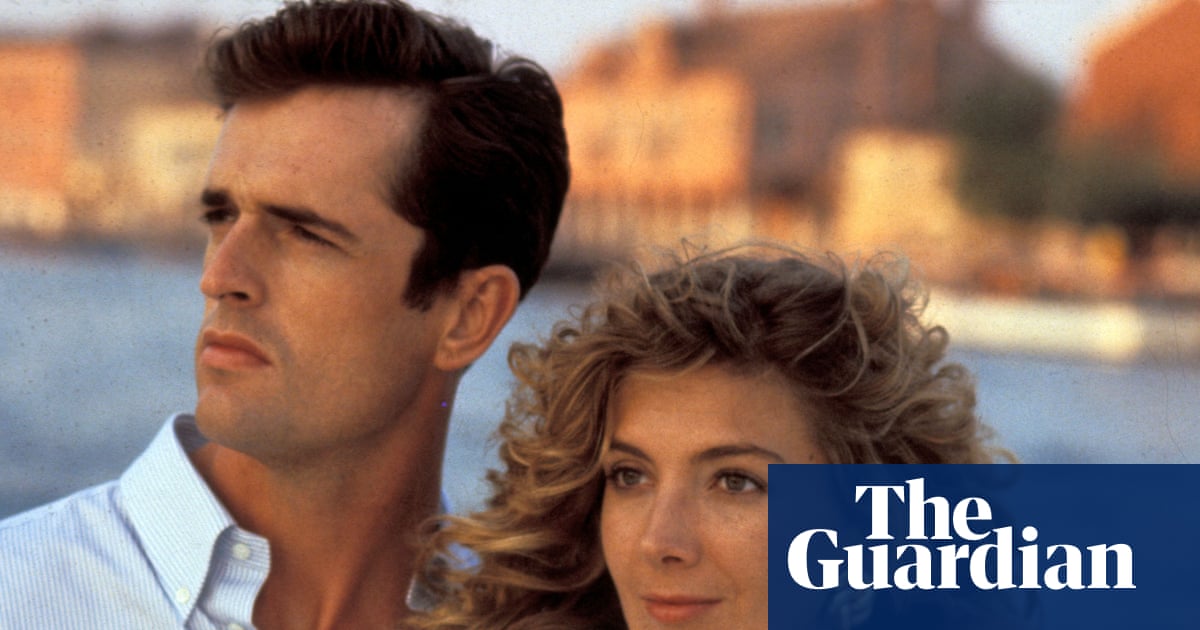
1 month agoA realistic take on marriage': readers on their favourite lesser-known movie romances
The Truth About Cats & Dogs A somewhat forgotten 90s romcom which is Cyrano retold in 90s LA. Brit Ben Chaplin is a delightfully incompetent owner of a large dog who mistakes Uma Thurman's producer for Janeane Garofalo's radio presenter of a pet advice radio phone-in. Garofalo and Chaplin completely steal the film I do wish people had given her more roles after it and it's touching, silly and (I've discovered over the years) a film for people like me who don't really like romcoms or romantic films in particular.
Film
fromHer Campus
1 month agoThe Space Between Then and Now: Modern Storytelling
Storytelling is shaped by the way we engage with it. In the past, narratives unfolded slowly, giving the audience time to reflect and analyze at their own pace. Classic games, podcasts, and films provided the audience with time to settle into the narrative, and for emotions to build up gradually. These slower forms of media created room for reflection and engagement, allowing audiences to process narratives thoughtfully.
Digital life
fromwww.theguardian.com
2 months agoUncomfortably relatable': writers on their favourite unlikeable movie characters
In one scene, an adoring fan asks Melvin his secret to writing women. I think of a man, and I take away reason and accountability, he says, an epic burn forever seared in my brain. Of course Melvin's anti-charm offensive only goes so far in a James L Brooks project. Before long, the rudeness erodes as Melvin is forced on to a journey of self-discovery with the nextdoor neighbor he can't abide (Greg Kinnear) and the diner waitress he can't live without (Helen Hunt).
Film
fromInverse
2 months agoThe Best Character of 2026 Is Totally Unexpected
Trails Beyond the Horizon's new character, Ulrika, is like staring into the abyss of a broken TikTok algorithm, and while my knee-jerk reaction might have been shock and even a little disdain, over the next 100 hours, I grew to find the character's bit surprisingly genuine and, admittedly, hilarious. What first felt like a gimmick grew to become one of my absolute favorite parts of the game, enhancing the already distinct personality of the Trails games.
Video games
Books
fromThe Atlantic
1 month agoWhen Did Literature Get Less Dirty?
Philip Roth's Zuckerman Unbound functioned as a response to the controversial reception of Portnoy's Complaint, with Roth's protagonist expressing regret over writing sexually explicit material that drew accusations of anti-Semitism and misogyny.
fromSilicon Canals
1 month ago7 things people do when telling stories that make others tune out immediately without realizing it - Silicon Canals
We've all been there. Someone starts telling a story, and within seconds, your mind starts wandering. Maybe you pull out your phone, suddenly remember an urgent email, or find yourself mentally reorganizing your weekend plans. The storyteller doesn't notice. They keep going, completely unaware that they've lost their audience. After interviewing over 200 people for various articles, I've noticed patterns in how people communicate their experiences. Some captivate you from the first word, while others lose you before they've even gotten to the point.
Writing
Books
fromwww.theguardian.com
1 month agoBen Markovits: I used to think any book concerned with people falling in love can't be very good'
Reading shaped formative years through detective stories, fantasy epics, and memoirs that provided companionship and escape during frequent moves and family transitions.
fromJezebel
1 month agoTurns Out, When You Write a Novel About Killing a Politician, People Tell You How They'd Do It
When the people who are after me get here, they'll arrest me and put me on trial, or they'll disappear me to some black site. Or they won't bother with any of that and they'll just kill me. All of these seem like plausible outcomes, but in the novel's prologue, the narrator seems much more confident of her success: I am a fucking genius, a gorgeous fucking genius, and the only thing left to do is sit down and write.
Books
fromThe Atlantic
2 months agoA Romance That Actually Takes Sex Seriously
When I first heard of Heated Rivalry, I didn't think much about it. The words Canadian ice-hockey TV series slid into my brain and slipped right back out. But a week later, approximately everyone I'd ever met wanted to talk about it. People kept telling me that it was fun, sweet, and addicting. Most of all, they emphasized that it was really smutty. Every recommendation seemed to come with a warning to not watch with my parents.
Television
Television
fromwww.theguardian.com
2 months agoEternally spellbinding': the TV shows that baffle you but you can't get enough of
Catterick, Monkey Dust, The OA, and Mrs Davies deliver surreal, darkly comic, and increasingly bizarre narratives blending crime, dreamlike animation, sci‑fi, and oddball humor.
Television
fromwww.theguardian.com
2 months agoCompetency porn: is there any greater escapism than watching a capable person on TV?
Audiences increasingly seek escapism through media that showcases calm, expert performance and everyday professional competence rather than sensational or fantastical drama.
fromwww.theguardian.com
2 months agoThe Puma by Daniel Wiles review a visceral tale of cyclical violence
After finding this seam of gold, miner Michael dreams that his son will be able to go to school, rather than join the other children who work in the mine, like blind, bald rodents unearthing themselves in search of scraps of candlelight. In the novel, which won the 2023 Betty Trask prize, everything closes in on Michael: lungs clog, tunnels collapse, horse-drawn narrowboats are attacked by robbers in the sooty dusk. It's a vivid reminder of the cost, in bodily suffering, of resource extraction.
Books
fromThe Atlantic
2 months agoSix Books for the Chronic Daydreamer
What is available is the daydream-a limitless realm of freedom. In this other world, one might be famous or rich, finally catch the attention of their beloved, or simply sit on a beach as a waiter brings them cocktails. They might fly or speak to animals, heroically save a child, tell off their boss with no consequences, win the Super Bowl at the whistle, or travel to another continent, planet, or time period. No one can stop them; no one can even object.
Books
[ Load more ]