#computer-upgrades
#computer-upgrades
[ follow ]






fromTheregister
3 weeks agoRAM is getting expensive, so squeeze the most from it
Both work with Linux's existing swapping mechanism. Swapping (called paging in Windows) is a way for the kernel to handle running low on available RAM. It chooses pages of memory that aren't in use right now and copies them to disk, then those blocks can be marked as free and reused for something else.
Software development
Apple
fromWIRED
3 weeks agoThe MacBook Pro M5 Max Is So Fast, It's Hard to Know How to Test It
The M5 Max MacBook Pro delivers exceptional performance and remains the market's most powerful high-end laptop, though its design has stagnated after five years with anticipated major redesigns coming next year.
#intel-processors
Tech industry
fromThe Verge
3 weeks agoIntel announces Core Ultra 270K Plus and 250K Plus, its 'fastest gaming desktop processors ever'
Intel launches Core Ultra 7 270K Plus and 250K Plus processors on March 26th, claiming superior gaming performance over previous flagship chips with competitive pricing and strong multithreaded capabilities.
Apple
fromTechCrunch
1 month agoThe new MacBook Pro laptops are up to $400 more expensive than their predecessors, thanks to the RAM shortage | TechCrunch
Apple's new M5 Pro and M5 Max MacBook Pro chips deliver significant AI performance gains, but prices have increased substantially due to RAM shortages driven by AI infrastructure demand.

#ryzen-ai-400-series

Gadgets
fromArs Technica
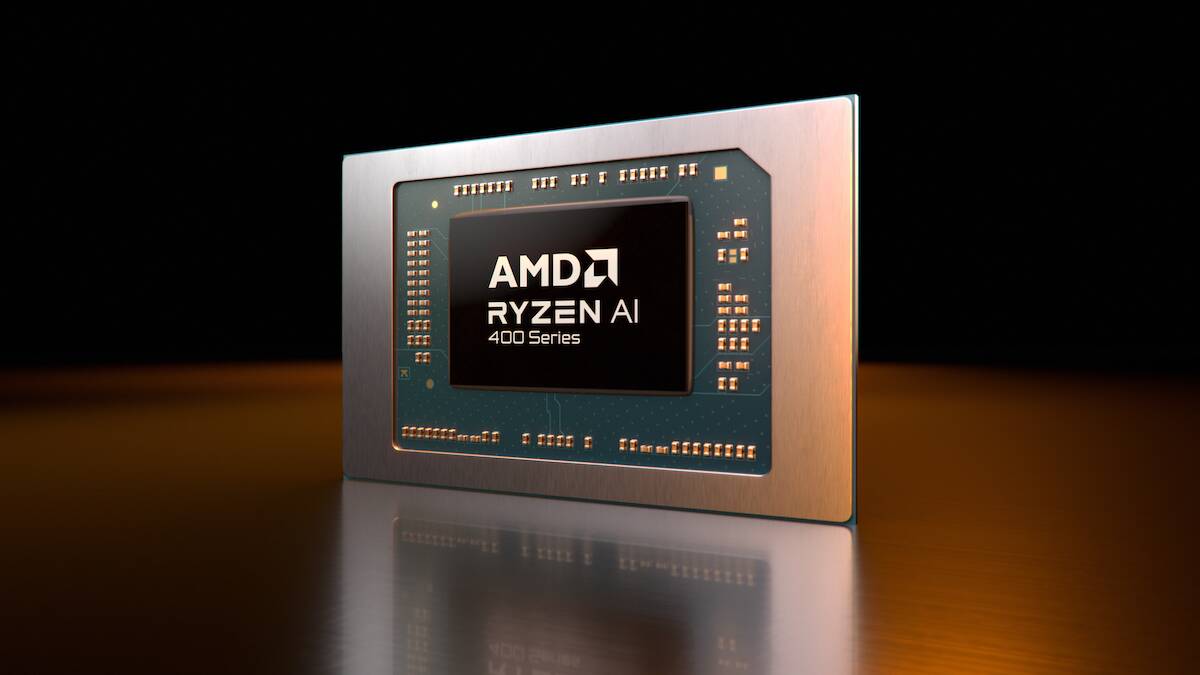
1 month agoAMD will bring its "Ryzen AI" processors to standard desktop PCs for the first time
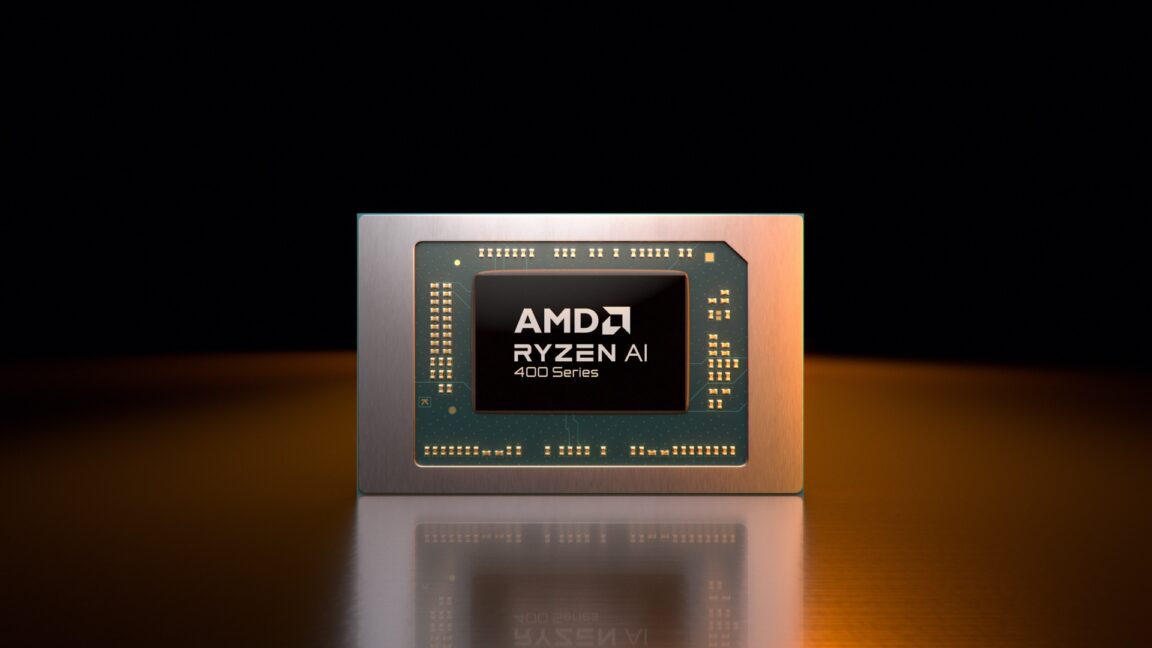
AMD's Ryzen AI 400-series desktop processors are repackaged laptop chips with up to 8 CPU cores and Radeon 860M GPUs, targeting business desktops rather than gaming due to high DDR5 memory costs.
Gadgets
fromArs Technica
1 month agoAMD will bring its "Ryzen AI" processors to standard desktop PCs for the first time
AMD's Ryzen AI 400-series desktop processors are repackaged laptop chips with up to 8 CPU cores and Radeon 860M GPUs, targeting business desktops rather than gaming due to high DDR5 memory costs.
fromTheregister
1 month agoPositron opts for laptop RAM over HBM to take on Nvidia
On paper, Positron's next-gen Asimov accelerators, no doubt named for the beloved science fiction author, don't look like much of a match for Nvidia's Rubin GPUs. Yet, the Arm-backed AI startup boasts its inference chip will churn out five times as many tokens per dollar while using one-fifth the power of Nvidia's latest accelerators to do it. Those are certainly some bold claims, which the company contends are possible because the chip was designed to support large-scale inference workloads.
Artificial intelligence
fromTheregister
2 months agoIntel greets memory apocalypse with Xeon workstation CPUs
The Xeon 600 lineup spans the gamut between 12 and 86 performance cores (no cut-down efficiency cores here), with support for between four and eight channels of DDR5 and 80 to 128 lanes of PCIe 5.0 connectivity. Compared to its aging W-3500-series chips, Intel is claiming a 9 percent uplift in single threaded workloads and up to 61 percent higher performance in multithreaded jobs, thanks in no small part to an additional 22 processor cores this generation.
Tech industry
fromEngadget
1 month agoFalcon Northwest FragBox review: A compact gaming rig that does everything right
When Falcon initially debuted the FragBox in 2004, it was notable for being a genuinely small PC that used full-sized parts. That's still a main selling point today: It can still fit in large NVIDIA GPUs, including the beefy RTX 5090, as well as either Intel's latest Core Ultra chips or AMD's Ryzen 9000 CPUs. A huge 280mm radiator sits at the top pulling out hot air, and it also serves as an All-in-One (AIO) liquid cooler for the CPU.
Gadgets


fromGSMArena.com
2 months agoAMD announces the new Ryzen 7 9850X3D gaming CPU
The Ryzen 7 9850X3D features the same 8-core, 16-threads design as the 9800X3D, as well as the same 96MB L3 cache that makes these chips especially suited for gaming workloads. Thanks to the higher level of binning, the 9850X3D can now hit 5.6GHz clock speeds, up from the 9800X3D's 5.2GHz, at the same 120W TDP. This is an almost 8% increase in clock speed, and should make the 9850X3D the fastest gaming CPU in AMD's lineup, and consequently, on the market.
Gadgets
fromEngadget
2 months agoAMD's new Ryzen AI Max+ chips and Ryzen 7 9850X3D court desktop enthusiasts at CES 2026
"Many people in the PC industry said, well, if you want graphics, it's gotta be discrete graphics because otherwise people will think it's bad graphics," Macri said at last year's CES. "What Apple showed was consumers don't care what's inside the box. They actually care what the what the box looks like. They care about the screen, the keyboard, the mouse. They care about what it does."
Gadgets
fromThe Verge
2 months agoIntel is planning a custom Panther Lake CPU for handheld PCs
According to IGN and TechCrunch, sources say Intel is going to compete by developing a custom Intel Core G3 "variant or variants" just for handhelds that could outperform the Arc B390 GPU on the chips it just announced. IGN reports that by using the new 18A process, Intel can cut different die slices, and "spec the chips to offer better performance on the GPU where you want it."
Gadgets
fromZDNET
2 months agoI never thought a gaming laptop could replace my work PC - until I used this Lenovo
In my opinion, the biggest issue with gaming laptops is their high barrier to entry. They're expensive, with many costing several thousand dollars. It makes sense, though, since you're (usually) packing top-tier hardware, a high-quality display, and a robust cooling system into a compact machine.
Gadgets


fromThe Verge
1 month agoiBuyPower's gaming desktops are discounted for Presidents Day
If you're weighing your options, consider some Presidents Day offers on iBuyPower's pre-built desktops, including the $1,899 RDY Element 9 Pro R07 and the $2,099.99 Slate - both of which are stocked with high-end AMD processors and GPUs that can tear through most games at 1440p with fast frame rates. They also come with 32GB of DDR5 RAM and 2TB of storage, along with a mouse and keyboard.
Gadgets
[ Load more ]