London politics
fromwww.theguardian.com
3 days agoWhy collars are cool for cats and wildlife. | Letters
Cats should wear collars to reduce wildlife mortality, despite pet organizations' concerns about safety without statistical evidence.
Among African elephants, "Big Tuskers" refers to bulls that grow tusks so long they sometimes scrape the ground. Each one can weigh well over 100 pounds. These giant, ivory incisors continually grow throughout an elephant's life, and males typically have much larger tusks than females.
After washing and displaying them, I invited my colleagues to observe them. One colleague seemed very angry after examining them, picked up a piece straight away, hit it hard on the other stone fragments, and exclaimed, 'These kinds of broken stones can be seen everywhere on the road!' But later that fall, the French archaeologist Henri Breuil examined the crystals and agreed with Wenzhong: The crystals were not just stones, but artifacts collected by the early humans who lived in the cave.
Since the rejection, Punch has been given a stuffed orangutan toy by zookeepers at Ichikawa zoo where he lives. Punch has won worldwide adoration mainly because people feel sorry for the baby monkey. The zoo has been posting updates of the macaque, with videos showing him playing alone, being hit by other monkeys and dragging his plushie around everywhere he goes.
Our workshop has encountered all kinds of issues with vehicles over the years, but a set of fox cubs is a brand new one for us. At first, our technician thought they might be rats because the cubs are grey, rather than the typical red you would expect of a fox they gave him quite a fright.
Our team has been so dedicated working around the clock, over time, whatever it takes to continue monitoring this outbreak. It's a really hard, emotional thing to go through as undergraduate, graduate students and young scientists to watch the seals that you've gotten to know over the years get sick.
In a naturalistic rendition of David vs. Goliath, a 28-pound Reeves's muntjac named Tata, a small deer species native to Asia, took on Maruśka, a 1.7-ton female rhinoceros, in a fierce head-to-head at the Wroclaw Zoo in Poland. A video that's gone viral on social media shows the miniature deer fiercely standing its ground and charging at the far more massive rhino, clashing into its horn-tipped snout with tiny antlers.
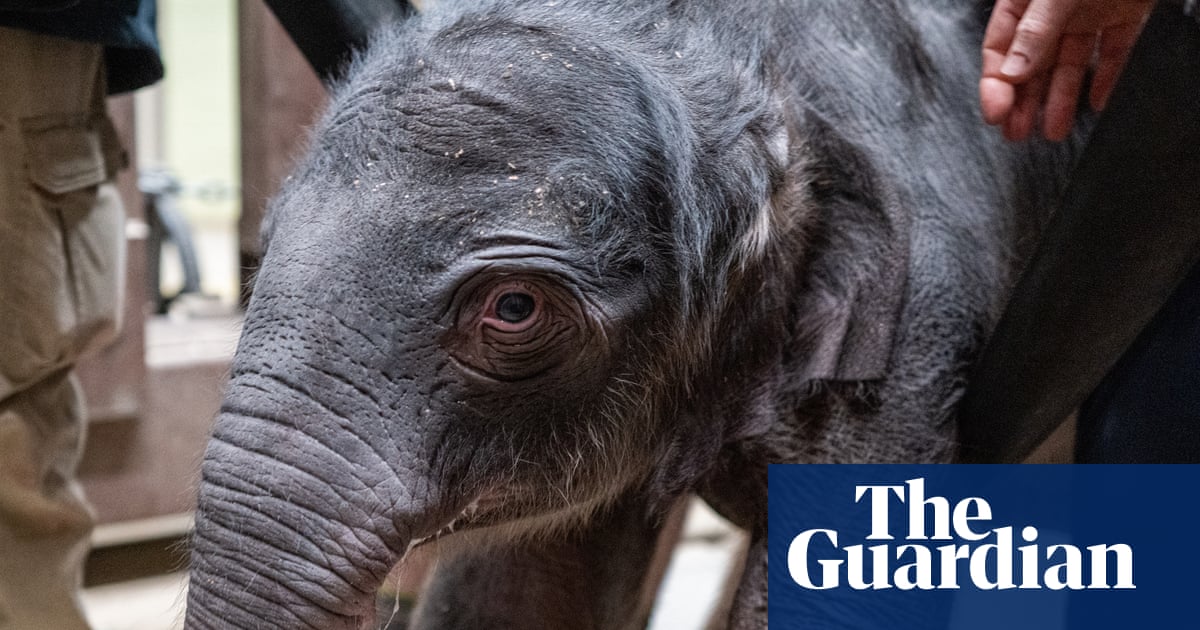
An elephant's trunk is a marvelous thing, flexible enough to bend and stretch as it forages for food, but also stiff enough to grasp and maneuver even delicate objects like peanuts or a tortilla chip. That's because the trunk is highly sensitive when it comes to sensing touch. Scientists have determined that the whiskers lining the trunk are crucial for that sensitivity thanks to their unique structure, amounting to a kind of innate "material intelligence, according to a new paper published in the journal Science.
The House of Elements, set to become the crown jewel of Orientarium Zoo in Łódź, Poland, takes the classical elements (earth, ice, water, fire, and air) and transforms them into a 6,000-square-meter narrative experience. Rather than designing a building where you walk from exhibit to exhibit, VMA created a continuous downward-then-upward journey that mirrors the evolution of life itself. Designer: VMA Design Studio for Orientarium Zoo
In Texas, the Houston Zoo has prepared its buildings and barns with heaters designed to withstand extreme conditions, the zoo said in a blog post on Friday. Animals will have access to extra hay and bedding, and food was stocked in advance. Across the Zoo, sensitive plants are being protected with coverings, and generators are positioned to provide backup power if needed, the blog post said.
He has been filmed multiple times being dragged and chased by older Japanese macaques inside the enclosure. Early clips showed him wandering alone with the toy after being pushed away by other monkeys, and clutching it tightly while being harassed. Viewers were briefly relieved when later videos emerged of another monkey grooming and comforting him. However, just days later, new footage showed Punch once again being targeted this time dragged aggressively in a circle by a much larger monkey.
Ever wondered what your Instagram feed says about your inner animal? Or why you scroll through TikTok like a cautious deer while your friend posts boldly like a roaring lion? The way we use social media mirrors the same personality traits scientists have found in animals for decades. Just as personality traits like neuroticism, agreeableness and extraversion have been studied in animals, these same traits shape how we present ourselves online.
The list of feats Andrew Schulz has witnessed an elephant perform with its trunk is as long as, well, an elephant's trunk. These powerful proboscises are strong enough to push over 900 pound trees and gentle enough to pick up a tortilla chip without breaking it. They can snuffle along the ground to sense vibrations from far-off herd movements. They can be used to solve puzzles, peel bananas, craft tools, console a fellow pachyderm or a human friend.
Recently, two unexpected examples by a wild wolf and a domesticated cow named Veronika attracted global attention and once again opened the door for experts and others to weigh in on the question, "Are these really examples of tooling?" Many people are eager to know more about the nitty-gritty details of tooling, so I am thrilled that Dr. Benjamin Beck, an expert in this area, could answer a few questions about this fascinating behavior.
A long, winding path takes guests around and under felled trees. Aged gray tree hunks form arches, for instance, over bridges that tower over clay-colored paths with hoof prints. The design is meant to reorient us, to take us on a trail walked not by humans but traversed and carved by elephants, a creature still misunderstood, vilified and hunted for its cataclysmic-like ability to reshape land, and sometimes communities.
Demand for safari holidays is growing, so how can you do it without harming animals, people or the landscape? Last summer, images were shared of a scene in Tanzania's Serengeti National Park - a large group of jeeps and dozens of tourists standing outside taking pictures of 'The Great Migration' and blocking wildebeests' traditional crossing point. Jeep traffic jams have also been widely reported in other parks, including Sri Lanka's Yala, known for its high density of leopards.
In late 2025, Interpol coordinated a global operation across 134 nations, seizing roughly 30,000 live animals, confiscating illegal plant and timber products, and identifying about 1,100 suspected wildlife traffickers for national police to investigate. Wildlife trafficking is one of the most lucrative illicit industries worldwide. It nets between US$7 billion and $23 billion per year, according to the Global Environment Facility, a group of nearly 200 nations as well as businesses and nonprofits that fund environmental improvement and protection projects.
As the Zoological Society of London (ZSL) enters its 200th year as a charity, keepers at London Zoo have started counting every animal for its annual stocktake. The zoo is home to more than 8,000 animals — from a colony of leafcutter ants to critically endangered Asiatic lions. ZSL, which runs London Zoo, was founded in 1826 as science-led conservation charity working to protect species, restore ecosystems and help wildlife and people coexist.
Countless millions of nonhuman animals (animals) of all sorts are used in a diverse array of laboratory research. Their treatment varies from being unspeakably inhumanely abused to being treated with kindness, depending on the questions at hand and the values and attitudes of the researchers themselves. The lives of these animals truly are hidden, and most people are incredulous when they learn that laboratory rats and mice still are not considered "animals" under the current federal Animal Welfare Act.
Researchers have discovered the naturally mummified and skeletal remains of 61 cheetahs, which were hidden deep inside caves in northern Saudi Arabia for hundreds, and in some cases thousands, of years. The find indicates that these big cats roamed the Arabian Peninsula for millennia before they disappeared from the landscape between 49 and 188 years agoevidence that bolsters an effort to rewild the region with modern-day cheetahs, according to Ahmed Boug, general director of the National Center for Wildlife in Riyadh.