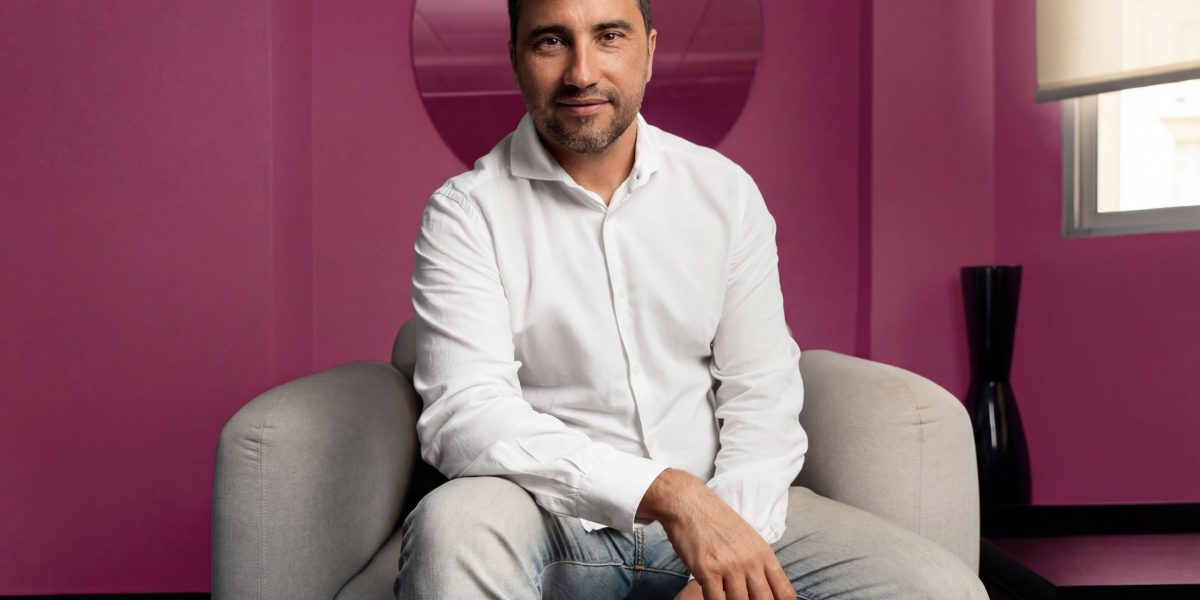
For more than four decades, Larry and Lorna Hundt have shaped not only a company, but a culture. What began as a young university student's weekend bus runs between Waterloo and Toronto evolved into one of Canada's most creative and admired motorcoach and tour operations. As Larry reflects on a lifetime in the industry and the legacy of Great Canadian Holidays & Coaches, the through-line is unmistakable: entrepreneurship, innovation, and a devotion to people - passengers, partners, and employees alike.
Five Welsh entrepreneurs have been recognised for outstanding progress after completing the Business Wales Start-Up Accelerator, with the latest cohort underlining how intensive, targeted support can turn early-stage ideas into investment-ready businesses. The award winners completed the ten-week accelerator programme and were recognised across five categories, reflecting both the breadth and quality of entrepreneurial talent emerging across Wales. Collectively, the cohort demonstrated strong momentum in moving from concept to customer, validating propositions and building clear growth strategies.
Entrepreneurs often have to take a leap of faith to get their businesses off the ground-whether it be cashing out their 401(k)s for funding, or dropping out of Ivy League colleges to go all-in. Chess.com cofounder Danny Rensch started his 235 million-player empire when his life was on the brink of collapse. Although he initially believed his vision was unrealistic, he credits a bit of that self-delusion to the platform's success.
Cuban's origins are fairly humble. He was raised in a middle-class family in Pittsburgh and once had a job selling garbage bags door-to-door around his neighborhood (yes, you read that correctly). He bootstrapped his way up, starting with bartending and software sales before founding MicroSolutions, which he sold for $6 million in 1990, and later co-founding Broadcast.com, acquired by Yahoo for $5.7 billion in stock during the dot-com boom.
I'm French, but I absolutely love living in LA. Still, during my maternity leave, I returned to Paris to be closer to my family. There, my baby adored singing books. She was only a few months old, but they kept her engaged. When we returned to America, I couldn't find anything similar. At the same time, I was learning all the English nursery rhymes I hadn't grown up with. I loved singing rhymes like "Twinkle Twinkle Little Star" and "Patty Cake."
When we think of entrepreneurs, many of us imagine bright young upstarts in hoodies and jeans, like Mark Zuckerberg or Irish founders of the payment service provider Stripe, brothers Patrick and John Collison.
2000-2003: The next Harry Potter book didn't come out for three years. 2022: Right after he was born, my son decided he would never sit in a stroller or a car seat. What is something you had to learn the hard way? Life doesn't pause for anyone. In the past few years, I've started three companies, moved homes and had two babies. There's no perfect moment, just a lot of juggling.
Concern over the potential of artificial intelligence replacing employees remains high as the number of work tasks the tools can tackle grows. But the technology now plays a large role in boosting employment, too. A new report by job site LinkedIn shows how AI does that by fueling small business growth, and enabling a rising number of aspiring entrepreneurs to strike out their ow
The median base salary for HBS's 2025 graduates rose to $184,500, up from $175,000 the year before. Of the 65% of the class seeking employment, 90% received at least one job offer within three months of graduation, and 84% accepted-both improvements from the classes of 2024 and 2023. Data from PayScale, analyzed by Poets & Quants, estimates the median lifetime income of an HBS graduate at over $8.5 million.
After experiencing intense itching from head to toe, I developed a total aversion to dogs. I made my husband agree that we would never have a dog when we got married. My husband and I both worked internationally, he in defense and me in humanitarian efforts. We met in Afghanistan and later moved to Kenya, which was a region where his harder skillset and my softer skillset could both be utilized.
The two-time founder told Fortune that he approaches it the way he approaches his business: always on. "It's just like in business, you have to, consistently, every day, show up and don't have any excuses for poor performance." He said that not all his Ironman training days are great, but he has to make sure he follows his plan. It aligns with how he works.
I grew up believing courage was about heroes jumping off mountains and running into burning buildings, 300 Spartan warriors standing against the invading Persian army-the kind of thing that is celebrated in epic poems and Hollywood blockbusters. But life has taught me something different. Courage does not just have to look spectacular. In fact, much more often, courage lives in the everyday.
Jarred Kessler has spent over fifteen years at the intersection of finance, technology, and real estate. He is known for building companies that rethink traditional models and deliver new solutions for both investors and consumers. From raising $150 million in startup capital to leading innovative real estate platforms, Kessler has established himself as a strategic thinker and transformative leader. "I've always believed that the best opportunities come from understanding change before it happens," Kessler says.
Having built a company worth around 70 million pounds ($92m) that he plans to sell soon, John wants to avoid a hefty capital gains tax bill. As his children are in university, upping sticks is possible. He hopes to take advantage of the Republic of Ireland's non-domiciled, or non-dom, tax regime, which would exempt him from Irish taxes as well.
For aspiring entrepreneurs, he said the key lesson from his career is the vital importance of "resilience, grit, hard work, and working on something that matters." Siminoff said that nobody knows how AI will reshape the world, but young people's best shot is to pursue a passion and work hard, as he expects there will still be jobs in five years for people who are "great at things."
While many businesses have modest beginnings, Dell says risk-taking focused his mind. "If you want to really make it big, you better come up with something unique," Michael Dell, the founder, chairman, and CEO of Dell Technologies, told Fortune in a 2017 interview. "It better be differentiated-that nobody else is doing." His other piece of advice for entrepreneurs is to take feedback with a grain of salt.
"I have blind, crazy, crazy trust that he's got what he's working on," Sakkijha said, adding that they're both "in it to win it." Masad said one advantage of working together is their ability to be direct. That level of openness helps the business move more quickly, he said. Both said that working together also brings out their individual strengths. Masad said he sees himself as detail-oriented, data-driven, and passionate about problem-solving and strategy, while Sakkijha thrives in communication, decision-making, and emotional intelligence.
Best known for his portrayal of Andre "Dre" Johnson on ABC's Black-ish, Anderson not only starred in the series but also served as executive producer. The show became a cultural touchstone, using comedy to explore themes of identity, family, and progress. His creative influence extended to spin-offs like Grown-ish and a variety of hosting roles, including To Tell the Truth and the 75th Emmy Awards.
Two of the UK beauty industry's most successful founders, Susie Ma of Tropic Skincare and Jenna Meek of Refy, are set to join the BBC's Dragons' Den as guest dragons in 2026. The pair will sit alongside Peter Jones, Deborah Meaden, Touker Suleyman and Steven Bartlett, as well as fellow guest dragons Tinie Tempah and Gary Neville, in a line-up designed to bring a new generation of entrepreneurial voices into the Den.
Ashley Rector is a former attorney turned entrepreneur, the founder of Quimby Digital and the visionary behind Wimbly Social, a forthcoming AI-powered SaaS platform built to revolutionize organic social media strategy. Ashley launched Quimby Digital to help purpose-driven brands scale their impact through smarter social storytelling. Under her leadership, Quimby has become known for delivering high-performing content and strategy across platforms like Reddit, Instagram, and TikTok-especially for clients in the health, wellness, parenting, and climate spaces.
The same is often true for entrepreneurs. A Journal of Business Venturing study found that the most successful entrepreneurs tend to be middle-aged, even in tech. In fact, a 60-year-old startup founder was three times more likely to launch a successful startup than a 30-year-old startup founder, and nearly twice as likely to launch a startup that landed in the top 0.1% of all companies in terms of revenue and profits.
When I went to college in 2017, I already knew I wanted to work in startups and make a difference in the world. After my freshman year at the University of Michigan, I switched majors from business to computer science, which I felt would be more useful for running an early-stage company. But in late 2018, at age 19, I dropped out of college for a full-time job.
Creating a successful company logo is a multifaceted magic trick, combining marketplace wisdom with personal intuition and a splash of creativity. Most restaurants start from scratch, hoping the design resonates with customers - but that's not always the case. The founder of one beloved fast-food chicken chain got an unusual gift of logo inspiration when remodeling a building. While uncovering traces of history and mystery, entrepreneur Todd Graves discovered a fascinating mural from which the logo of Raising Cane's arose.
I worked in tech sales for about four years, mainly selling software and AI solutions to restaurant companies. I did well and consistently hit my quotas, but I didn't have control over my future. Even after a strong quarter, management would suddenly announce changes, and I never had a say in the matter. That's just how big companies work. Eventually, I knew I had to go out on my own if I wanted to shape my own future.
Duane Roberts made millions off a food he was initially wholly ignorant of: the humble burrito. It was the 1950s, and his family owned a small meat wholesaler called the Butcher Boy that sold patties to local restaurants, including one of the first operating McDonald's, a location in San Bernardino. As the fast food chain and other burger joints grew in popularity, the family brainstormed other products they could manufacture, Roberts recalled in a 2007 interview with the Orange County Register.
My entrepreneurial ambitions led me to major in computer science, which opened the door to internships at companies like Meta, Slack, and Robinhood. My desire for more agency and autonomy over my work drove me to intern at progressively smaller companies. My first internship was with Facebook, which at that time had about 12,000 employees. When I joined Slack, it was a 1,200-person company. And finally, when I got to Robinhood, it was a 300-person company.
This has undoubtedly sent shockwaves through the cannabis space with investors and industry giants likely taking note. Black cannabis leaders state that there has always been less funding and respect for them. "Politics has emboldened people to say what they really think," Alexander-Davis said. "When people think about DEI hires, they think the standards are lower when they're actually higher."