#epistemological-crisis

[ follow ]
Philosophy
fromemptywheel
2 hours ago

Defining Morality - emptywheel

Morality is defined as a code of conduct concerning harm, purity, and loyalty, guiding behavior within a society.
Medicine
fromwww.theguardian.com
1 day ago

If it feels like the world is rejecting science and truth, here are five ways to fight back | Helen Pearson

Evidence-based medicine transformed medical practice by prioritizing scientific evidence over intuition, despite initial backlash from traditionalists.
#ai-in-education
fromWIRED
4 days ago

The Online Civil War About 'Michael' Is a Battle Over Truth

Musically, Jackson was in a class all his own. He remains, even in death, one of the best-selling music artists of all time, with 13 number one singles and countless awards.
Independent films
Psychology
fromSilicon Canals
4 days ago

I'm 34 and I just noticed that I've been describing my own life to friends in the same tone I'd use to describe someone else's, and that distance turned out to be the actual problem, not the events I was describing - Silicon Canals

Self-distancing can help manage emotions, but relying on it too much can create a disconnect from one's own life experiences.
fromNature
5 days ago

Hit a glitch in your research? Some 'night science' thinking could move it forward

The terminology of day science and night science, introduced by François Jacob, helps scientists navigate challenges in the lab by encouraging a shift in mindset towards creativity and abstract thinking.
OMG science
fromDeconstructing Yourself
14 hours ago

A Conversation with Wystan

Wystan emphasizes that awakening does not come with a Buddhist label, suggesting that it transcends traditional boundaries and can be approached from various cultural perspectives.
Philosophy
Psychology
fromSilicon Canals
5 days ago

Psychology says deep thinkers don't realize the reason they feel disconnected from their own life isn't depression - it's that observation became a shelter they forgot how to leave - Silicon Canals

Chronic detachment often misdiagnosed as depression or stress may stem from a learned behavior of observing rather than experiencing life.
fromA Philosopher's Blog
2 days ago

The Better than Average Delusion

Surveys illustrate that most Americans rank themselves as above average in everything from leadership ability to accuracy in self-assessment, despite the statistical impossibility of this belief.
Philosophy
Psychology
fromSilicon Canals
5 days ago

Some people who appear completely unbothered by criticism haven't stopped caring what others think. They've just moved the audience inside, and now they answer to a version of themselves that never gives them a day off - Silicon Canals

Internalized criticism often masquerades as resilience, leading to preemptive self-critique before external feedback is received.
fromA Philosopher's Blog
1 week ago

Success, Failure & Chance

Sorting out the role of chance in success is both interesting and important. One reason it is important to sort out chance is to provide a rational basis for praise or blame (and any accompanying reward or punishment).
Philosophy
Psychology
fromSilicon Canals
5 days ago

Some people don't stay quiet in arguments because they're calm, they stay quiet because they ran the math years ago and concluded that saying the thing costs more than swallowing it, and they've been paying the cheaper price so long they forgot it was a choice - Silicon Canals

Silence in arguments often results from an automatic cost-benefit analysis rather than emotional mastery or composure.
Philosophy
Society grapples with accepting mortality while simultaneously resisting control over death, creating a tension in attitudes toward life extension and end-of-life choices.
#higher-education
fromA Philosopher's Blog
2 days ago

Love, Voles & Kant

If humans are like voles and the mechanistic theory of human bonding is correct, then fidelity that grounds pair-bonding would be a form of addiction, as discussed in the previous essay.
fromPhilosophynow
4 weeks ago

What do I have to fear, have I ever diminished by dying?

What do I have to fear, have I ever diminished by dying? I died as lifeless matter and became growing vegetation, then I died as a plant and reached animality. I died as an animal and became human.
#philosophy
Philosophy
fromApaonline
4 days ago

Recently Published Book Spotlight: Why Plato Matters Now

Plato's dialogues address contemporary issues like democracy, education, and ethics, emphasizing the importance of dialogue in understanding the human experience.
Philosophy
fromBig Think
6 days ago

The idea of "theories of everything" may be fundamentally wrong

Quantum physics and General Relativity are fundamentally incompatible, leading to a search for a unifying theory that has yet to succeed.
Psychology
fromPsychology Today
3 weeks ago

People Don't Just Update Beliefs, They Test Them

Understanding psychological change requires recognizing the role of control and mastery in actively pursuing change despite familiar limitations.
Philosophy
fromApaonline
2 weeks ago

Doing Philosophy in a Borrowed Tongue

Experiencing a second language can create a profound sense of self-difference and challenges in communication for international students.
OMG science
fromBig Think
1 month ago

Ask Ethan: Does nature need to obey laws at all?

The Universe's fundamental laws and constants remain unchanged across space and time, despite the variety of structures formed throughout cosmic evolution.
Philosophy
fromApaonline
2 weeks ago

APA Member Interviews, Sharon Crasnow

Sharon Crasnow focuses on feminist epistemology and social science methodology, emphasizing the importance of objectivity and measurement in her work.
Psychology
fromPsychology Today
1 month ago

Beyond Suspicion: Why We Doubt Greatness-and What It Says About Us

Mental mastery and team trust are crucial for success in cycling, transcending past performance and skepticism.
fromBig Think
2 months ago

How our view of "fundamental" has evolved over time

In antiquity, many opined about "the elements" in combination. Around 2500 years ago, Leucippus and Democritus founded the idea of atoms. Perhaps everything, they opined, was composed of indivisible building blocks. In the late 1700s, hydrogen and oxygen were discovered. Circa 1804, John Dalton revived atomism to explain chemical behavior. Then in 1869, Mendeleev developed the periodic table: organizing the atoms.
Science
Philosophy
fromBig Think
2 weeks ago

The important role of ignorance in building a better society

Total freedom without laws leads to chaos; social contracts are essential for order and security in society.
#jurgen-habermas
Philosophy
fromApaonline
3 weeks ago

What About Knowledge That No Longer Knows What It Is For?

Knowledge and education have become distorted by managerial frameworks, leading to a superficial understanding of their true purpose and value.
Philosophy
fromPsychology Today
2 weeks ago

What's the Difference Between Wisdom and Critical Thinking?

Wisdom and critical thinking are distinct, with wisdom arising from experience and offering long-term insights, while critical thinking can foster wisdom over time.
fromPsychology Today
2 months ago

We Don't Know How Little We Know

This is a tough time for politics in America. But it's an extremely interesting time for those of us who wrestle with the nature of reality. As a psychiatrist who has treated people with psychosis for over 20 years, I have lived in the uncomfortable space between their experience of reality and mine and I have worked to change beliefs that are some of the most resistant to change: delusions.
US politics
Mindfulness
fromPsychology Today
1 month ago

Ideas We Aren't Ready to Understand-Yet

Collect ideas you don't understand but sense are important, as they trigger deeper cognitive processing and eventual insight through incubation.
fromNature
2 months ago

'What are we doing here?' The polymaths who searched for the meaning of life

A mentor once told me that, when writing a research statement for a professorship, I had to start with the most ambitious pitch I could imagine - and then go ten times bigger. It's tricky enough to do this as a cosmologist, given that the topic of study is the entire Universe. But there is a quest that is more ambitious still: to find out 'what are we doing here?'
Books
Education
fromPsychology Today
2 months ago

A True Believer in the Intellectual Spirit

Entrenched anti-intellectualism, market-driven educational priorities, and political pressures are undermining liberal arts, academic freedom, and intellectual life while religious movements retain transformative power.
Science
fromBig Think
1 month ago

The right way to be a scientific contrarian

Scientific advancement occurs through incremental improvements and revolutionary paradigm shifts that replace foundational understanding with entirely new conceptions of natural phenomena.
Arts
fromHyperallergic
2 months ago

A Surprisingly Enjoyable Show About Critical Theory

Echo Delay Reverb examines French critical theory's influence on American art, highlighting Francophone thinkers and artworks addressing labor, incarceration, materiality, and formal contrasts.
Science
fromPsychology Today
1 month ago

The Unbearable Fear of Psi: When Skepticism Shifts to Denial

Scientific investigation of extraordinary human experiences encounters emotional resistance and dismissal that exceeds standard methodological critique, reflecting deeper discomfort with certain research topics rather than legitimate scientific skepticism.
fromPhilosophynow
4 weeks ago

Life Sacrifice

The widespread practice of showing the Eid Al Adha slaughtering to children can desensitize them to violence, as many families take pride in this tradition.
Philosophy
fromPhilosophynow
4 weeks ago

The Mirror & the Flame

Attar's 'Conference of the Birds' follows a flock of souls seeking the Simorgh, symbolizing the Divine, through seven valleys, ultimately revealing the Divine as a reflection of the self in relation with others.
Philosophy
fromThe Atlantic
1 month ago

How to Believe in God

Witnessing the presence of God at a bus stop in 2011, I felt overwhelmed by something indescribably majestic, which bared my soul to a profound realization.
Philosophy
fromInsideHook
1 month ago

Are the Humanities Poised for an Academic Comeback?

Many colleges and universities have made cuts in these programs, often bolstering STEM programs at their expense. It's a situation that has sparked no small amount of impassioned editorials. The headline of a recent article at The Guardian by Alice Speri referenced an 'existential crisis at U.S. universities,' and Speri's reporting features numerous examples of undergraduate and graduate programs facing cuts or outright elimination.
Higher education
fromwww.theguardian.com
1 month ago

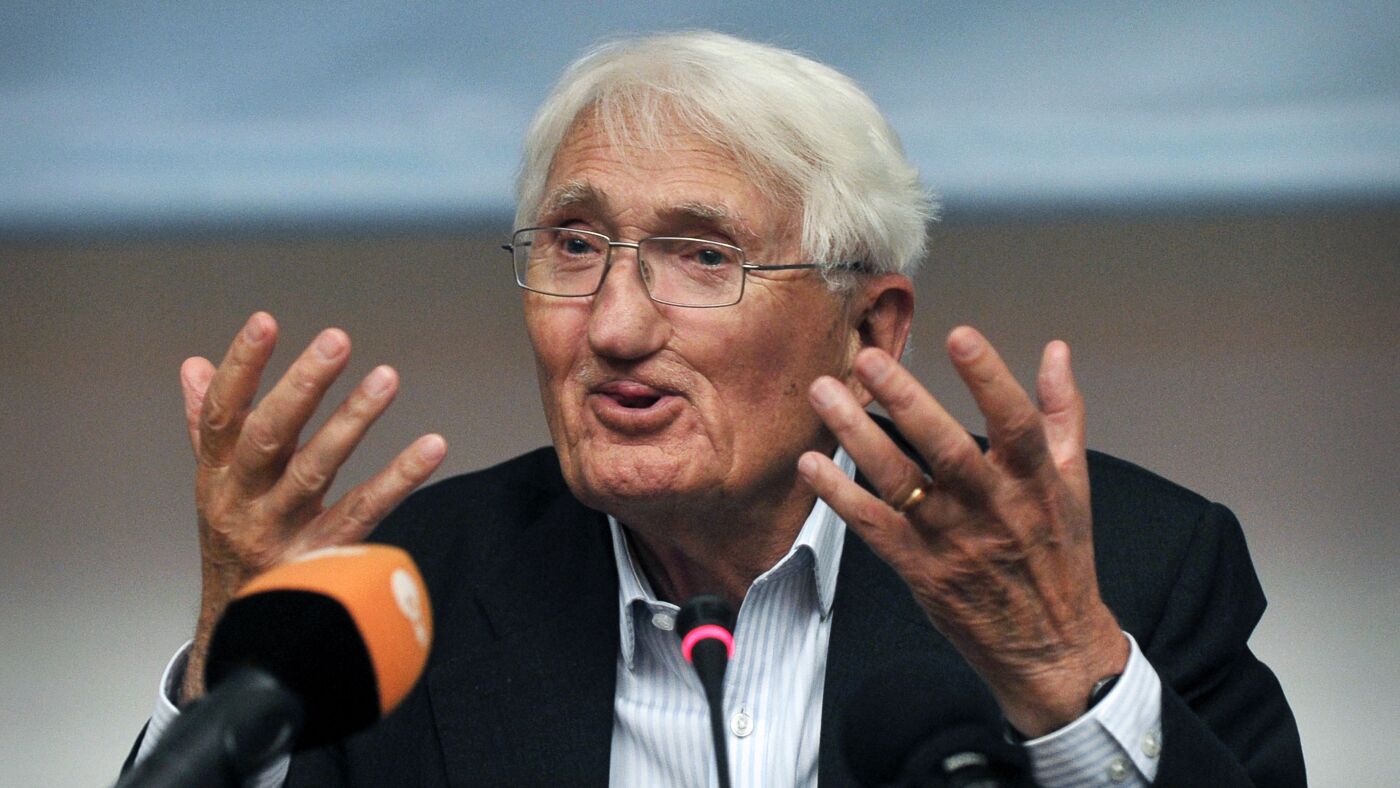
The Guardian view on the legacy of Jurgen Habermas: philosophical sustenance for illiberal times | Editorial

The Theory of Communicative Action, his 1980s magnum opus, was not (to put it mildly) as accessible as some of his newspaper opinion pieces. But its central idea—that our nature as linguistic beings puts reason and the search for consensus at the core of who we are—remains an antidote both to intellectual relativism and Trumpian realism, which elevates national or individual self-interest above all other sources of human motivation.
Philosophy
Philosophy
fromPsychology Today
1 month ago

What Is the 'Critical' in Critical Thinking?

Critical thinking is the ability to analyze, evaluate, and make judgments for decision-making, not merely critiquing or criticizing ideas.
Philosophy
fromPsychology Today
1 month ago

Why Some Scientific Debates Never End

Complex questions involving values cannot be definitively settled by evidence alone, as different priorities lead experts to emphasize different findings from the same data.
Philosophy
fromwww.theguardian.com
1 month ago

Jurgen Habermas obituary

Jürgen Habermas transformed from a Hitler Youth member into a leading defender of Enlightenment values and democratic theory after witnessing Nazi atrocities, dedicating his philosophy to ensuring collective democratic influence over society.
Philosophy
fromPsychology Today
1 month ago

The Atheist's Guide to Surviving End Times

Non-religious people experience apocalyptic anxiety from modern crises despite disbelieving End Times prophecy, requiring meaning-making through psychological and social resources rather than faith.
Philosophy
fromThe Conversation
1 month ago

I was teaching virtue and knowledge while lying on the side

Self-deception enables vice through small permissions that gradually erode moral boundaries, as demonstrated through infidelity rationalized during relationship separation.
Philosophy
fromPhilosophynow
2 months ago

A Very Short History of Critical Thinking

Sophistry prioritizes winning and approval over truth, using deceptive, manipulative arguments that undermine ethics and honest critical thinking.
Philosophy
fromPsychology Today
2 months ago

A Commonsense Critique of A Priori Metaphysics

Claims that metaphysics, rather than science, is the necessary foundation for scientific knowledge are false and revive pre-Enlightenment mystic scholasticism.
fromPsychology Today
2 months ago

If Justice Doesn't Exist, Then Numbers Don't Either

A drawn circle is at least something physical. You can see it, touch it, erase it. The skeptic can still say, "Circles are grounded in physical reality. Justice is different; it's just an idea in your head." So let's talk about the number two. Point to it. Not two apples, not two fingers, not a numeral on a page-that's just a symbol.
Philosophy
Philosophy
fromBig Think
1 month ago

The philosophy of indoctrination and how to fix it

Indoctrination occurs when beliefs are sealed off from questioning through prepackaged instructions that frame scrutiny as irrational or immoral, preventing rational evaluation of counterevidence.
Philosophy
fromApaonline
2 months ago

The Humanities Challenge: Expanding the Circle of Philosophy

Philosophy offers transformative insights and vision into human life, and public humanities must evolve beyond traditional academic formats to make philosophy accessible to broader audiences through innovative, engaging methods.
Philosophy
fromPhilosophynow
2 months ago

News: February/March 2026

A university review of race and gender course content led to removal of Plato passages from a syllabus, effectively banning Plato's Symposium and prompting protest and syllabus revision.
fromApaonline
1 month ago

Recommendation: U.K. Spinoza Circle

Spinoza was an heir to both Jewish and Christian culture-in Amsterdam he grew up in a Jewish community within a Protestant society-yet he distanced himself from both these religions. He did not want to be a member of a religious institution with strict, prescriptive codes of belonging and belief. He feared-quite rightly-that a [institutional religion would constrain philosophical freedom].
Philosophy
fromThe Conversation
1 month ago

Today's obsession with authenticity isn't new - being true to yourself has troubled philosophers for centuries

All of us live in an age where we're bombarded by social media and artificial intelligence - when striving to be your authentic self becomes an increasingly difficult task. Yet, even if it has somehow become a common goal, it is unclear how many of us can truly define the "authenticity" that we say we are pursuing.
Philosophy
Philosophy
fromApaonline
1 month ago

Why Engage with the Past? Philosophy and Its History

Philosophy departments distinguish between contemporary theoretical and practical philosophy addressing current issues, and history of philosophy studying outdated theories from past philosophers.
Philosophy
fromThe Conversation
1 month ago

Making good choices when life gets messy - practical wisdom relies on human judgment, not rules

Practical wisdom involves making sound judgments in complex situations where rules are unclear and competing values conflict.
Philosophy
fromThe Conversation
2 months ago

I'm a philosopher who tries to see the best in others - but I know there are limits

Interpreting others charitably—seeing them as protagonists who do their best—promotes understanding, cooperation, and productive learning across differences.
Philosophy
fromPhilosophynow
2 months ago

The Post Paralysis Peace Paradox

Stoic philosophy transformed perspective after complete quadriplegia, fostering acceptance, resilience, and meaning despite health complications, caregiving strains, institutional barriers, and ableism.
fromApaonline
2 months ago

Philosophy, Technology, and Mortality

This APA Blog series has broadly explored philosophy and technology with a throughline on the influence of technology and AI on well-being. This month's post brings those themes into focus recounting a vital Washington Post Opinion piece by friend of the APA Blog, Samuel Kimbriel. Samuel is the founding director of the Aspen Institute's Philosophy and Society Initiative and Editor at Large for Wisdom of Crowds. We collaborated on a Substack Newsletter about intellectual ambition, building on his essay, Thinking is Risky.
Philosophy
Philosophy
fromApaonline
2 months ago

Science Denial: From Post-Truth to Post-Trust

Many citizens adopt dangerous, willfully irrational beliefs—science denial and misinformation erode evidence-based decision-making in liberal democracies.
Philosophy
fromPsychology Today
2 months ago

How Ancient Philosophy Lost Its Mind-Twice

The shift from Classical Attic to Koine Greek correlated with a philosophical simplification from Plato's multipart psyche to the Stoics' unitary rational mind.
fromPsychology Today
2 months ago

Why You Can't Rely on Your Own Morality Alone

What does it mean to say that you are restrained solely by your own morality, by your own mind? The conscience is often described as an inner voice telling us what to do when others may be opposed. A moral compass is that which distinguishes between right and wrong, good and bad. Our conscience, our moral compass, sets the groundwork for doing the right thing.
Philosophy
Philosophy
fromPsychology Today
2 months ago

Why Skeptics Can't See the Evidence They Demand

Skepticism can become a defended belief that biases perception and evidence evaluation rather than remaining a neutral scientific stance.
Philosophy
fromPsychology Today
2 months ago

Embracing Intellectual Humility in Political Conversations

Intellectual humility recognizes knowledge limits, seeks other perspectives, and restrains certainty, tribalism, extremism, and contempt in political judgment.
[ Load more ]