#fujifilm-x100vi
#fujifilm-x100vi
[ follow ]
#photography #instant-photography #camera-gear #instant-camera #photojournalism #toy-camera #retro-design
Social media marketing
fromFstoppers
2 weeks agoShowcase Photography on Instagram in 2026 | Fstoppers
Instagram's algorithm has fundamentally shifted away from static photography, requiring photographers to adapt their content strategy and embrace storytelling to maintain audience reach and engagement.
Travel
fromMail Online
3 weeks agoJapan resident reveals how to beat the cherry blossom crowds
Japan's cherry blossom season attracts millions of visitors annually, but expert strategies can help travelers avoid crowds and experience the blooms more authentically by embracing flexibility and exploring local areas.
Typography
fromYanko Design - Modern Industrial Design News
3 weeks ago8 Best Japanese Stationery Finds So Clever You'll Question Why the Rest of the World Even Bothers - Yanko Design
Japanese stationery applies precision engineering to everyday writing tools, solving friction points others accept as normal through thoughtful design details.
Photography
fromwww.theguardian.com
3 weeks agoAs soon as I saw it, I knew the image': Robby Ogilvie's best phone picture
Edinburgh photographer Robby Ogilvie won the Sony World Photography Awards 2026 Object category for an image of a Ford Cortina in Cape Town's Bo-Kaap neighborhood, capturing the area's vibrant community and complex history through color and composition.
#instant-camera


Photography
fromWIRED
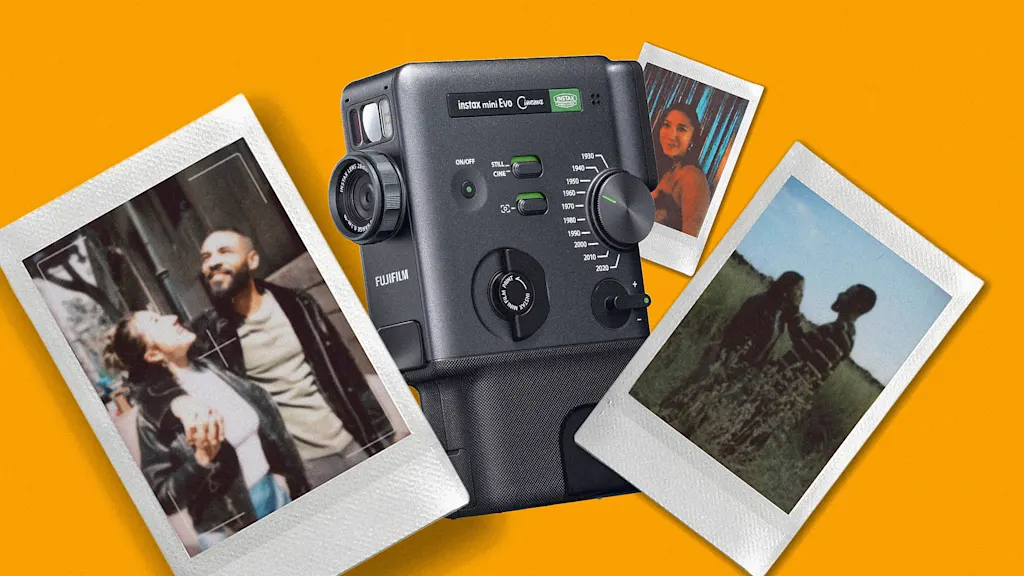
3 weeks agoTurn the Dial Through the Decades on Fujifilm's Retro-Inspired Instax Evo Cinema Camera
A compact instant camera with a 5-MP sensor, microSD card support, 28mm f/2.0 lens, and up to 15-second video recording capability, suitable for Instax prints and social media but limited for larger prints.
fromEngadget
1 month agoThe best budget cameras for 2026
If it's speed you want for sports or action shots of your kids, models like Canon's R50 can shoot bursts as fast as many high-end cameras. Creators, meanwhile, can choose Sony's ZV-E10 for vlogging jobs. There are also great, and cheap, models in the action and gimbal camera categories.
Gadgets
fromABC7 Los Angeles
1 month agoHow the Japanese locations in 'Rental Family' became more characters in the film
"I wanted it to feel how people have been living through, walking through (the city)," she said. "It's a massive city, Tokyo is, so just kind of find the right place for people around the world and have that experience."
Film
fromThe Verge
1 month agoVibe camera shootout: Camp Snap Pro vs. Flashback One35 V2
Younger folks are snapping up old point-and-shoots because they view the aesthetic as more authentic and more appealing than smartphone images. Companies are even rereleasing old tech at new prices. And there are cameras like the original Camp Snap: a $70 single-button point-and-shoot with no screen, designed as a modern take on a disposable film camera. It's cheap enough to send off with a kid to summer camp and accessible enough for just about anyone to enjoy its lo-fi aesthetic.
Gadgets
fromWIRED
2 months agoGear News of the Week: Kia Shows off the EV2, and Fujifilm Debuts New Instax Cameras
Being an entry-level electric car, the EV2 will apparently retail somewhere around $32,000, but don't be fooled by the price or small size (it's barely more than 13 feet long)-the top-spec version will have a 61-kWh battery that should be good for just shy of 280 miles. Meanwhile, the 400-volt e‑GMP platform lets you recharge in 30 minutes from 10 to 80 percent.
Cars

fromThe Verge
1 month agoThere's a tiny digital camera inside these retro 35mm film rolls
Following the popularity of the Kodak Charmera, it was inevitable that other retro-inspired digital toy cameras would start popping up. While the Charmera's design was inspired by the '80s single-use Kodak Fling camera, the OPT100 Neo Film crams a basic digital camera into a 35mm film roll that comes inside a plastic canister and a small box with a matching aesthetic.
Gadgets
fromEngadget
1 month agoCanon unveils a Limited Edition version of its popular G7 X III compact camera
Canon released its first PowerShot camera back in 1996 with a 0.5-megapixel sensor, helping kickstart the digital photo revolution. To celebrate that 30-year anniversary, the company has unveiled a Limited Edition version of its still-popular PowerShot G7 X III compact camera. It has a few unique touches but is otherwise the same as the original model released nearly seven years ago.
Photography
Gadgets
fromYanko Design - Modern Industrial Design News
2 months agoTired of AI filters and endless selfies? Retrostyled Await Camera makes you wait 24 hours to see your photos - Yanko Design
A retro digital camera limits shots, removes previews, and enforces a 24-hour delay before viewing to encourage patience and deliberate photography.
Gadgets
fromYanko Design - Modern Industrial Design News
1 month agoFujifilm's $170 Instax mini Link+ printer now lets you directly print moodboards from Pinterest - Yanko Design
Fujifilm's Instax Mini Link+ is a premium smartphone printer that uses Design Print Mode and a 318 dpi OLED exposure system to produce sharper text and finer detail.
Photography
fromYanko Design - Modern Industrial Design News
2 months agoinstax mini Evo Cinema Hides 15-Second Clips Inside QR Code on Prints - Yanko Design
Fujifilm's Instax mini Evo Cinema is a hybrid instant camera that records 15-second videos and prints QR-coded instax mini photos linking to the clips.
Gadgets
fromYanko Design - Modern Industrial Design News
1 month agoThe "Shot On iPhone" Lifehack: This 235mm Telephoto Case Packs Manual Controls + MicroSD Storage - Yanko Design
PGYTECH's RetroVa Vintage Imaging Kit adds a 13-element 235mm-equivalent telephoto, tactile grip, microSD storage, and film-style app rendering to iPhone 16/17 Pro.
fromThe Verge
2 months agoRicoh's black-and-white-only camera launches in February for $2,200
While most of the GR IV Monochrome's specs match the regular GR IV, like its 26-megapixel resolution and microSD card slot supported by 53GB of internal storage, the Monochrome has a built-in red filter. Just as in black-and-white film photography, shooting through a red filter naturally deepens contrast, and in the GR IV Monochrome it also doubles as a two-stop ND filter. Aesthetically, the GR IV Monochrome has a blacked-out GR logo, matte finish, and white LED power light instead of the usual green.
Gadgets
Photography
fromThe Art Newspaper - International art news and events
2 months ago'Sometimes it would get physical': the photographer who captures humanity at close quarters
Mark Cohen's abrupt, close-cropped street photographs use confrontational, flash-driven techniques to capture ordinary people and scenes, predominantly in Wilkes-Barre, Pennsylvania.
fromDesign Milk
1 month agoMovie Magic: The Lumina Sideboard from YOMEI and LEICA
Enter the Lumina Sideboard from German furniture brand YOMEI and Leica Camera AG, crafted specifically for the Leica Cine 1. This Bauhaus-inspired solution offers brilliant color and sound, without the permanent fixture of a black screen staring back, a void usually occupying the focal point of the room when not in use. With the Lumina Sideboard, each piece of the puzzle fits together neatly, minimizing pain points of the TV experience, all while gifting this container for culture a sleek aesthetic.
Gadgets
fromYanko Design - Modern Industrial Design News
2 months ago10 Best Japanese Stationery Items Under $100 Planners Obsess Over - Yanko Design
The stationery world has long looked to Japan for innovation, and planning enthusiasts know this better than anyone. Japanese design philosophy brings together minimalism, functionality, and thoughtful engineering to create tools that transform mundane tasks into moments of creative joy. These aren't just accessories that sit pretty on your desk. They're carefully crafted instruments that respect your workflow, elevate your planning rituals, and make every stroke of the pen feel intentional.
Gadgets
fromWIRED
2 months agoThe Sony A7V Is the Best Mirrorless Camera You Can Buy
Perhaps the most anticipated new camera of 2025, Sony's new A7V mirrorless camera just squeaked onto the scene before the end of the year. The A7 series is Sony's all-around camera. It lacks the resolution of the A7R cameras and the video focus of the A7S cameras, but in some ways offering enough of the best of those to make the plain A7 the best choice for most people.
Photography
[ Load more ]