fromFast Company
21 hours agoThe hidden logic behind AI CEOs' job loss warnings
CEOs of major AI labs acknowledge significant job loss from AI, with varying timelines and perspectives on job creation.
"We now recognize this general purpose technology we call intelligence as an opportunity to create new industries, create brand new jobs. But of course, it will shape every job. Some will no longer be necessary. Many new ones will be invented beyond our imagination today."
If you sell the tool, you're in a race against the model. But if you sell the work, every improvement in the model makes your service faster, cheaper, and harder to compete with. A company might spend $10K a year for QuickBooks and $120K on an accountant to close the books. The next legendary company will just close the books.
Companies aren't rewarded for making decisions that support people or social goods. Companies are rewarded for profit. They're rewarded for being first to market. When robotics cuts labor costs or increases output, deployment becomes a business decision. Whether displaced workers are retrained or supported elsewhere depends on public policy.
The linear career path changed somewhere between the rise of the gig economy and the rise of artificial intelligence. Companies are restructuring. Some industries may collapse entirely in the next five years. I've gone from studying law to studying software entrepreneurship to being a self-improvement essayist. My career is still an "experiment in progress." The world of work is changing. And I'm changing with it.
We talk constantly about age-in politics, in leadership, in debates about retirement and the future of work. Yet we rarely stop to ask a simple question: What is age, exactly? Most of us rely on a single number, as if people were stamped with a vintage year like bottles of wine. But age is far from a fixed or universal metric. It is multidimensional, deeply unequal, and increasingly misleading when used as a shortcut for ability, potential, or readiness.
In September, the consulting firm Accenture made headlines when it acknowledged it had "exited" 11,000 employees who couldn't be retrained to adapt to AI. On a recent earnings call, CEO Julie Sweet explained the decision bluntly, saying that "the workforce needs new skills to use AI, and new talent strategies and related competencies must be developed." It's a tough-but-true reality that thanks to AI, tomorrow's jobs will look radically different than they do today.
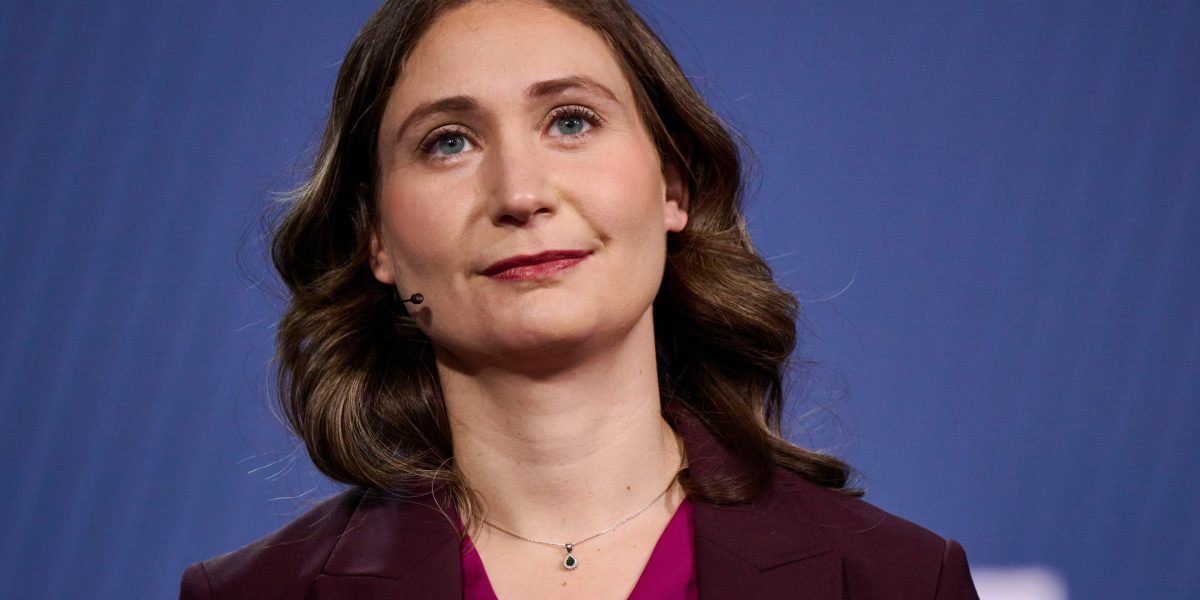
The government will create a new cross-department Future of Work Unit, expand its ambition to upskill 10 million workers in AI by 2030, and invest £27 million in a new TechLocal programme aimed at entry-level tech roles, the Science and Technology Secretary has announced. Delivering her first major speech on artificial intelligence at Bloomberg on Wednesday, Liz Kendall set out how the government intends to position Britain to "win for Britain on AI", while supporting workers through the disruption the technology will bring.
Aki Ito is our chief correspondent on careers, a huge topic for Davos - and for us. She asked people across business tough questions about the future of work (believe me, I was in the room) to help bring insights for your success. She also moderated a conversation with chief people officers from companies across the business world. You'll see her takeaways from that soon.
Kate Lister is a widely recognized thought leader on trends that are changing the who, what, when, where, why, and how of work. As the founder of Global Workplace Analytics, she has been helping organizations understand, pilot, scale, and optimize their workplace strategies and work practices for nearly two decades. Kate was one of only three witnesses invited to testify before a U.S. Senate committee regarding the post-pandemic potential for distributed work in government.
As work, technology, and learning change quickly, gaining the right skills has become essential. So, instead of just wanting "a better job," people now aim to build the skills employers will need in 2026. This focus makes more sense because skills are trackable, actionable, and linked directly to job growth. Plus, skill-based goals fit better into busy lives. You can study in short sessions, see your progress, and use what you learn right away.
AI is changing how companies hire, train, and lead, and in the process, the chief human resources officer's role is expanding. Today's top HR leaders are becoming AI strategists, helping their organizations navigate the next wave of workplace transformation. "The old model of HR was employees over here, technology over there," says Thomas Hutzschenreuter, a university professor at the Technical University of Munich (TUM). "But the new model of work is human-AI collaboration." AI is a coworker now, he says, and that means that "HR has a bigger mandate. They need to understand not just people and culture, but go deeper into the strategy, the business, and the technology itself."