#semi-formal-reasoning
#semi-formal-reasoning
[ follow ]
#ai #artificial-intelligence #large-language-models #decision-making #mathematics #human-experience #ai-safety



Psychology
fromSilicon Canals
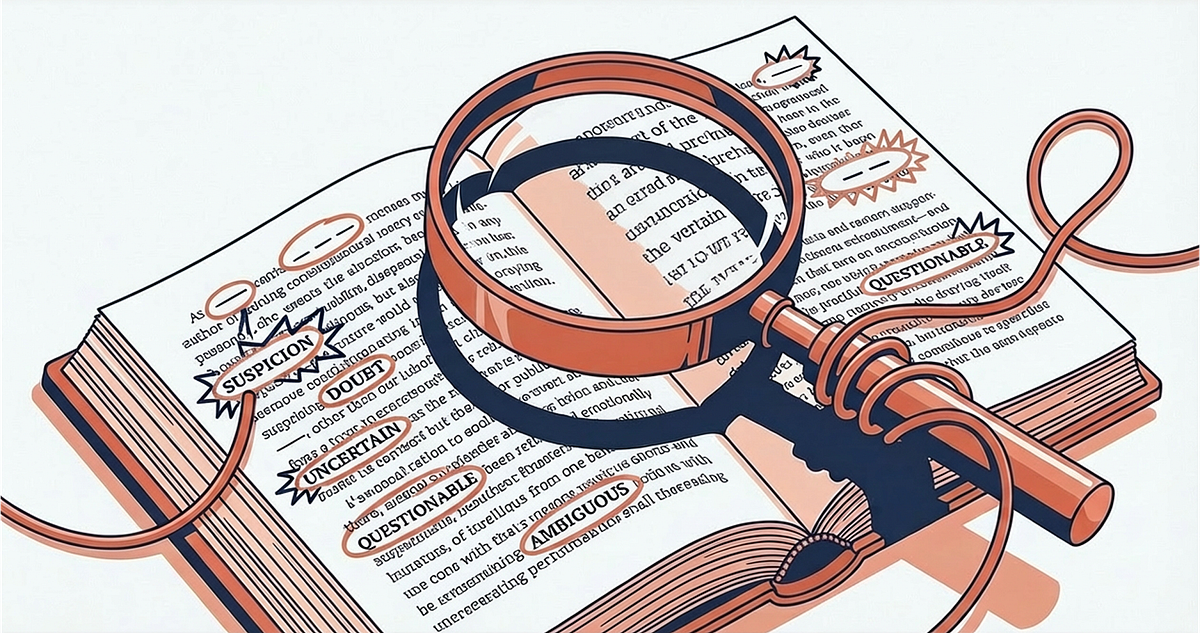
13 hours agoResearch suggests that high intelligence doesn't protect against bad decisions - it makes people better at constructing convincing justifications for the bad decisions they were already going to make - Silicon Canals
Higher intelligence can lead to greater polarization rather than alignment on contested facts.




fromArs Technica
3 weeks agoFiguring out why AIs get flummoxed by some games
With its Alpha series of game-playing AIs, Google's DeepMind group seemed to have found a way for its AIs to tackle any game, mastering games like chess and by repeatedly playing itself during training. But then some odd things happened as people started identifying Go positions that would lose against relative newcomers to the game but easily defeat a similar Go-playing AI.
Board games
fromwww.scientificamerican.com
3 weeks agoMathematicians find one pi formula to rule them all
For more than two millennia, mathematicians have produced a growing heap of pi equations in their ongoing search for methods to calculate pi faster and faster. The pile of equations has now grown into the thousands, and algorithms now can generate an infinitude. Each discovery has arrived alone, as a fragment, with no obvious connection to the others. But now, for the first time, centuries of pi formulas have been shown to be part of a unified, formerly hidden structure.
Science
Software development
fromTechzine Global
1 month agoMicrosoft introduces open-source multimodal Phi-4 reasoning model
Microsoft's Phi-4-reasoning-vision-15B combines vision and reasoning capabilities using mid-fusion architecture, outperforming larger models on mathematical and scientific benchmarks while maintaining efficiency through selective multimodal layer processing.
Artificial intelligence
fromwww.scientificamerican.com
2 weeks agoAs AI keeps improving, mathematicians struggle to foretell their own future
First Proof, a benchmarking initiative, is launching its second round to evaluate large language models' ability to contribute to research-level mathematics, now requiring transparency and access from participating AI companies.
fromMedium
1 month agoAlgorithms Are Just Real Life, Formalized
Which Algorithm Is This? If you step back, this maps almost perfectly to the Top K Frequent Elements problem.We usually solve it for integers in a list. Here, the "elements" are audience profiles age and body-type combinations. First, define what an audience profile looks like: case class Profile(age: Int, height: Int, weight: Int) What we want is a function like this:
Scala

fromNature
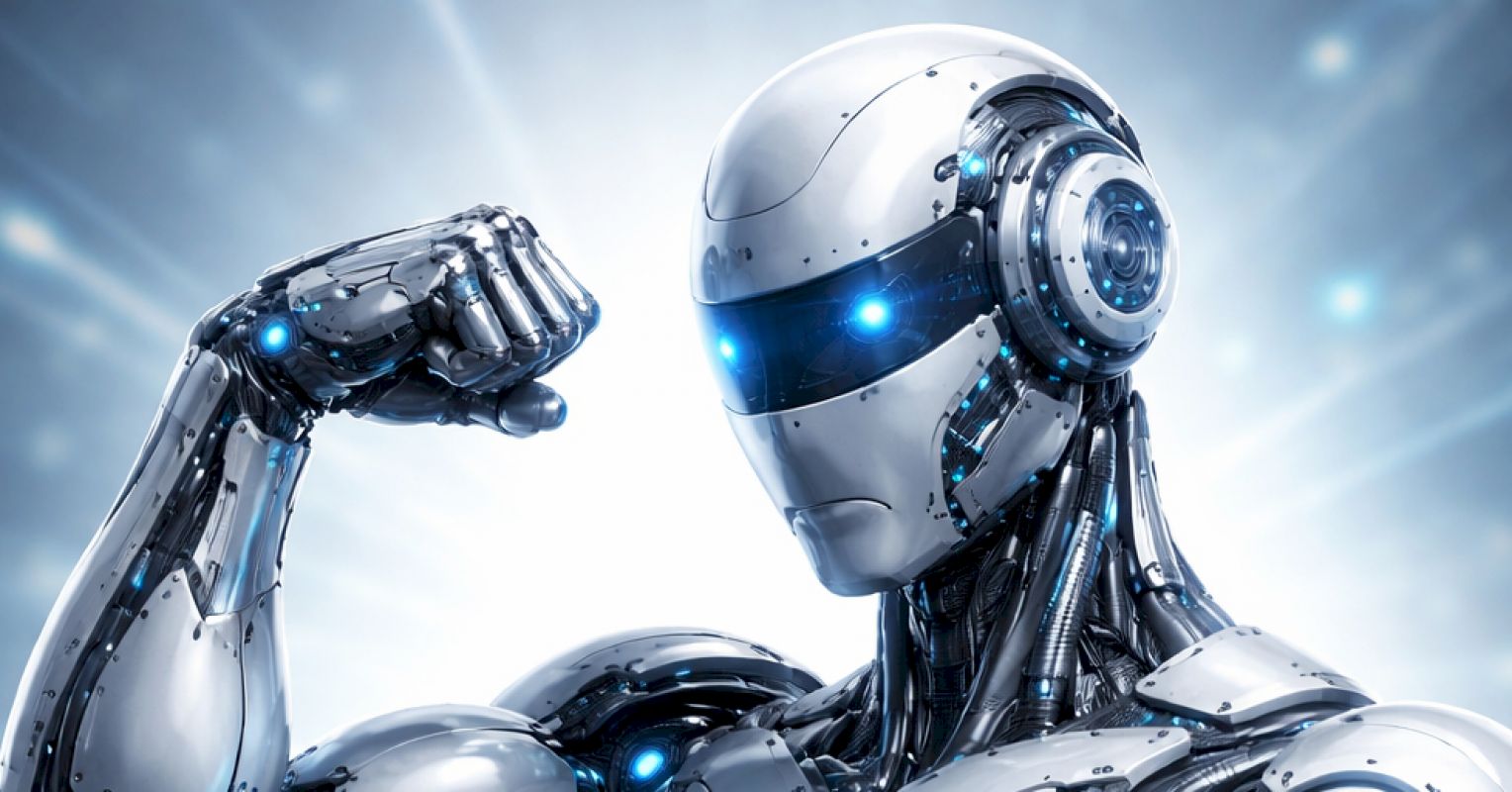
2 months agoForget formalism: mathematics was built on infighting and emotional turmoil
In the weeks leading up to September 1891, mathematician Georg Cantor prepared an ambush. For years he had sparred - philosophically, mathematically and emotionally - with his formidable rival Leopold Kronecker, one of Germany's most influential mathematicians. Kronecker thought that mathematics should deal only with whole numbers and proofs built from them and therefore rejected Cantor's study of infinity. "God made the integers," Kronecker once said. "All else is the work of man."
History
fromMedium
3 weeks agoWhy safe AGI requires an enactive floor and state-space reversibility
Frontier AI systems are simply not reliable enough to operate without human oversight in high-stakes physical environments. The Pentagon's demand was, in structural terms, a demand to eliminate the human's ability to redirect, halt, or override the system. Amodei's refusal was an insistence on maintaining State-Space Reversibility - the architectural commitment to keeping the human in the loop precisely because the system lacks the functional grounding to be trusted outside it.
Artificial intelligence



fromPsychology Today
3 weeks agoAl-Between the Hype and the Happening
The incessant AI predictions are frightening and incite panic like an ongoing tornado siren from the edge of town. The idea that humans willingly replaced themselves with their technology might give future generations pause. Or maybe not---if those future generations are AI.
Artificial intelligence
fromComputerworld
2 months agoIn an AI-perfect world, it's time to prove you're human
But now, communicating with perfection and polish signals a lack of value. It signals that you used AI. Speaking to Instagram influencers, Instagram chief Adam Mosseri last week announced the dawn of this new world. In posts on Instagram and Threads, he said that, "Deepfakes are getting better and better. AI is generating photographs and videos indistinguishable from captured media. The feeds are starting to fill up with synthetic everything."
Social media marketing
fromFuturism
2 months agoScientists Preparing to Simulate Human Brain on Supercomputer
The team, which is being led by Jülich neurophysics professor Markus Diesmann, will leverage the Joint Undertaking Pioneer for Innovative and Transformative Exascale Research (JUPITER) supercomputer for their simulation. JUPITER is currently the fourth most powerful supercomputer in the world according to the TOP500 list, and features thousands of graphical processing units. The team demonstrated last month that a " spiking neural network " could be scaled up and run on JUPITER, effectively matching the cerebral cortex's 20 billion neurons and 100 trillion connections.
Science
fromBig Think
1 month agoThe man who transposed human thought into algebra
Walking through a field one day, a 17-year-old schoolteacher named George Boole had a vision. His head was full of abstract mathematics - ideas about how to use algebra to solve complex calculus problems. Suddenly, he was struck with a flash of insight: that thought itself might be expressed in algebraic form. Boole was born on November 2, 1815, at four o'clock in the afternoon, in Lincoln, England.
Philosophy
fromThe Conversation
2 months agoAI cannot automate science - a philosopher explains the uniquely human aspects of doing research
Consistent with the general trend of incorporating artificial intelligence into nearly every field, researchers and politicians are increasingly using AI models trained on scientific data to infer answers to scientific questions. But can AI ultimately replace scientists? The Trump administration signed an executive order on Nov. 24, 2025, that announced the Genesis Mission, an initiative to build and train a series of AI agents on federal scientific datasets "to test new hypotheses, automate research workflows, and accelerate scientific breakthroughs."
Philosophy
fromComputerworld
1 month agoAI doesn't think like a human. Stop talking to it as if it does
Autonomous agents take the first part of their names very seriously and don't necessarily do what their humans tell them to do - or not to do. But the situation is more complicated than that. Generative (genAI) and agentic systems operate quite differently than other systems - including older AI systems - and humans. That means that how tech users and decision-makers phrase instructions, and where those instructions are placed, can make a major difference in outcomes.
Artificial intelligence
fromArmin Ronacher's Thoughts and Writings
1 month agoA Language For Agents
Last year I first started thinking about what the future of programming languages might look like now that agentic engineering is a growing thing. Initially I felt that the enormous corpus of pre-existing code would cement existing languages in place but now I'm starting to think the opposite is true. Here I want to outline my thinking on why we are going to see more new programming languages and why there is quite a bit of space for interesting innovation.
Software development


fromFast Company
2 months agoHow to give AI the ability to 'think' about its 'thinking'
This process, becoming aware of something not working and then changing what you're doing, is the essence of metacognition, or thinking about thinking. It's your brain monitoring its own thinking, recognizing a problem, and controlling or adjusting your approach. In fact, metacognition is fundamental to human intelligence and, until recently, has been understudied in artificial intelligence systems. My colleagues Charles Courchaine, Hefei Qiu, Joshua Iacoboni, and I are working to change that.
Artificial intelligence
fromenglish.elpais.com
2 months agoHow does artificial intelligence think? The big surprise is that it intuits'
Each of these achievements would have been a remarkable breakthrough on its own. Solving them all with a single technique is like discovering a master key that unlocks every door at once. Why now? Three pieces converged: algorithms, computing power, and massive amounts of data. We can even put faces to them, because behind each element is a person who took a gamble.
Artificial intelligence

Artificial intelligence
fromPsychology Today
2 months agoMind and Machine: A Lethal Cognitive Cocktail
Artificial intelligence is combining with human cognitive vulnerabilities to create an escalating crisis of hybrid intelligence, enabling manipulation through convincing deepfakes and persuasive algorithms.
fromPsychology Today
2 months agoArtificial Intelligence Mirrors Natural Intelligence
For the past three years, the conversation around artificial intelligence has been dominated by a single, anxious question: What will be left for us to do? As large language models began writing code, drafting legal briefs, and composing poetry, the prevailing assumption was that human cognitive labor was being commoditized. We braced for a world where thinking was outsourced to the cloud, rendering our hard-won mental skills, writing, logic, and structural reasoning relics of a pre-automated past.
Artificial intelligence
fromNature
2 months agoAI can spark creativity - if we ask it how, not what, to think
When a scientist feeds a data set into a bot and says "give me hypotheses to test", they are asking the bot to be the creator, not a creative partner. Humans tend to defer to ideas produced by bots, assuming that the bot's knowledge exceeds their own. And, when they do, they end up exploring fewer avenues for possible solutions to their problem.
Artificial intelligence
Artificial intelligence
fromwww.scientificamerican.com
1 month agoAI uncovers solutions to Erdos problems, moving closer to transforming math
AI language models helped mathematicians find references and solutions, moving about 100 Erdos conjectures from open to solved by combining literature search and theorem synthesis.
fromMedium
2 months agoWhen AI Thinks for Us, We Forget How to Think
Harry frowned. "I'm not seeing the value in it. Can you explain it clearly? Is there any other solution?" Tom leaned in. "This isn't making much sense. You could try this instead. It's simpler." Leina sighed. "Next time you present, put more thought into your reasoning." Meanwhile, Ron trembled with anxiety. He wanted to make a point but ended up rambling. This was his second failed attempt at defending his ideas.
Artificial intelligence
Artificial intelligence
fromwww.scientificamerican.com
2 months agoWorld models could unlock the next revolution in artificial intelligence
AI world models representing 4D environments (3D plus time) enable consistent, continuously updated understanding for video, AR, robotics, autonomous vehicles, and progress toward AGI.
[ Load more ]