UX design
fromFast Company
5 hours agoDesign has been solving the wrong problem
Design should prioritize real-life usability over aesthetic appeal to enhance long-term satisfaction with products.
The documentary, created by Dr. Igea Troiani, Dr. Mamuna Iqbal, artist and researcher Paula Roush, and filmmaker Rime Tsujino, brings visibility to the experiences of six architects of South Asian origin.
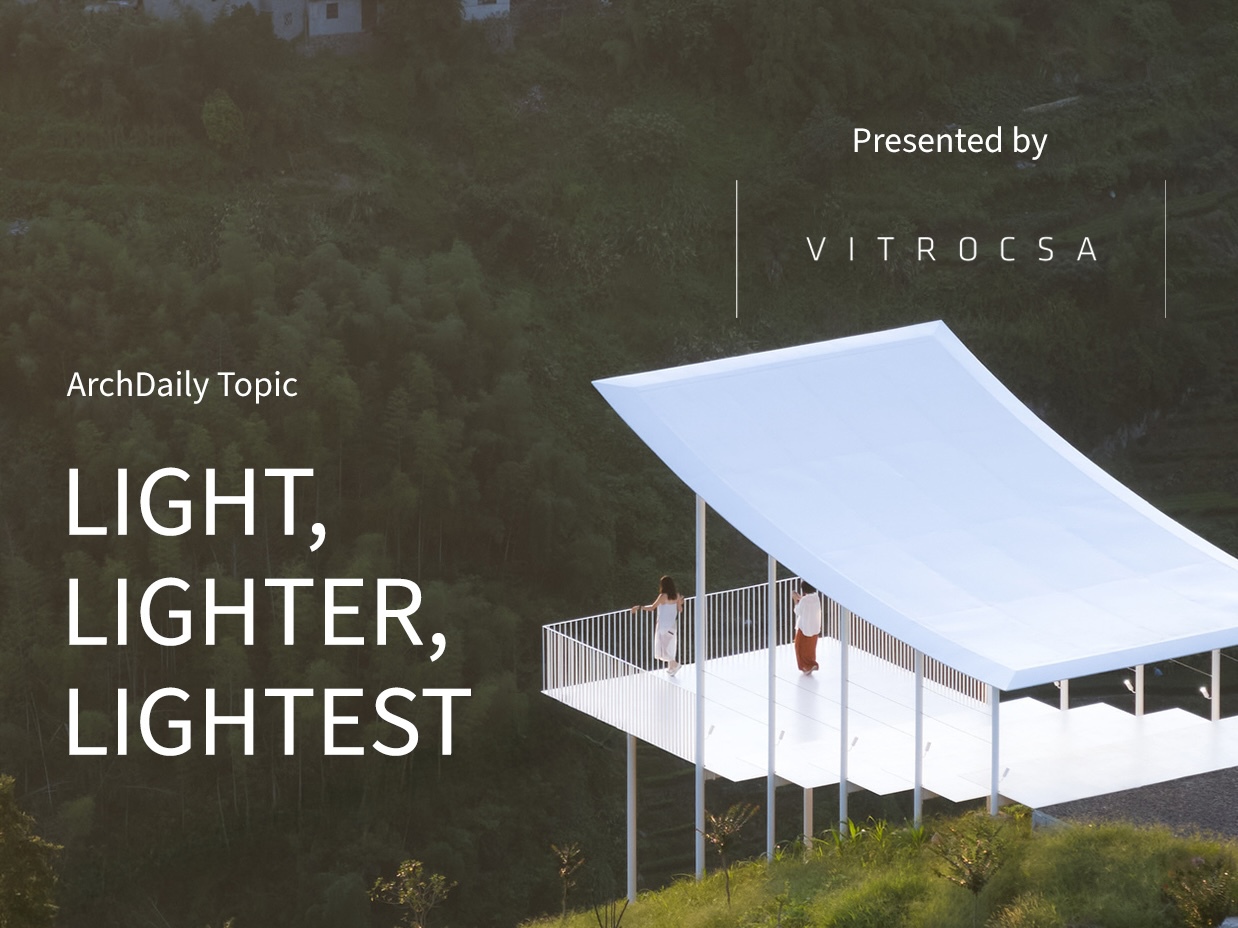
The original intent of pilotis was to create a sense of lightness that would allow circulation and light to flow beneath a structure, but contemporary requirements render thin columns insufficient for large-scale civic projects.
Viewpoints are structures designed for observing the landscape from elevated positions. They act as devices that organize the gaze and establish a direct relationship between the body and the territory.
Decades of research in environmental psychology and building science reveal that indoor conditions can profoundly affect human health and behavior. Lighting influences circadian rhythms and sleep patterns. Air quality impacts cognitive performance and respiratory health. Temperature and acoustics shape comfort and concentration.
The contemporary technology museum has emerged as a performative participant in the systems it seeks to document. The architecture of these institutions has become increasingly fluid and bold, often mirroring the velocity and complexity of the systems it houses. They operate as mediators between the human, the ecological, and the technological realms, transforming from encyclopedic warehouses into active educational engines.
For most of human history, night arrived as a planetary certainty. Darkness spread across landscapes, and the sky revealed thousands of stars. Today, that sky is disappearing. Artificial light spills upward from cities, scattering through the atmosphere and turning night into a permanent haze. Research mapping global sky brightness shows that more than 80 percent of humanity now lives under light-polluted skies, and the Milky Way has vanished from view for over a third of the world's population.
While sailors could easily determine their latitude by measuring the angle of the sun or the North Star, calculating their east-west position on a continuously spinning globe remained one of the era's most stubborn scientific hurdles. Without it, navigators were forced to rely on dangerous guesswork like dead reckoning, leaving them vulnerable to getting lost, running aground, or being ambushed by pirates along predictable routes.
In antiquity, many opined about "the elements" in combination. Around 2500 years ago, Leucippus and Democritus founded the idea of atoms. Perhaps everything, they opined, was composed of indivisible building blocks. In the late 1700s, hydrogen and oxygen were discovered. Circa 1804, John Dalton revived atomism to explain chemical behavior. Then in 1869, Mendeleev developed the periodic table: organizing the atoms.
I'll be talking about holistic engineering or the practice of factoring in your technical decisions, designs, strategies, all the non-technical factors that are actually forces that influence your organic socio-technical problem space. As much as you can see in this canyon how natural forces have influenced the shape of the earth, so you can see the color. You can see all the different layers.
Having explored adaptability at the city scale, we are now zooming in on the building itself-and, crucially, on practice. How can architects, developers, and consultants embed adaptability as a measurable, mainstream outcome? This question will be on the agenda at the Adaptable Building Conference (ABC) on January 22 at the Nieuwe Instituut in Rotterdam, where architects, engineers, policymakers, and industry leaders will explore the potential of adaptable buildings-and how to deliver them at scale.
The Architect Elevator is a metaphor-in reality, the company leadership may be sitting on the same building floor as you; my car metaphors could fill an entire book; and " Architecture is Selling Options " has become the anchor of many architecture keynotes. So, at least my world of architecture is full of metaphors.
Recent integrative approaches suggest that physics cannot be adequately characterized by magnitude-based distinctions alone, such as those implied by Big-P, little-p, and mini-p physics. While these categories capture differences in scope and historical impact, they fail to address the heterogeneity of physical activity itself. To remedy this, I propose the Five Fs of physics: force, friction, flux, formulation, and foundational structure.
Earlier we did episode one of this with Grady Booch where we discussed the principled view of that what's changing and what remains unchanged, what is hyped and what is actually naturally coming with the AI changes. We also spoke about that what is the difference between the design and the architecture and what teams are focusing and what they might be missing.
Every architectural epoch has been defined by its instruments. The compass, the drawing board, the camera, and the computer have each altered how architects think and produce. Yet the current moment feels qualitatively different.
Many philosophers strike me as like Polish apparatchiks in 1983-they turn up to work and do what they did yesterday just because they don't know what else to do, not because they seriously believe in the system they are maintaining. I think it's not been fully appreciated how much of a blow it is to the confidence of the field's youth that scientific ambitions are increasingly abandoned as untenable.
A drawn circle is at least something physical. You can see it, touch it, erase it. The skeptic can still say, "Circles are grounded in physical reality. Justice is different; it's just an idea in your head." So let's talk about the number two. Point to it. Not two apples, not two fingers, not a numeral on a page-that's just a symbol.
This story is about complexity, advanced math, cognition, and machine computation. But hold on. For this exercise, my task is to take this complex idea and reduce it-to simplify it into something less daunting and (I hope) a bit easier to understand. So, let's take a step back. My bet is that most of us learned our first piece of geometry with two letters: x and y.
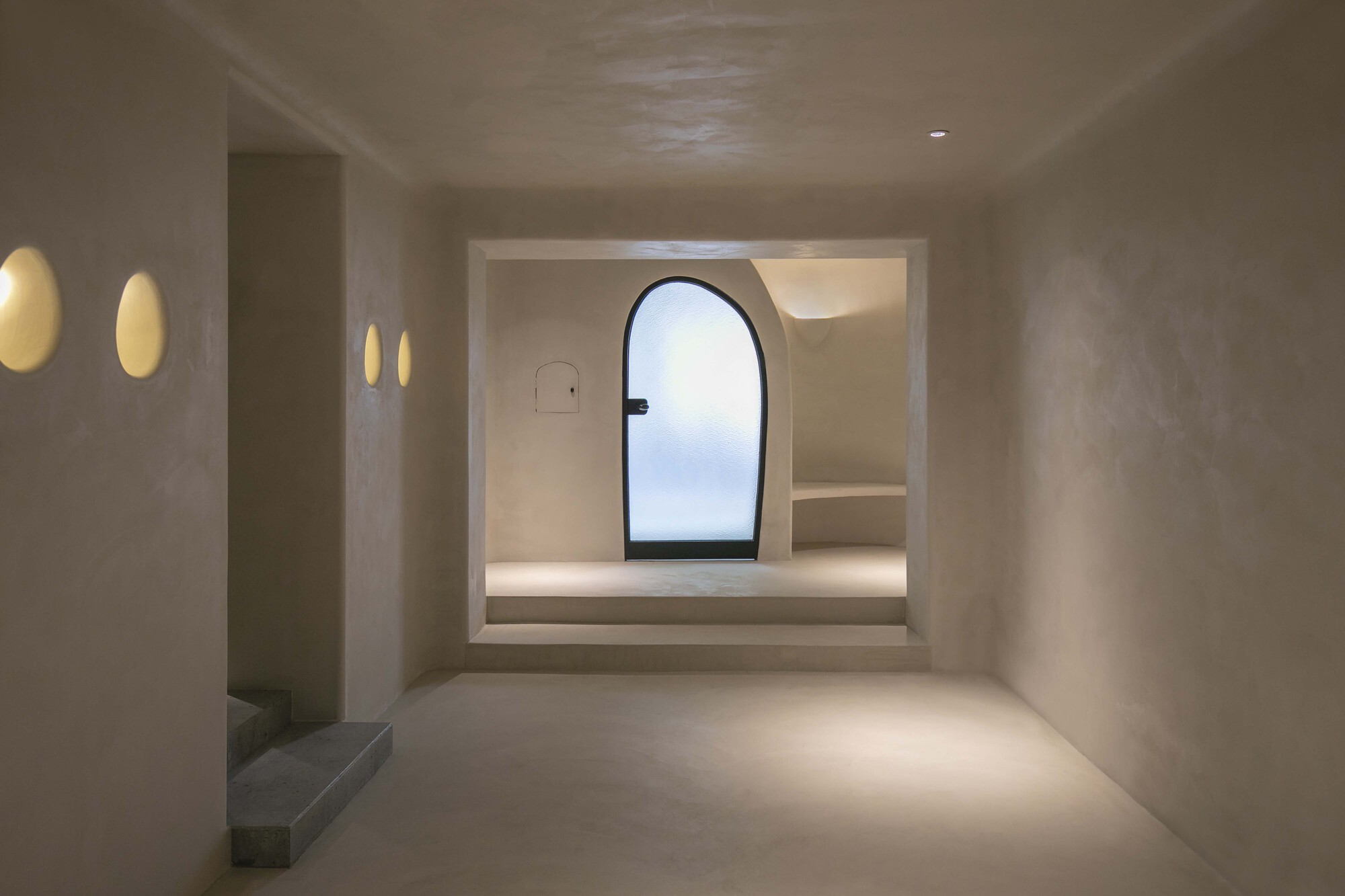
Beneath the visible surface of cities lies an invisible architecture. Subways, tunnels, water systems, data cables, and bunkers form a dense network that sustains urban life while remaining largely unseen. The ground beneath our feet is not a void but a complex territory that holds the infrastructures, memories, and anxieties of our age. In recent years, as land becomes scarce and climate pressures intensify, architects and urbanists have turned their gaze downward, rediscovering the subterranean as both a physical and conceptual frontier.
For many architects, schematic design is defined by a familiar tension. It is the phase of open-ended exploration-where multiple ideas are tested, challenged, and refined for clients to define a project's direction. In essence, it's where the design magic happens. The challenge is rarely a lack of ideas, but the effort required to test and evaluate those ideas properly under time-, resource-, and budget constraints.
Life doesn't pause for grief or fear. You might be going through something devastating but you're still packing lunches, still driving your kids to baseball practice, still showing up to work. One minute I find myself prepping for a whole home presentation and the next minute I'm checking the news, hoping and praying that no one has been killed on the streets today.